


Last updated: July 2026
Here’s what changed in this refresh:
- Re-read the newest owner feedback through mid-2026 and confirmed the lace-hardware failure pattern (bent or snapped speed hooks) is still the single most-repeated durability complaint, not an old-batch fluke.
- Re-checked the timing of sole and heel separation reports and found they still cluster suspiciously close to the end of the return window.
- Added a clearer split between light-duty/casual owners (mostly happy) and heavy daily-trade owners (mostly disappointed), because that divide predicts satisfaction better than anything else.
- Verified the re-buyer paradox held up: a real slice of owners keep re-purchasing on price even while acknowledging the boot doesn’t last.
Affiliate disclosure: As an Amazon Associate, we earn from qualifying purchases. If you buy through links on this page, we may receive a small commission at no extra cost to you. It never changes what the owner feedback says.
The short version before you scroll
If you’ve ever pulled a “steel-toe logger” out of the box, laced it once, and watched a speed hook bend sideways, you already understand the confusion around this boot. It looks like a $180 logger and costs a fraction of that, which makes people either love it or feel burned.
Is the Ad Tec Men’s Logger Boot worth it? For light-duty, casual, or budget-strapped buyers who accept a short lifespan, yes; for heavy daily trades, no — the hardware and soles fail too soon.
I went deep into real owner experience for this one — a large sample of verified-purchase reviews spanning several years — because the star average hides how sharply owners split. This isn’t a spec sheet rewrite. It’s a synthesis of what people actually reported after wearing these on real jobsites. For the full category picture beyond this single model, our logger boot buying guide walks through what separates a disposable pair from a resole-worthy one.
How this review was built (so you can trust it)
- How many reviews: I analyzed a sample of roughly 185–190 verified-purchase text reviews actually read across the critical and positive feedback — not the listing’s ~984 global ratings, which I mention only as context. The analyzed number reflects individual written reviews I read, nothing more.
- Time window: Feedback spans roughly 2017 through mid-2026, so it reflects both older pairs and current production. That matters here, because several longtime buyers explicitly compare a great first pair to a weaker replacement — a signal worth watching.
- How I synthesized it: I tagged every review into buckets — comfort/fit, sizing, waterproofing, sole and construction durability, lace hardware, weight, heat/cold, and warranty/support — then separated “use or fit-driven issues” (wrong trade, wrong width, wrong climate) from “likely product or design issues” (lace-hook failure, sole delamination, heel separation). Filtering out the wrong-use complaints reveals a truer failure pattern than the raw star count.
- Important limitations:
- Reviews skew toward extremes — thrilled bargain-hunters and furious returners both post more than the quiet middle.
- Wear intensity varies wildly: a weekend yard-work owner and a cable lineman on gaffs are grading completely different lifespans.
- I prioritized patterns that repeat across many owners over dramatic one-off lemons.
For a broader safety-first foundation before you commit, the work boots 101 primer ties boot features to actual jobsite hazards.
Quick Verdict (TL;DR)
Best for:
- Budget buyers who genuinely can’t stretch to a $150+ logger right now.
- Light-to-moderate use — yard work, casual wear, occasional outdoor tasks, short shifts.
- People who like the logger look and steel-toe protection at an entry price.
Not for:
- Heavy daily trades on hard surfaces (construction, lineman, roofing, tree work) expecting a year-plus.
- Anyone counting on real waterproofing for standing water or wet grass.
- Buyers who want a resole-and-keep-forever boot.
Standout win:
- Genuinely comfortable and good-looking out of the box for a lot of owners, at a price that makes replacement painless.
Watch-outs:
- Lace hooks and eyelets that bend or snap early, plus sole/heel separation that tends to show up right around when returns close.
Confidence Score: 🎯 7.5/10 This is a buyer-usefulness score, not a reliability rating. It reflects how confidently I can tell you who this boot fits — and that signal is strong, because the happy-vs-unhappy divide tracks cleanly with use intensity. I held it back from a higher number because the durability data is genuinely polarized and the lace-hardware defect repeats often enough that I can’t wave it off as bad luck.
What This Boot Is (and What It Isn’t)
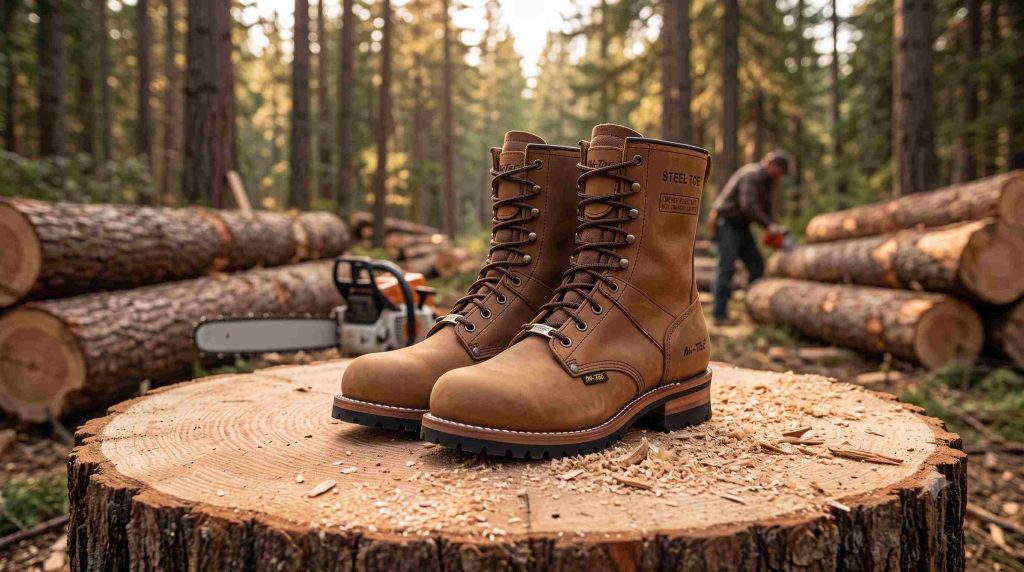
In plain terms: the Ad Tec Men’s Logger is a steel-toe, lace-up logger-style work boot with a tall heel and a leather upper, sold at a budget price point. It’s built to look like the premium loggers tradespeople covet, and for casual or light use it often delivers on that look and feel.
A few misconceptions worth clearing up:
- “It’s a premium logger at a discount.” It isn’t. Owners who love it tend to frame it as a good cheap boot they’re happy to replace, not a lifetime boot. The ones who expected Red Wing or Carolina longevity are the angriest.
- “Waterproof means waterproof.” Several owners report damp feet after standing water or wet grass. Treat any water resistance as light and temporary, not a seal.
- “Steel toe means heavy-duty everywhere.” The steel toe does its job on impact — one owner credited it with saving toes from a heavy falling object — but toe protection doesn’t fix the sole and hardware issues that show up under hard daily wear.
Key Specs That Actually Matter
I’m only listing the things owners say actually change the outcome on the job:
- Steel toe: Protective and, per owner feedback, effective in a real crush event. But some report the steel cap rubbing the top of the foot or feeling tight around the toes, especially if you size wrong.
- Tall logger heel: Part of the look and useful on unstable terrain and pole work, but a recurring complaint is that the heel feels hard and “like walking on a brick,” and that it can wear down or separate faster than expected.
- Leather upper: Owners describe it as soft and good-looking, and oil-tanned (several warn not to over-oil a new pair). The flip side: some find it thin and under-structured for abusive work.
- Lace hardware (speed hooks / eyelets): This is the one to watch. Bent-on-first-lacing and snapped-within-weeks hooks are the most repeated hardware complaint by a wide margin.
- Outsole: Comfortable for many, but reported as slippery on wet concrete and tile, and the rubber wears down quickly for heavy users. A few note screws in the sole construction becoming exposed as the heel grinds down.
- Weight: Opinions split — some call it light for a steel toe, others say it feels heavy. Fit and sizing likely drive that perception.
For how outsole compound and construction actually affect grip and lifespan, our breakdown of work boot soles is a useful companion read.
Sizing & Fit — What Owners Actually Report
Bottom line: these run small and narrow for many buyers. Ordering a half size up is the single most-repeated sizing tip, and wide-footed owners should be cautious.
Across the owner feedback I analyzed, the sizing signal is remarkably consistent:
- Runs small: A steady stream of owners say to go up a half size (some say a full size). Several ordered for a whole family and had to re-order every pair larger.
- Runs narrow: “Narrow in the front” and “too tight side to side” come up repeatedly. Even some buyers who ordered the wide version felt it wasn’t truly wide.
- The width trap: One recurring surprise is owners receiving a wide when they didn’t knowingly order one (or vice versa), then blaming discomfort on the boot when it was a width mismatch. Check the tag.
Who the fit suits: standard-to-slightly-narrow feet who size up a half size tend to report the best comfort. Who it fights: genuinely wide feet, and anyone who orders their exact street size expecting room.
If heel slop or toe pinch is a chronic problem for you, our work boot fit and sizing guide has a foot-shape checklist that heads off exactly these complaints.
Feature-by-Feature Breakdown (Truth vs Marketing)
| Feature | What the Marketing Implies | What It Actually Means (Owner Experience) | Compared to Competitors |
|---|---|---|---|
| Steel toe | Full heavy-duty protection | Genuinely protective on impact, but can rub the instep or feel tight if mis-sized | On par with budget steel toes; not the roomy fit of pricier loggers |
| Logger heel | Rugged, terrain-ready | Looks right and helps on poles/uneven ground, but feels hard underfoot and can wear or separate | Premium loggers cushion the ride better and hold the heel longer |
| Leather upper | Durable full build | Soft, handsome, oil-tanned; some find it thin for abuse | Undercuts premium leather structure; fine for the price |
| Lace hardware | Secure, tough | The weak point — bending and snapping hooks reported often, sometimes on day one | Clearly behind name-brand hardware |
| Waterproofing | Weather-ready | Light resistance at best; damp feet in standing water or wet grass | Falls short of true waterproof loggers |
| Comfort out of box | Work-ready immediately | Often a genuine strength — many owners comfy from day one | Better out-of-box comfort than some stiffer premium boots |
| Value | Premium look, low price | The core appeal; happy owners buy because replacement is cheap | Unbeatable on sticker price, not on lifespan |
Real-World Owner Experience (Deep Pattern Analysis)
I led with the thing owners obsess over most for this specific boot: the collision between a genuinely likable cheap boot and hardware that fails early.
Pattern 1: The lace-hardware failure (what most reviews won’t tell you)
In a nutshell: The most repeated product defect isn’t the sole — it’s the speed hooks and eyelets. Owners describe hooks bending the first time they lace up, and one or more snapping off within the first couple of weeks. It shows up across years of feedback and even on replacement pairs, which is what moves it from “bad luck” into “manufacturing consistency” territory.
Hidden strength: When the hooks survive, owners generally like the lacing and ankle lockdown.
Hidden weakness: A snapped hook mid-boot is hard to work around without either re-lacing awkwardly (risking a tear in the leather) or losing ankle support — a real problem for pole and ladder work.
What to do about it: Lace up gently the first time and inspect every hook before you commit to keeping them (see the return-window checklist below). If a hook fails outside the window, don’t force a field repair on a structural hook yourself — consult a cobbler or qualified repair rather than risk the leather.
Pattern 2: The return-window trap (failure timing)
In a nutshell: A striking number of sole-separation, heel-separation, and stitching complaints land just after the return window closes — one owner literally titled it around the sole peeling right after returns ended, another had the sole falling off inside about a month of heavy use. The boot frequently survives the trial period and then lets go.
Hidden strength: The trial period is usually enough to catch fit and obvious defects.
Hidden weakness: It is not long enough to surface the durability failures that matter most, so the star average is propped up by boots that hadn’t failed yet at review time.
What to do about it: Stress-test hard and fast inside the return window instead of babying a new pair. Details below.
Pattern 3: The failure sequence (leak → sole → upper)
In a nutshell: When these go, they tend to go in an order. Water intrusion around the laces or through the “waterproof” upper shows up first; sole and heel separation follows; stitching and upper problems come later. A sudden leak is often the early warning that the bond is starting to give.
Hidden strength: That sequence gives you lead time — a leak isn’t just annoying, it’s a heads-up.
Hidden weakness: Owners who ignore the first leak often report full sole separation weeks later.
What to do about it: Treat the first unexplained wet foot as a signal to start monitoring the sole seam, not just a waterproofing gripe.
Pattern 4: The re-buyer paradox
In a nutshell: Here’s the twist that explains the whole product. A real slice of owners complain about durability and re-buy anyway. Some are on their third or fourth pair. The logic is explicit in their words: at this price they’ll happily replace the boot every few months rather than pay several times more for a premium pair.
Hidden strength: For the right buyer, disposability is a feature, not a bug — cheap enough that a short life is acceptable math.
Hidden weakness: That same math is a trap for a heavy-trade worker who needs reliability, not replaceability, and ends up furious.
What to do about it: Decide honestly which camp you’re in before buying. If replacing boots twice a year annoys you, this isn’t your boot.
Pattern 5: The use-case threshold (comfort’s hidden divide)
In a nutshell: The cleanest line between happy and unhappy owners isn’t the boot — it’s the job. Yard work, machine-shop floors, light construction, casual wear, short shifts: mostly happy, often for a year or two. Heavy daily abuse on hard surfaces — cable lineman on gaffs, roofing, full-time construction on concrete: mostly disappointed inside months.
Hidden strength: In its lane, owners rave about comfort and value.
Hidden weakness: Push past that lane and the sole, heel, and hardware give out fast.
What to do about it: Match the boot to the intensity. To pin down which trades it survives, our work boots by job type guide maps footwear demands to specific trades.
Pattern 6: The hard-heel comfort complaint
In a nutshell: Separate from durability, a recurring comfort gripe is a hard, unforgiving insole/heel — “like walking on a rock” or “wearing bricks.” It’s polarizing: many owners find them comfy from day one, while others can’t last a full shift.
Hidden strength: For those it suits, comfort is the headline selling point.
Hidden weakness: The stock insole is widely called inadequate for all-day standing.
What to do about it: Owners who swap in a quality aftermarket insole early tend to flip from miserable to satisfied — one of the highest-leverage fixes for this boot.
The Good, The Bad & The Ugly
The Good (value & first impressions):
- Strong out-of-box comfort for a large share of owners
- Sharp logger looks that draw compliments
- Effective steel-toe protection in real impact events
- Low enough price that replacement doesn’t sting
The Bad (fit & comfort friction):
- Runs small and narrow; sizing-up is nearly mandatory
- Hard heel/insole that doesn’t suit everyone for long shifts
- Slippery outsole on wet concrete and tile
The Ugly (durability & hardware):
- Lace hooks/eyelets that bend or snap early, sometimes on replacements too
- Sole and heel separation clustered right after the return window
- Light, non-sealing waterproofing despite expectations
Mini Toolkit: Decide + Fix (Fast)
Issue-Tag Box: #lace-hook-snap #sole-separation #runs-small #hard-heel #not-truly-waterproof #return-window-failure
Fit Mini-Matrix:
| Foot Type | Verdict |
|---|---|
| Narrow | Best match — size up a half and you’re likely happy |
| Standard | Workable — go up a half size, expect a snug break-in |
| Wide | Risky — even the “wide” runs narrow for some; try cautiously |
Mini Decision Tree:
- If you do heavy daily trade work on concrete → skip it, buy up.
- If you need real waterproofing → skip it.
- If you want a cheap, good-looking light-duty or casual boot → buy it, size up a half.
- If you blow through boots fast anyway and price matters most → buy it, embrace the disposable math.
- If your feet are genuinely wide → try in person or size carefully first.
Troubleshooting Quickflow (hard heel & early wear):
- Feet aching by midday? → swap the stock insole for a supportive aftermarket one.
- Still tight across the toes/instep? → you likely sized too small; exchange up a half size.
- Noticed a first leak? → start checking the sole seam weekly.
- Hook bent or loose? → inspect all hooks immediately, before the return window closes.
- Sole or heel starting to peel? → document it and act on returns fast.
- Beyond basic care (resole, hardware replacement)? → consult a cobbler or verify against your employer’s PPE hazard assessment.
Mini Return-Window Reality Check
Because so many failures land right after returns close, run these before the window ends:
- Lace and unlace firmly several times and inspect every speed hook and eyelet for bending or looseness.
- Flex the sole hard and check the toe and heel seam for any early separation or gapping.
- Do a controlled water check appropriate to your use and see if your foot stays dry — don’t assume it’s sealed.
- Wear them a full working day on your actual surfaces to surface the hard-heel issue before it’s too late to return.
- Inspect the box-fresh pair for defects owners report on arrival: exposed sole screws, miscut stitching, or wrong width on the tag.
If any of that fails, weigh a swap now against a costlier replacement later — the same trade-off our logger buying guide frames for the whole category.
Sizing & Insider Tips (Realistic)
- Order a half size up as your default; a full size if you wear thick socks — the most repeated fix owners wish they’d known.
- Check the width on the tag the moment they arrive; wrong-width surprises drive a lot of “uncomfortable” reviews.
- Swap the insole early if your heels or arches ache — owners consistently call the stock insole the weak link for all-day wear.
- Lace gently the first time to avoid bending a fresh speed hook, then inspect all hooks before committing.
- Don’t over-oil a new pair — several owners note the leather is oil-tanned and warn against drowning it in conditioner right away.
- Avoid wet concrete and tile where you can; owners repeatedly flag slick footing on smooth wet surfaces.
- Treat waterproofing as light — fine for a quick puddle, not for standing water or soaked grass.
- Monitor the sole seam after any first leak; that’s often the early sign of separation to come.
- Don’t scuff them up before you’re sure — if you might return them, keep them clean during your test window.
- For anything beyond basic care — resoling, replacing failed hardware, or slip-hazard concerns on the job — consult a cobbler or qualified repair, or verify against your employer’s PPE hazard assessment. If workplace safety compliance is your concern, foot protection sits under OSHA’s foot protection standard (29 CFR 1910.136), and protective-toe performance is defined by ASTM F2413.
Owner Stories
The stories below are composite scenarios reflecting repeated patterns across owner feedback — not individual quotes.
- The happy light-duty re-buyer: A weekend property owner uses them for mowing, snow-blowing, and dog walks. After more than a year of light use they’ve held up fine, feel comfy after break-in, and look great. He’d buy them again without hesitation — because he’s never asking them to survive a jobsite.
- The wrong-job mismatch: A full-time construction worker on concrete loves the price and the look, then watches the soles break down within a few months and the feet ache by day’s end. The boot didn’t fail him randomly — it was never built for that intensity, and premium loggers exist precisely for his shift.
- The wrong-width returner: A narrow-footed buyer orders their exact size, gets pinch and heel pain, and later realizes the tag read wide (or the pair simply ran narrow). A half-size-up exchange with attention to width would have turned a one-star into a keeper.
SEE MORE OWNER FEEDBACK ON AMAZON
Who This Is For (and Who Should Skip It)
Buy it if…
- You want a good-looking steel-toe logger on a tight budget.
- Your use is light-to-moderate: yard work, casual wear, short or occasional shifts.
- You blow through boots fast anyway and cheap replacement is the smart math for you.
- You have standard-to-narrow feet and will size up a half.
- You’ll swap the insole and treat waterproofing as light.
Skip it if…
- You work a heavy daily trade on hard surfaces and need a year-plus of reliability.
- You need genuine waterproofing for standing water or wet conditions.
- You have wide feet and can’t try before buying.
- You want a resole-and-keep boot rather than a disposable one.
- Replacing boots twice a year would frustrate you.
If you’re comparing options, start here: Top Logger Boot Picks
Alternatives (Quick Comparisons)
- If you need real durability for a hard daily trade: step up to a premium logger built to be resoled — many disappointed Ad Tec owners explicitly name pricier brands they wish they’d bought instead. Our best logger boots roundup covers the tier up.
- If waterproofing is non-negotiable: look at a dedicated sealed boot rather than a light-resistance logger — see our best waterproof work boots.
- If your priority is all-day comfort: the hard-heel complaint here is real; browse options built around cushioning in our most comfortable work boots guide.
- If you want lightweight without the heft complaints: compare against our best lightweight work boots picks.
Deep-Dive FAQ
What should I test immediately after delivery?
Lace and unlace firmly to check every speed hook, flex the sole and inspect the toe and heel seams, and wear them a full day on your real surfaces. Because so many failures land just after the return window, aggressive early testing is the whole game here.
What are the most common problems and fixes?
The big three are bending/snapping lace hooks, sole and heel separation, and a hard stock insole. Fixes: lace gently and inspect hooks early, act fast on returns if the sole starts peeling, and swap in a supportive aftermarket insole for comfort. Hardware or resole repairs should go to a cobbler, not a field fix.
Will these work with my foot type and my job?
They fit narrow-to-standard feet best if you size up a half, and they suit light-to-moderate use far better than heavy daily trades. Wide feet and hard-surface, full-shift work are where owners get burned.
How long do they really last?
It depends almost entirely on intensity. Light and casual users report a year or two; heavy daily-trade users frequently report months. Owner feedback doesn’t support a single reliable number — the use case drives the lifespan more than the boot does.
Are they actually waterproof?
Not reliably. Owners report damp feet in standing water and wet grass, so treat any resistance as light and temporary rather than a seal.
Ad Tec Logger vs a premium logger (like Carolina or Chippewa) — which should I buy?
If you need a boot that survives heavy daily work and can be resoled, the premium logger wins clearly, and many Ad Tec owners say so themselves after a pair failed. If you want the logger look and steel-toe protection at a fraction of the cost for lighter use, the Ad Tec makes sense — as long as you accept it’s a shorter-lived, replaceable boot, not a lifetime one.
Is the steel toe genuinely protective?
Yes, on impact — one owner credited it with saving toes from a heavy falling object. Just note it can rub or feel tight if you size wrong, and toe protection doesn’t offset the sole and hardware wear under hard use.
Final Verdict
The Ad Tec Men’s Logger Boot is exactly what its happiest owners say it is: a sharp-looking, comfortable, protective steel-toe logger at a price that makes a short lifespan tolerable. The catch is equally clear — lace hardware that fails early, soles that separate right after returns close, and light waterproofing that won’t survive real wet work.
Buy it if you’re a light-duty, casual, or budget-first buyer who’ll size up a half, swap the insole, and treat it as a replaceable boot. Skip it if you need a hard-trade workhorse or true waterproofing — in that case, spend up once instead of replacing often.