


Last updated: July 2026
- Re-read the newest 2026 owner feedback and confirmed the comfort-out-of-the-box signal is still the dominant theme, now alongside a fresh batch of “second and third pair” repeat buyers.
- Re-checked the durability complaints and re-sorted them: the sole-separation and heel-blowout reports cluster in a specific way that the star average hides, so I rewrote that section.
- Re-verified the lace-and-eyelet pattern — it’s the single most consistent gripe from otherwise-happy long-term owners, so I promoted it up the page.
- Added a wet-weather threshold breakdown after multiple owners flagged where the GORE-TEX holds and where maintenance neglect lets water back in.
Affiliate disclosure: This review contains Amazon affiliate links. If you buy through them, I may earn a small commission at no extra cost to you. It doesn’t change what I write — the patterns below come straight from real owner feedback.
The quick take
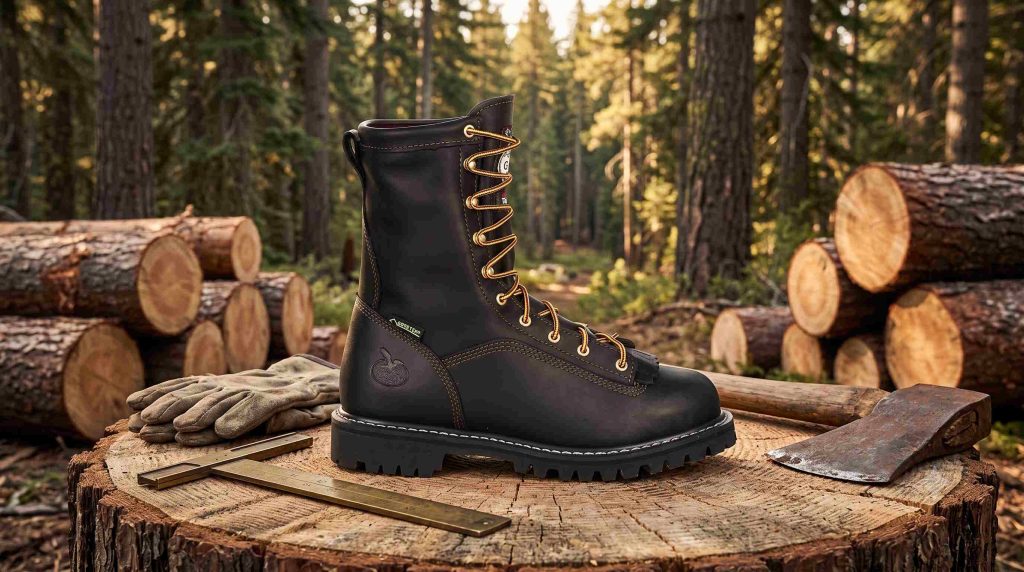
You’ve been through a pair of “waterproof” boots that turned into buckets by month three, and now you’re staring at the Georgia Low Heel Logger wondering if the GORE-TEX label is real this time or just marketing. Here’s the honest confusion this boot creates: it’s a budget-tier logger with a Vibram sole and a real GORE-TEX liner, imported (Dominican Republic), and owners are genuinely split — a large, loud majority who’d buy them again forever, and a smaller-but-repeating minority whose pairs came apart fast.
Is it worth it? For most trades in wet, cold, on-your-feet work, yes — it’s a comfortable, truly-waterproof boot that punches above its price, as long as you baby the laces and maintain the leather.
Everything below is a synthesis of real owner experience, not a spec sheet. If you want the wider category view first, the complete logger boots buying guide lays out how heel height, shank, and waterproofing trade off before you commit to any single pair.
How this review was built (so you can trust it)
- Roughly 115 owner reviews analyzed. I read a sample of about 115 distinct verified-purchase text reviews across the positive and critical filters. For context, the listing shows 773 global ratings — but I’m only counting the individual written reviews I actually read, not that total.
- Time window: late 2019 through mid-2026, weighted toward the most recent years. A few longtime owners compare these to pairs they bought a decade ago, and several note the boots are made in the Dominican Republic now — so if you’re chasing an older “made-somewhere-else” version, know that current production is what these reviews mostly reflect.
- Synthesis method. I tagged every review into buckets — comfort/fit, sizing, waterproofing, sole and construction durability, lace and eyelet hardware, weight, heat/cold performance, warranty/support — and then separated “use-and-fit-driven” complaints (wrong width, wrong climate, wore them past the return window) from “likely product failures” (sole delamination, heel separation, cracking soles).
- Important limitations. Reviews skew to extremes — thrilled or furious, rarely lukewarm. Wear intensity is wildly different (a dog-walker vs. a pipe-layer standing in sewer water put very different loads on the same boot). I prioritized patterns that recur across many owners over one-off lemons.
Quick Verdict (TL;DR)
Best for:
- Wet, cold, on-your-feet trades — concrete crews, arborists, heavy-equipment operators, well-drillers
- Buyers who want Vibram + GORE-TEX at a price well under Danner/White’s territory
- People who’ll actually re-oil and maintain the leather
Not for:
- Anyone who needs a certified safety toe on the job (this is a soft-toe boot in owner reports)
- Narrow feet expecting a locked-in fit without lacing tricks
- Buyers around constant sparks or extreme abuse who need a boot to survive years, not seasons
Standout win: Repeatedly called comfortable straight out of the box, with a short break-in — unusual for a beefy logger.
Watch-outs: The stock laces fray and the brass eyelets are small and can catch; a minority of pairs separate at the sole or heel, sometimes right after the return window closes.
Confidence Score: 🟢 8.5/10 (buyer-usefulness). This score reflects how confidently I can tell you who this boot fits — not a reliability statistic. The comfort and waterproofing signals are remarkably consistent across trades and years, which makes the “who it’s for” call easy. It’s docked from maxed-out because the durability signal is genuinely polarized: most owners get years, a real minority get months, and that split is the whole story.
What This Boot Is (and What It Isn’t)
In plain terms: it’s an 8-inch, low-heel logger built on a Goodyear-style welted construction with a Vibram lug outsole, a GORE-TEX waterproof liner, and — per owner reports — a soft toe, not a safety toe.
Three misconceptions worth clearing up:
- “It’s a Danner/White’s competitor.” No. Owners who love it are clear-eyed: it’s the closest feel to a Danner Rainforest at a fraction of the cost, but it’s a budget boot that everyone “thinks are Danners.” Priced and built like value gear, not heirloom gear.
- “Logger = high heel.” This is the low-heel version, and multiple owners specifically note the heel isn’t as tall as a Red Wing logger. That’s a feature if you walk a lot on flats and concrete, less ideal if you want an aggressive climbing heel.
- “GORE-TEX means maintenance-free.” The liner is real, but owners repeatedly warn that neglected, dried-out leather cracks and lets water in around the membrane. Waterproof isn’t the same as care-free.
Key Specs That Actually Matter
- GORE-TEX liner — the reason people buy these. Owners in mud, sewer water, snow removal, and forest wildfire lines report dry feet, which is the whole job for a waterproof boot.
- Vibram lug outsole — called out by name in owner feedback for traction and oil resistance on slick shop floors. Matters because a waterproof boot that slides on wet concrete is a liability, not a feature.
- Low-heel logger last — walks and stands better than a tall-heel logger for concrete and flat terrain, per owners doing 12–16 hour shifts.
- Lace hardware (brass eyelets + stock laces) — matters because it’s the #1 recurring complaint from happy owners. The eyelets are on the small side and the laces fray fast.
- Insulation — present but light. Several owners call it fine for roughly 30°F and up, and a couple wanted more warmth in the teens. If you understand why outsole and upper choices change on-the-job outcomes, the work boot anatomy and construction breakdown is a useful companion read.
No hard numbers on weight, temperature ratings, or lifespan here unless owners stated them — and where they did, you’ll see it below.
Sizing & Fit — What Owners Actually Report
Verdict: these run large and long for many owners. The single most repeated sizing note is that they feel long for the size — one owner said they felt like “clown shoes” and wished he’d gone down a half to a full size. Multiple others echo “go down a size.”
Width behavior is mixed and this is important: some owners find the standard width narrow (a few call the boot narrow outright and moved to other styles), while others who ordered the Wide felt it was “barely wide.” So the shape reads narrow-to-standard in the forefoot even when you size up in width. A couple of owners with flat or wide feet had to lace aggressively to stop side-to-side toe jamming.
Half-size guidance: if you’re between sizes, most owner experience points to sizing down a half. The exception is thick socks with insulation — a few said the snug-with-insulation fit worked fine with a thinner sock.
Who the fit suits: standard-to-slightly-wider feet who don’t mind a roomy toe box. Who it fights: narrow feet expecting lockdown, and anyone with mismatched left/right foot sizes — one detailed reviewer with a half-size difference between feet never got both boots comfortable. Before you gamble on a size, the work boot fit and sizing guide walks through the heel-slop and toe-room checks that prevent exactly these returns.
Feature-by-Feature Breakdown (Truth vs Marketing)
| Feature | What the Manufacturer Says | What It Actually Means (User Experience) | Compared to Competitors |
|---|---|---|---|
| GORE-TEX waterproofing | Keeps you dry, breathable | Genuinely holds in mud, snow, standing water — if you maintain the leather; neglect cracks the leather and water sneaks in | Owners rate the waterproofing near Danner-level, well above cheaper “water-resistant” boots |
| Vibram outsole | Rugged, oil- and slip-resistant | Confidence on oily shop concrete and wet surfaces is a repeated highlight | Traction on par with pricier boots; a real selling point at this tier |
| Comfort / break-in | Comfortable, supportive | Frequently comfortable out of the box with a short break-in — rare for a logger | Beats many stiff loggers that punish you for weeks |
| Lace hardware | Quality brass hardware | Eyelets are small and can catch; stock laces fray and need replacing within a season of hard use | A common weak point owners fix themselves; competitors with beefier hooks avoid this |
| Toe protection | (Owners describe soft toe) | No safety-toe protection reported — fine for many trades, disqualifying for others | Steel/composite-toe rivals win if your site requires a rated toe |
| Insulation | Warm | Adequate to roughly 30°F+; thin for deep cold per some owners | Dedicated winter boots insulate better; see below |
Real-World Owner Experience (Deep Pattern Analysis)
Pattern 1 — The comfort-out-of-the-box surprise (the thing owners obsess over)
In a nutshell: For a heavy logger, the recurring shock is how comfortable these are almost immediately. “Feels like a tennis shoe,” “broke in already after a day or two,” “most comfortable work boot I’ve ever owned” show up again and again.
Hidden strength: This is the re-buyer engine. Owners on 12–16 hour concrete shifts and multi-year rotations keep coming back specifically for the day-one comfort.
Hidden weakness: A minority experience the opposite — a genuinely painful, unwearable fit — and it correlates with foot shape (narrow feet, oddly-shaped forefeet) rather than a defect. One longtime Georgia owner found this specific style hurt where his older Georgias never did.
What to do about it: Trust the comfort signal, but treat fit as personal. Wear them indoors on carpet first, and if the forefoot pinches, that’s your body telling you the last doesn’t match your foot — return while you still can.
Pattern 2 — The lace-and-eyelet weak spot (what most reviews won’t tell you)
In a nutshell: This is the most consistent complaint from otherwise thrilled owners. The stock laces fray and break within a season of hard use, and the small brass eyelets can catch and, in a few reports, “sharpen themselves” and cut the laces over time.
Hidden strength: It’s a cheap, DIY-fixable flaw — owners routinely swap in leather or Kevlar laces and move on for years.
Hidden weakness: Until you fix it, you’re re-lacing mid-shift, which multiple owners called “infuriating.”
What to do about it: Budget for aftermarket leather or Kevlar laces from day one. Several long-term owners treat this as a standard first-week upgrade, not a defect.
Pattern 3 — The failure-timing split (real information gain)
In a nutshell: Here’s the pattern the star average hides. Owners overwhelmingly report years of service — three to five years is common, and a few claim 12–18 years of re-buying. But a distinct minority report failure in months: soles separating “in the middle,” backs of boots “came apart” at 7 months, soles cracking just days past the return window.
Hidden strength: When these last, they really last — 50-hour work weeks, concrete every day, and the toes wear out before the boot leaks.
Hidden weakness: The fast failures cluster suspiciously near the return window. One owner’s soles cracked six days past return; another “fell apart within months” and the return link led to a furniture store. That’s the ugly part.
What to do about it: Assume the first 30–60 days are a stress test, not a formality (see the Return-Window Reality Check below). If a sole or heel shows early separation, that predicts the rest — don’t wait it out.
Pattern 4 — The re-buyer paradox
In a nutshell: Even owners who gripe about laces or wish they were American-made overwhelmingly say “I’ll order none other” and “third pair, they work.” The complaints are real but rarely dealbreakers for people whose pair survived the first season.
What to do about it: Read the negative reviews for what failed and when. If it’s laces or fit, that’s manageable. If it’s sole separation in month two, that’s the lottery you’re accepting at this price.
Pattern 5 — The use-case threshold
In a nutshell: Filtering out wrong-use complaints reveals a clearer picture. These thrive in wet/cold, walking-and-standing, moderate-abuse work: concrete, arborist work, well-drilling, snow removal, dog-walking in all seasons. They struggle at the extremes — constant spark/heat exposure and buyers expecting a certified safety toe or a boot to survive years of the harshest fire-line abuse.
What to do about it: Match the boot to the job. One wildland-adjacent owner was blunt: they’re not $500 Whites for the inferno, but for tree work and general wet-weather labor they hold up great.
The Good, The Bad & The Ugly
The Good (comfort & performance)
- Comfortable out of the box with a short break-in — repeated across trades
- Waterproofing genuinely holds in mud, snow, and standing water
- Vibram traction inspires confidence on oily, wet concrete
- Strong value — repeatedly framed as “closest to a Danner for hundreds less”
The Bad (fixable annoyances)
- Stock laces fray and break; plan to replace them
- Small brass eyelets can catch and are a pain to lace fast
- Runs long/large for many; narrow-to-standard forefoot fights wide feet
- Light insulation — thin for deep cold
The Ugly (the real risk)
- A repeating minority of pairs separate at the sole or heel within months
- Some early failures land just past the return window
- Seller/return support was unresponsive for at least one owner, who got refunded by Amazon instead
Mini Toolkit: Decide + Fix (Fast)
Issue-Tag Box: #lace-fray · #small-eyelets · #sole-separation · #runs-long · #narrow-forefoot · #light-insulation
Fit Mini-Matrix
| Foot type | Verdict |
|---|---|
| Narrow | Fights you — expect heel slop; lace tight or look elsewhere |
| Standard | Best match; consider sizing down a half |
| Wide | Order Wide, but it runs barely-wide; fine for moderately wide feet |
Mini Decision Tree
- If you need a rated safety toe → skip; owners report soft toe.
- If you work wet/cold on concrete or terrain → strong buy.
- If you face constant sparks/extreme abuse → look at a heavier-duty boot.
- If your feet are narrow → size carefully and plan to lace-lock.
- If budget matters but you want Vibram + GORE-TEX → this is the sweet spot.
Troubleshooting Quickflow
- Boots arrive → wear indoors on carpet 1–2 hours.
- Forefoot pinches or heel slips → try a lace-lock/heel-lock; still bad → return now.
- Fit is good → stress-test laces and soak-test waterproofing before the window closes.
- Laces catch or fray → swap to leather/Kevlar laces.
- Leather looks dry after a few weeks → condition it to protect the waterproofing.
- Any early sole/heel separation → return immediately; it predicts the rest.
Mini Return-Window Reality Check
- Stress the laces: lace and unlace hard several times; if the eyelets catch or the laces fuzz immediately, note it now.
- Soak-test the waterproofing: get them genuinely wet and stand in a puddle; dry feet in, keep them; damp, return them.
- Flex the sole seam: bend the boot and inspect the outsole-to-upper bond for any early gap — this is the failure that strands owners past the window.
- Check the heel and back seam: press and flex where a couple of owners reported the back “coming apart.”
- Walk a full day indoors: the roomy, long fit only shows up over hours, not minutes.
- For how these return-window tests differ across the whole category, the logger boots buyer’s resource covers the full protocol.
Sizing & Insider Tips (Realistic)
- Order a half-size down if you’re between sizes — the long/large fit is the most repeated sizing note.
- Replace the stock laces early with leather or Kevlar; frayed laces are the top gripe from happy owners.
- Wide feet: order the Wide, but know it reads barely-wide, not roomy.
- Narrow feet: use a heel-lock lacing to kill slop before blaming the boot.
- Condition the leather every couple of months — dried-out, salt-crusted leather cracks and lets water past the GORE-TEX.
- Match socks to the season: thin socks if you find them snug with insulation; thicker winter socks below freezing, since insulation is light.
- Don’t expect a spark/heat boot — owners near constant heat saw shorter life.
- Watch the sole bond for the first 60 days and act on any early gap rather than hoping it settles.
- For deeper leather-care and crack-prevention steps beyond basic conditioning, or if a sole starts separating, consult a cobbler or qualified repair, and verify any slip- or hazard-related concern against your employer’s PPE assessment. The work boot problems and troubleshooting guide is a good next stop for early failure signs.
Owner Stories
The stories below are composite scenarios reflecting repeated patterns across owner feedback.
- The happy re-buyer (concrete crew): He’s on his third pair over five years, 50-hour weeks on concrete. The toes wear out before the boots ever leak. He swapped to leather laces after the first pair and never looked back.
- The wrong-job mismatch: A buyer expecting a boot to survive constant heat and the worst abuse finds them fine for tree work and wet weather but not the “inferno” boot he imagined — realistic once he right-sized his expectations to the price.
- The wrong-width returner: A narrow-footed owner who normally loves Georgia boots finds this last too roomy and the forefoot off, sends them back, and moves to a different style — a fit mismatch, not a defect.
SEE MORE OWNER FEEDBACK ON AMAZON
Who This Is For (and Who Should Skip It)
Buy it if…
- You work wet and cold — mud, snow, standing water, arborist or concrete work
- You want real Vibram + GORE-TEX without paying premium-brand prices
- You’ll maintain the leather and don’t mind swapping laces
- You have standard-to-moderately-wide feet
- You value day-one comfort over maximum ruggedness
Skip it if…
- Your site requires a certified safety toe
- You have narrow feet and hate lace-locking
- You face constant sparks or extreme abuse and need multi-year survival
- You want deep-winter insulation out of the box
- You can’t tolerate the minority risk of an early sole failure
If you’re comparing options, start here: Top Logger Boot Picks
Alternatives (Quick Comparisons)
- Need deep-winter warmth? These insulate lightly; a dedicated cold-weather boot serves teens-and-below better — the best winter work boots roundup is the right shortlist.
- On your feet all day and comfort is everything? If all-day cushioning outranks logger ruggedness for you, browse the most comfortable work boots.
- Want the lightest option? Loggers are beefy; if weight is your priority, the lightweight work boots guide compares nimbler builds.
- Need certified waterproofing across brands? Compare membranes and seams in the best waterproof work boots guide.
Deep-Dive FAQ
What should I test immediately after delivery?
Wear them indoors for a full evening and soak-test the waterproofing before the return window closes. The roomy, long fit and any early sole-bond gap only reveal themselves over hours — so stress the laces, flex the outsole seam, and check the heel before you commit.
What are the most common problems and fixes?
The two recurring issues are fraying stock laces and small brass eyelets that catch. Fix: swap in leather or Kevlar laces right away. The more serious, less common problem is sole or heel separation within months — for that, there’s no fix, only an immediate return.
Will these work with my foot type and my job?
They suit standard-to-moderately-wide feet in wet, cold, on-your-feet trades. They fight narrow feet and aren’t for jobs requiring a rated safety toe or constant heat/spark exposure. If your job needs a specific safety rating, confirm it against your site’s requirements. The work boots by job type guide helps map trade to boot.
How long do they really last?
For most owners, years — three to five is common, with some claiming far longer across repeat pairs. But a real minority see failure in months. The honest answer is that lifespan is polarized: maintain the leather and you’re likely in the multi-year camp, but the early-failure risk is genuine at this price.
Are they actually waterproof?
Yes, by strong owner consensus — the GORE-TEX holds in mud, snow, and standing water. The catch is maintenance: owners warn that neglected, cracked leather lets water in around the membrane, so conditioning isn’t optional.
Georgia Low Heel Logger vs. Danner — which should I buy?
If budget matters, the Georgia. Owners repeatedly frame it as the closest feel to a Danner Rainforest for a fraction of the cost — “everyone thinks they’re Danners.” Danner wins on longevity and refinement; the Georgia wins decisively on value. If you need heirloom durability and can pay for it, Danner; if you want 80% of the experience at a budget price, this is the pick.
Do they run true to size?
No — they run long and large for many owners, so most guidance points to sizing down a half. Width reads narrow-to-standard in the forefoot even in the Wide, so factor that in.
Final Verdict
The Georgia Low Heel Logger GORE-TEX is a genuine value standout for one specific buyer: the tradesperson working wet and cold, on their feet all day, who wants Vibram traction and real waterproofing without paying premium-brand money — and who’s willing to swap the laces and keep the leather conditioned. For that person, the day-one comfort and dry feet are exactly what the owner feedback promises, pair after pair.
It’s not for everyone. If you need a certified safety toe, deep-winter warmth, or a boot guaranteed to survive years of the harshest abuse, look elsewhere — and go in knowing a minority of pairs fail early, sometimes just past the return window. Stress-test yours hard in the first 60 days and you’ll know quickly which camp you’re in.