


Last updated: June 2026
What changed in this update:
- Re-checked the “comfort vs. durability” split against both happy long-haul owners and early-failure complaints — the gap is wider and more predictable than a star average suggests.
- Re-verified exactly when and where these boots fail (toe-cap stitching and sole, clustered around the 2–6 month mark) versus where they hold up for years.
- Cross-checked the “metal-detector-safe” claim and the warranty/return friction owners keep running into.
Affiliate disclosure: SturdyBoot is reader-supported. If you buy through links on this page, we may earn a small Amazon commission at no extra cost to you. It never changes our verdict — the patterns below come straight from owner feedback.
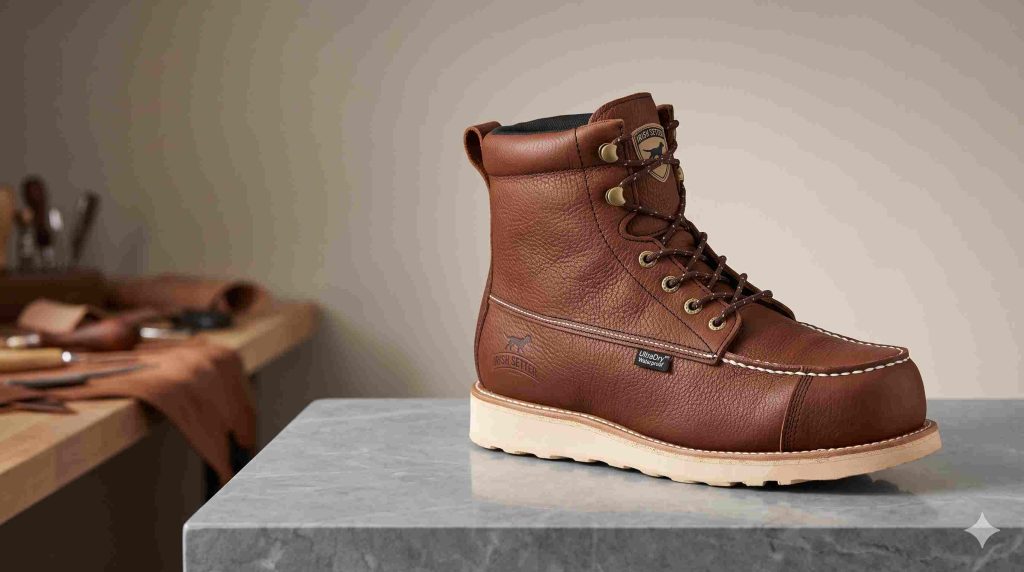
I went deep into real owner feedback on the Irish Setter Wingshooter ST because almost no other boot creates this much whiplash. One tradesperson calls it the most comfortable boot they’ve ever laced up; the next says the toe blew out in two months. Both are telling the truth — and that contradiction is the whole story.
Is it worth it? Yes — if you treat it as a comfort-first boot you’ll replace yearly, not a buy-it-for-life tank. Wrong job, wrong expectation, and it disappoints fast.
This review is a synthesis of real-world owner experience, not a spec sheet. I tagged the feedback by theme, separated wrong-use complaints from genuine product failures, and built the verdict around the patterns that repeat — because on this boot, the pattern is more honest than any single review. For the bigger picture on what to look for in this category, our waterproof work boot buying guide breaks down membranes, soles, and toe types feature by feature.
How this review was built (so you can trust it)
I analyzed a sample of roughly 190 verified-purchase text reviews pulled across the boot’s full rating spread — not the listing’s total rating count, just the individual written reviews I actually read. For context, the listing itself sits around a 4.5-star average across several thousand ratings, but I’m only claiming the written ones I went through line by line.
Time window: The feedback I read spans roughly late 2022 through mid-2026, which matters here. Longtime Irish Setter fans repeatedly compare current pairs to older ones they owned for years, and several explicitly say current production (now made in Vietnam) doesn’t last like the boots they remember. So some of the harshest reviews are partly a “this isn’t the boot it used to be” reaction.
Method, in plain English: I sorted feedback into buckets — comfort/fit, sizing, waterproofing, sole and toe-cap durability, lace hardware, weight, heat/warmth, and warranty/support — then separated use- and fit-driven issues (wrong width, wrong climate, brutal concrete-and-kneeling jobs) from likely product/design issues (toe stitching letting go, soles peeling, eyelets popping). Filtering the wrong-use complaints out changes the picture: the durability problem is real, but it clusters around specific trades and specific failure points rather than hitting everyone equally.
Important limitations:
- Written reviews skew toward extremes — thrilled re-buyers and furious early-failures are both over-represented versus the quiet middle.
- Wear intensity varies wildly: a 14k-step-a-day concrete electrician and an office-plus-occasional-field user are not testing the same boot.
- I weighted recurring patterns over one-off lemons, factory-seconds complaints, and shipping gripes.
For help matching any boot to your trade and foot, our work boots by job type guide is a good companion to the analysis below.
Quick Verdict (TL;DR)
Best for:
- Anyone who prioritizes out-of-the-box comfort over everything else
- Wide and extra-wide feet that fight most work boots
- Jobs that need a non-metallic, metal-detector-safe safety toe
Not for:
- Hard-on-boots trades on concrete (electricians kneeling/climbing, ironworkers, asphalt/paving)
- Buyers who expect a $200+ boot to last 1–2 years of daily abuse
- Anyone who needs reliable warranty backing after heavy work use
Standout win: Near-zero break-in. Owner after owner describes day-one, “walking-on-clouds” comfort — genuinely rare in a safety-toe boot.
Watch-outs: Toe-cap stitching and soles are the weak link; many owners get 6–8 months of hard use, not years. Laces are widely called the first thing to fail.
Confidence Score: 🟢 8/10 This scores how confidently I can tell you who this boot fits — not a reliability percentage. It’s high because the owner signal is unusually consistent in both directions: comfort is near-universally praised, and the durability ceiling is just as consistently reported. The polarization is the clarity. I held it at 8 (not higher) because outcomes swing hard on trade and wear intensity, so your mileage genuinely depends on your job.
👉 CHECK TODAY’S PRICE ON AMAZON
What This Boot Is (and What It Isn’t)
The Wingshooter ST is a 6-inch (some sizing runs taller-feeling), waterproof leather work boot with a non-metallic composite safety toe and a soft, cushioned wedge-style sole built around a roomy, moc-toe-influenced last. In plain terms: it’s a comfort-forward safety boot, not a rugged-terrain tank.
A few misconceptions worth clearing up:
- “It’s a buy-it-for-life Red Wing-tier boot.” It’s made by the same parent company, but owners consistently treat it as a mid-grade, comfort-first boot — several long-haul fans flatly say it doesn’t last like older pairs.
- “Steel toe.” It’s a non-metallic safety toe, which is exactly why metal-detector-sensitive workplaces like it. (One owner notes other models in the line still have steel shanks — the ST is the metal-free one.)
- “Waterproof forever.” It’s waterproof when new; like any leather boot, that protection degrades, and a meaningful minority report leaks far sooner than expected.
Key Specs That Actually Matter
- Non-metallic composite safety toe — light, no cold-transfer, metal-detector friendly. Owners repeatedly say it protects without the bulk of steel. Its weak spot is the stitching around it, not the cap.
- Waterproof leather construction — keeps feet dry when new; ages faster on people who soak them daily without re-treating.
- Soft cushioned wedge sole — the comfort engine of this boot, and also the part that wears down fastest on abrasive surfaces.
- Roomy toe box / generous last — a blessing for wide feet, a liability for narrow ones (heel slop, toe-box stretch).
- Lace hardware (quick eyelets/hooks) — a recurring failure point; budget for replacement laces early.
I’m deliberately not quoting weights or lifespans as hard numbers — owner estimates vary too much to state as fact. For how toe ratings and standards actually work, the ASTM F2413-24 explainer covers what a safety toe is certified to do, and you can read the underlying ASTM F2413 foot-protection standard directly.
Sizing & Fit — What Owners Actually Report
The short version: these run roomy and slightly large, with a generous toe box — great for wide feet, tricky for narrow ones.
- Length/volume: Several owners say they run large or “feel taller/longer” than expected. A couple of size-13 buyers measured them noticeably longer than other brands. One returned them for feeling like clown-length.
- Width: This is where the Wingshooter ST shines. Wide and 4E owners who can’t find boots elsewhere repeatedly call the fit perfect. Narrow-footed owners are the opposite — heel slop, sloppy lockdown, and a toe box that “stretches out” over months until they can’t lace it tight.
- Half-size guidance: Most who order their normal size are fine, but narrow feet and low insteps should size carefully or expect to address volume with insoles/lacing.
If you’re between widths or fighting heel slop, our work boot fit & sizing guide walks through lock-lacing and volume fixes that head off the exact complaints narrow owners report here.
Feature-by-Feature Breakdown (Truth vs. Marketing)
| Feature | What the Manufacturer Says | What It Actually Means (User Experience) | Compared to Competitors |
|---|---|---|---|
| Comfort / break-in | Comfortable, supportive | Genuinely day-one comfortable; “memory foam slipper” comparisons are common | Beats Thorogood and Red Wing on out-of-box comfort, per repeat switchers |
| Safety toe | Non-metallic protection | Light, metal-detector safe, protects on impacts; stitching around it fails early | Lighter than steel-toe loggers; less durable at the seam than premium rivals |
| Waterproofing | Waterproof | Solid when new; a vocal minority leak within 2–3 months | Mid-pack — not as bulletproof as the price implies |
| Sole | Durable wedge outsole | Comfortable but wears fast on concrete/asphalt; some report peeling/separation | Soft compound trades longevity for comfort vs. firmer rivals |
| Lace hardware | — | Frequent early failure; laces and eyelets are the first to go | A common, almost universal gripe |
| Width options | True work-boot fit | Excellent for wide/4E; loose for narrow | Among the better wide options in the category |
Real-World Owner Experience (Deep Pattern Analysis)
1. The Comfort-vs-Durability Paradox (this boot’s defining trait)
In a nutshell: Almost everyone agrees it’s spectacularly comfortable; a large share also agree it doesn’t last. The same review often praises and condemns it in the same paragraph.
Hidden strength: Zero break-in is real and rare. Electricians, plumbers, millwrights, and warehouse crews describe 12-hour shifts without the foot and back fatigue other boots cause.
Hidden weakness: That softness is the durability problem. The plush sole and supple leather that make day one great are the same parts that wear down by month six.
What to do about it: Buy it as a comfort tool with a known replacement cycle, not as a long-term investment. If you’re cross-shopping on lifespan, our most comfortable work boots roundup shows which rivals get closer to “comfortable and long-lasting.”
2. Failure Timing — what most reviews won’t tell you
In a nutshell: The failures cluster in a predictable window. A noticeable share of unhappy owners report trouble in the first 2–6 months — frequently after the typical return window has closed but before the boot has earned its price.
Hidden strength: Because the pattern is so consistent, you can stress-test for it early (see the return-window check below) instead of being surprised at month four.
Hidden weakness: Several owners describe being stuck — failure lands just past return eligibility, and warranty support for work-used boots is reportedly hard to get.
What to do about it: Treat the first 30 days as an active test, not a grace period. Push the boot hard early so any defect shows while you can still return it.
3. Failure Sequence — the toe predicts the rest
In a nutshell: There’s an order to how these die. The toe-cap stitching separating or splitting is usually the first symptom, often followed by the sole wearing/peeling and laces fraying.
Hidden strength: Knowing the sequence means the toe is your early-warning system — watch that seam and you’ll see decline coming.
Hidden weakness: Once the toe stitching opens and exposes the cap, water intrusion and faster breakdown tend to follow.
What to do about it: Multiple owners proactively coat the toe (toe-saver/”Tuff Toe”-type products) before heavy use. For anything beyond basic care — restitching, resoling — consult a cobbler or qualified repair, and verify any modification against your employer’s PPE hazard assessment.
4. The Repeat-Defect Pattern
In a nutshell: This isn’t always bad luck. Owners on their 2nd, 3rd, and 4th pairs report the same failure at the same spot — toe stitching and soles — which points to a consistency issue, not a one-off lemon.
Hidden strength: It also means the good traits repeat: re-buyers know exactly what they’re getting.
Hidden weakness: A replacement pair won’t necessarily fix the durability ceiling — it tends to follow the same arc.
What to do about it: If your first pair failed at the toe, a second pair likely will too unless your wear conditions change. Factor that into the re-buy decision.
5. The Re-Buyer Paradox
In a nutshell: Here’s the strangest signal — many owners who complain still buy them again. People who openly say “these only last 6 months” and “I’m spending $400 a year” keep coming back.
What it reveals: The comfort is good enough that a chunk of the workforce treats short lifespan as a cost of doing business. That’s the real-world verdict: not “great boot,” not “garbage,” but “comfortable enough to keep paying for.”
What to do about it: Decide which camp you’re in before buying. If comfort is worth an annual replacement to you, you’ll likely be a repeat customer too. If you want longevity, that paradox is your warning.
6. The Use-Case Threshold
In a nutshell: There’s a clear line between happy and unhappy owners, and it’s mostly about surface and motion. Landscapers, lighter-duty plumbers, drivers, warehouse, and everyday/hunting users skew happy and report multi-year wear. Electricians and AV techs constantly kneeling on concrete, ironworkers, and asphalt/paving crews skew toward fast failure.
What to do about it: Match honestly. If your day is concrete + kneeling + climbing, this is the wrong tool. If it’s varied terrain or moderate wear, it can genuinely last years.
The Good, The Bad & The Ugly
The Good (comfort & fit):
- Best-in-class out-of-box comfort, near-zero break-in
- Excellent wide/4E availability and roomy toe box
- Light, metal-detector-safe non-metallic toe
- Warm in winter without being brutal in milder weather
The Bad (durability & hardware):
- Soft soles wear and peel faster than the price suggests
- Laces and lace hardware fail early — almost universally noted
- Waterproofing fails sooner than expected for a vocal minority
The Ugly (toe failure & support):
- Toe-cap stitching separating in months is the signature complaint
- Warranty/return support for work-used pairs is reportedly difficult
- A handful of owners report factory-seconds/used-condition arrivals
Mini Toolkit: Decide + Fix (Fast)
Issue-Tag Box: #toe-stitching-split · #sole-wears-fast · #lace-hardware-fail · #seam-leak · #heel-slop-narrow · #toe-box-stretch
Fit Mini-Matrix:
| Foot type | Verdict |
|---|---|
| Wide / 4E | Best-case fit — buy with confidence |
| Standard | Generally fine; order true to size |
| Narrow / low instep | Risky — expect heel slop; lock-lace or size carefully |
Mini Decision Tree:
- If you kneel/climb on concrete all day → skip it, durability won’t keep up.
- If you have wide feet and want instant comfort → strong buy.
- If you need a metal-detector-safe toe → it’s a top pick.
- If you want 1–2 years from one pair → look harder at alternatives.
- If you’ll happily replace yearly for comfort → buy it.
Troubleshooting Quickflow (max 6 steps):
- Toe seam looks loose? → Stop the spread early; coat with a toe-protectant.
- Heel slipping? → Re-lace with a heel-lock before blaming the size.
- Insole feels thin/dead? → Swap in a supportive aftermarket insole.
- Laces fraying? → Replace proactively (keep a spare set).
- Leaking? → Re-treat leather; if it leaks within return window, return it.
- Toe cap exposed or sole separating? → Consult a cobbler or verify against your employer’s PPE assessment before continuing to wear.
Mini Return-Window Reality Check
Because the most common failures land just past typical returns, treat the first 30 days as a stress test:
- Hammer the toe early: kneel, scuff, and work the toe area hard — toe stitching is the #1 failure, so force it to show now.
- Soak-test the waterproofing: walk through wet grass or a shallow puddle within the window; a fast leak is a return, not a maintenance issue.
- Stress the lace hardware: cinch hard daily and inspect eyelets/hooks for early give.
- Flex the sole seam: bend the boot and check the outsole-to-upper bond for any peeling.
- Inspect on arrival: check for factory-seconds signs (mismatched soles, rough seams, used condition) and return immediately if present.
For deciding whether this category even fits your hazards before you commit, the waterproof work boot buying guide is the place to start.
Sizing & Setup Tips (Realistic)
- Narrow feet: lock-lace the top eyelets to kill the heel slop owners report, rather than sizing down into a cramped toe box.
- Order true to size in standard width; only adjust if you know you run between sizes — they trend roomy, not small.
- Plan an insole swap: several owners call the stock insole thin and replace it for all-day concrete comfort.
- Coat the toe before heavy use: preempt the signature toe-stitching failure with a toe-protectant if you kneel or crawl.
- Keep spare laces on hand from day one — owners treat early lace failure as a near-certainty.
- Re-treat the leather monthly if you work wet daily; waterproofing is not permanent on any leather boot.
- Don’t over-soak them needlessly — wet/dry/wet cycling accelerates leather breakdown here.
- Watch the toe seam as your early-warning gauge — it tells you when decline is starting.
- For anything past basic care (resoling, restitching, hardware replacement), consult a cobbler or qualified repair, and verify against your employer’s PPE hazard assessment — don’t field-fix a safety toe.
See It in Action: Visual Reality Check
Specs and star averages only get you so far; seeing the boot move on a real foot tells you more. Use the walkthrough to pressure-test the exact things owners flag.

What to look for in this video (based on owner patterns):
- Toe-stitching / sole-bond check — watch the seam where the toe leather meets the cap, and the outsole-to-upper line; that’s where failures start.
- Lace-hook check — are the hooks and eyelets beefy or flimsy? Owners say these go first.
- Toe-box room — note how much space sits around the forefoot; great for wide feet, loose for narrow.
- Weight cue — gauge how substantial the toe looks; a few owners call them slightly heavy.
- Upper material — spot the leather thickness that drives both the warmth and the “runs hot in summer” comments.
Keep in mind this shows a fresh pair at its best — it won’t show the toe-stitching separation some owners hit a few months in.
Owner Stories
The stories below are composite scenarios reflecting repeated patterns across owner feedback.
- The happy wide-foot re-buyer: A 4E warehouse worker who never finds boots wide enough finally does. Day-one comfort, holds up well through months of hard use, and they’re already planning the next pair. For them, this boot is a clear win.
- The wrong-job mismatch: An electrician on concrete, constantly kneeling and climbing, loves the comfort but watches the toe blow out before six months — on the third pair in a row. Comfort keeps pulling them back; durability keeps letting them down.
- The narrow-foot returner: A standard-to-narrow foot orders true to size, gets heel slop and a toe box that won’t lock down, and sends them back — through no fault of the build, just a fit mismatch with a roomy last.
👉 SEE MORE OWNER FEEDBACK ON AMAZON
Who This Is For (and Who Should Skip It)
Buy it if…
- You have wide or extra-wide feet and struggle to find a comfortable safety boot
- Out-of-box comfort matters more to you than maximum lifespan
- You need a non-metallic, metal-detector-safe toe
- Your work is varied-terrain or moderate-duty (landscaping, driving, warehouse, lighter trades)
- You’re fine replacing boots yearly for the comfort payoff
Skip it if…
- You’re hard on boots on concrete/asphalt with constant kneeling or climbing
- You expect 1–2 years of daily abuse from a $200+ boot
- You have narrow feet or a low instep and hate heel slop
- You need dependable warranty backing after heavy work use
- You want a buy-it-for-life welted tank
👉 CHECK TODAY’S PRICE ON AMAZON
If you’re comparing options, start here: Top Waterproof Work Boot Picks.
Alternatives (Quick Comparisons)
- If you need more durability for concrete/heavy trades: look at firmer-soled, longer-wearing options in our best work boots list — you’ll trade some day-one plushness for lifespan.
- If lightweight all-day comfort is the priority (and you can accept the durability tradeoff): the most comfortable work boots guide includes close cousins to the Wingshooter feel.
- If you want maximum waterproof reliability: cross-shop the best waterproof work boots roundup, where waterproofing consistency is the ranking factor.
- If you specifically want a lighter boot: our best lightweight work boots picks weigh comfort against protection.
Deep-Dive FAQ
Is the Irish Setter Wingshooter ST worth it?
Yes, if you value comfort over longevity and have wide feet — it’s one of the most comfortable safety boots owners have worn. No, if you’re hard on boots on concrete and expect years of service; many get 6–8 months of heavy use.
What should I test immediately after delivery?
Stress the toe stitching, soak-test the waterproofing, cinch the laces hard, and flex the sole seam — all within your return window. The signature failures (toe seam, leaks, sole) often appear just after returns close, so force them to show early. Also inspect for factory-seconds signs on arrival.
What are the most common problems and fixes?
Toe-cap stitching separating, soles wearing/peeling, and laces failing fast are the top three. Fixes owners use: coat the toe with a protectant before heavy use, swap the thin stock insole, keep spare laces, and re-treat the leather monthly. For toe-cap or sole repairs, see a cobbler and check your employer’s PPE rules first.
Will these work with my foot type and my job?
Wide and 4E feet do best; narrow feet and low insteps get heel slop and toe-box stretch. Job-wise, they suit varied-terrain and moderate-duty work; they struggle with constant concrete kneeling/climbing and asphalt work. Match your surface and motion, not just your trade name.
How long do they really last?
It splits sharply. Many heavy-use owners report 6–8 months before the toe or sole gives out; lighter-duty and varied-terrain owners report multiple years, some past two. The deciding factor is wear conditions, not luck — pick your camp before buying.
Are they actually waterproof?
When new, mostly yes — most owners stay dry in rain and wet conditions. But a vocal minority report leaks within 2–3 months, often after the toe stitching opens up, and the leather’s water resistance fades over time without re-treatment.
Wingshooter ST vs. Red Wing/Thorogood — which should I pick?
Pick the Wingshooter ST if out-of-box comfort and a roomy wide fit are your top priorities; repeat switchers say it’s more comfortable day one than both rivals and often cheaper. Pick a higher-tier Red Wing or Thorogood if you want longer service life and better post-purchase support — several owners who left those brands for comfort admit they came back for durability.
Final Verdict
The Irish Setter Wingshooter ST is the rare boot whose biggest strength and biggest weakness are the same thing: softness. It’s a comfort-first, wide-friendly, metal-detector-safe safety boot that feels broken in on day one — and for landscapers, drivers, warehouse crews, and lighter trades, that comfort plus solid wear can make it a multi-year favorite. But for hard-on-concrete electricians, ironworkers, and asphalt crews, the toe stitching and soft sole will likely tap out in months, just past the return window.
If you’re a wide-footed worker who prizes comfort and accepts an annual replacement cycle, this is an easy recommendation. If you need a buy-it-for-life tank with airtight warranty backing, look elsewhere. Know which buyer you are, and the Wingshooter ST stops being confusing.