


Last updated: June 2026
- Re-checked the sole-separation complaint against the happy-owner pile and confirmed the split runs straight through the middle: the people who call these the most comfortable boot they’ve ever worn are frequently the same ones losing the outsole inside a year.
- Re-verified where the waterproofing actually fails — early leaks cluster at the tongue and the sole-to-upper seam, not through the leather face.
- Cross-checked the lace-hook/eyelet failure across model years and sizes; it remains one of the most repeated single points of failure, and it shows up on replacement pairs too.
Affiliate disclosure: SturdyBoot is reader-supported. If you buy through links on this page, we may earn a small commission at no extra cost to you. We only recommend gear we’d lace up on a jobsite ourselves.
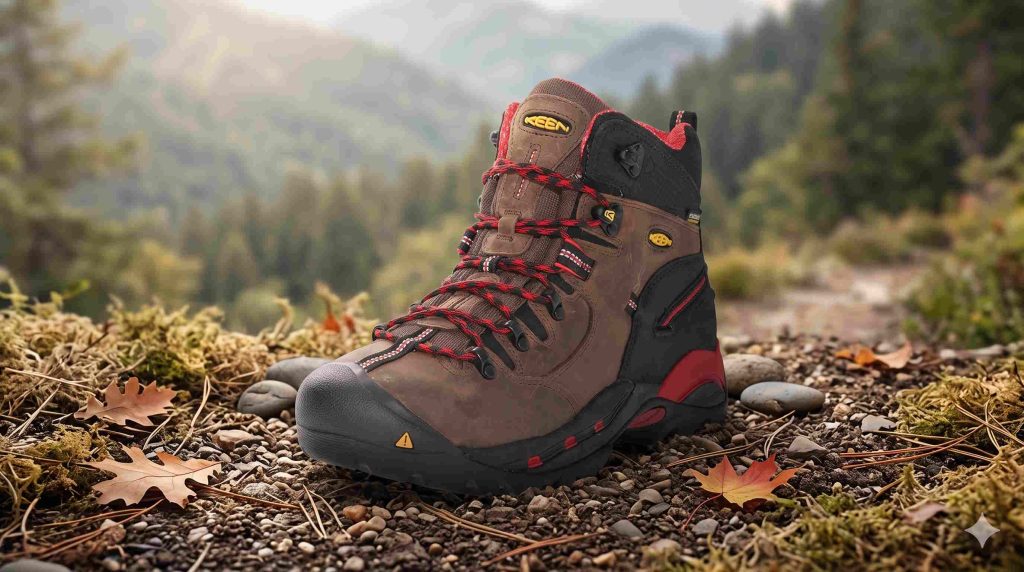
There’s a specific kind of heartbreak this boot causes: you finally find a steel toe that feels like a hiking boot, you stop dreading your shift, and then eight months in the sole peels off mid-job. That contradiction is the whole story of the KEEN Pittsburgh, and it’s exactly why buyers keep circling back confused — the comfort is genuinely elite, but the durability reputation is all over the place.
Quick answer — is it worth it? Yes, if you prize day-one comfort and real waterproofing over multi-year lifespan, and you treat these as a roughly-once-a-year boot rather than a buy-it-for-life one.
I went deep into real owner feedback for this one to separate what’s a true design flaw from what’s a fit or wrong-job mismatch. If you’re still working out which features actually matter for your conditions before you commit, the waterproof work boot buyer’s framework lays out how to weigh comfort against lifespan the way this boot forces you to.
How this review was built (so you can trust it)
I analyzed a large body of verified-purchase owner reviews of the Pittsburgh 6″ — a rating base that’s strong-majority-positive with a vocal critical minority — weighted toward U.S. buyers from late 2021 through mid-2026, so this reflects current production rather than the older “made in USA” pairs longtime fans get nostalgic about.
My method, in plain English: I tagged every review into buckets — comfort/fit, sizing, waterproofing, sole/construction durability, lace hardware, weight, heat/cold performance, and warranty/support — then separated use-and-fit-driven issues (wrong job, wrong width, spark exposure) from likely product/design issues (sole delamination, eyelet failure). When the same failure recurs across different sizes, colors, and years, I treated it as a real pattern instead of a one-off lemon.
Important limitations:
- Reviews skew to extremes — thrilled buyers and furious ones write far more than the satisfied middle.
- “Daily wear” means wildly different things — a welder, an arborist, and a desk-plus-walking tech log very different mileage.
- I prioritized recurring patterns over dramatic one-star stories, but I can’t independently verify any single claim.
Quick Verdict (TL;DR)
Best for:
- Workers who put day-one comfort and zero break-in above maximum lifespan
- Wide-footed guys who can’t get a comfortable steel toe anywhere else
- Wet (not spark-heavy) environments where real waterproofing matters
Not for:
- Welders, foundry, and hot-shop workers — the fabric panels and heat are a recurring dealbreaker
- Buyers expecting 2–5 years out of a single premium-priced pair
- Narrow or skinny feet that swim in the roomy toe box and heel pocket
Standout win: Possibly the most comfortable steel toe on the market straight out of the box — owner after owner describes “tennis shoe” or “hiking boot” feel with no break-in.
Watch-outs: Sole separation and snapped lace hooks are the two failures that surface over and over, often inside a year.
Confidence Score: 🟡 7/10 — This is a buyer-usefulness score, not a reliability stat. It measures how confidently I can tell you who this boot fits based on consistent owner patterns. It’s high because the comfort and waterproofing signals are remarkably consistent; it’s held back because durability outcomes are genuinely polarized and partly luck-of-the-pair.
What This Boot Is (and What It Isn’t)
The Pittsburgh 6″ is a leather, waterproof, steel-toe work boot built on a hiking-boot-style last — meaning a roomy toe box, genuine ankle support, and a cushioned, athletic ride instead of the stiff plank feel of traditional work boots. That hiking-boot DNA is the entire reason people love it.
What it isn’t:
- It isn’t a buy-it-for-life boot. Owners who expect five years (and remember when they got them) are consistently the most disappointed. Treat it as a comfort-first consumable.
- It isn’t a hot-work boot. The upper has fabric/mesh sections that don’t survive sparks or radiant heat, and the boot runs warm.
- It isn’t a narrow-foot boot. The “wide” runs genuinely wide, and even standard width has a generous toe box and heel pocket.
As a steel toe, it’s a safety boot first. To understand what the certification on the tongue actually guarantees, OSHA’s foot protection standard, 29 CFR 1910.136, requires employers to provide footwear meeting recognized consensus standards, and the benchmark it points to is ASTM F2413 — the spec defining impact (I/75) and compression (C/75) toe-cap performance. Our plain-English breakdown of ASTM F2413-24 decodes exactly what each letter on the label means.
Key Specs That Actually Matter
- Steel toe (not composite): One detail-oriented owner notes the steel cap “stays cooler in heat” than aluminum/composite caps — a small but real summer comfort point. The trade-off is weight.
- Waterproof leather + membrane: When intact, it genuinely works (dry feet standing in wet grass). When it fails, it fails at the tongue and sole seam, not the leather face.
- Hiking-style last and ankle support: The single most-praised structural feature. Multiple plantar-fasciitis sufferers specifically credit the support and footbed.
- Aggressive lug outsole: Strong wet-ground and uneven-terrain traction — though a few cold-climate owners report the compound stiffening and getting slick on ice.
- Lace-hook hardware up top: The spec to scrutinize. The metal hooks/eyelets are the single most frequently reported mechanical failure point.
No exact weight is consistently cited, but the recurring owner verdict is clear: these are heavy, and the weight is toe-forward. If you walk high mileage per shift, factor that in.
Sizing & Fit — What Owners Actually Report
Bottom line: most owners find the Pittsburgh true-to-size on length, but the fit runs roomy in volume — generous toe box and a deep heel pocket. That’s a gift for wide and large feet and a liability for narrow ones.
- Wide/large feet: This is the boot’s sweet spot. Big-footed owners (up to size 15 wide) repeatedly thank KEEN for “covering us big-foot types” and call the toe box unbeatable.
- Standard feet: Generally fine, but size carefully — several owners note the roomy forefoot and recommend lacing down.
- Narrow/skinny feet: Risky. Owners with skinny feet report the heel “swimming” in the pocket, rubbing up and down each step, and the toe box feeling too wide. A recurring complaint is a fabric “lump” felt on top of the toe box on some pairs.
If your foot shape is the variable you’re least sure about, the work boot fit & sizing guide walks through measuring width and volume before you order.
Feature-by-Feature Breakdown (Truth vs Marketing)
| Feature | What KEEN Positions | What It Actually Means (Owner Experience) | Compared to Competitors |
|---|---|---|---|
| Out-of-box comfort | “No break-in” | Overwhelmingly confirmed — the boot’s strongest, most consistent signal | Owners who switched say it beats Red Wing and Timberland Pro on day-one comfort |
| Waterproofing | “Waterproof” | True for many, but early leaks at tongue/seam are a recurring minority complaint | More hit-or-miss than premium dedicated-waterproof rivals |
| Durability | “Built tough” | Polarized — comfort lovers frequently lose the boot to sole separation in 6–12 months | Owners say cheaper Wolverines or even Walmart pairs sometimes outlast it per dollar |
| Toe-box room | “Roomy fit” | Great for wide feet, a liability for narrow feet (heel slop, toe-box “lump”) | The widest comfortable steel toe many big/wide-footed owners can find |
| Heat handling | (implied all-purpose) | Poor in hot/spark work — fabric panels burn, boot runs warm | Clearly outclassed by dedicated welding/foundry boots |
Real-World Owner Experience (Deep Pattern Analysis)
Pattern 1: The comfort is real — and so is the sole separation (the core paradox)
In a nutshell: This is the Pittsburgh story. The same boot earns “most comfortable I’ve ever worn” and “the sole fell off in seven months” — frequently from the same person, who then buys another pair anyway.
Hidden strength: The comfort loyalty is so strong that many owners knowingly re-buy a boot they expect to fail. That tells you the day-to-day experience is exceptional.
Hidden weakness: The dominant failure mode is the outsole/midsole delaminating from the upper, often well before the leather shows real wear. The top half still looks new when the bottom quits.
What to do about it: Buy these expecting a roughly annual replacement cycle, and inspect the sole-to-upper bond monthly. At the first sign of separation, a flexible shoe-repair adhesive can buy you weeks — several owners report DIY-gluing to limp a pair to payday. For anything beyond a basic glue touch-up, consult a cobbler rather than improvising.
Pattern 2: The lace-hook failure most reviews underplay (what most reviews won’t tell you)
In a nutshell: Here’s what most reviews won’t tell you — the most preventable-looking failure isn’t the sole, it’s the upper metal lace hook/eyelet snapping or pulling out of the leather, sometimes within weeks. And critically, it recurs on replacement pairs at the same spot, which points to design rather than a bad batch.
Hidden strength: When the hardware holds, the lacing system fits a wide range of foot shapes well.
Hidden weakness: This is often the failure that ends the boot’s usable life before anything else wears — and several owners note it happens just after the return window closes.
What to do about it: Stress-test every hook hard in the first 30 days, while you can still return it. If a hook ever pops the leather, a cobbler can usually swap in a replacement speed-hook for a few dollars — far cheaper than scrapping an otherwise-fine boot.
Pattern 3: Waterproofing fails at the seams, not the leather (the failure sequence)
In a nutshell: “Not waterproof” reviews are real but specific — the wet-out usually starts where the tread/sole separates from the upper or at the tongue, letting water in through a gap rather than soaking through the leather.
Hidden strength: Intact pairs deliver genuinely dry feet in wet grass and rain without aftercare treatment, which owners consistently rate above rivals.
Hidden weakness: Because leaks track with sole separation, a sudden leak is often the first symptom of the durability problem in Pattern 1 — not an isolated waterproofing miss.
What to do about it: Treat a sudden leak as an early-warning light, not just a sealing failure — check the sole bond immediately. For wet-trade workers weighing alternatives, our best waterproof work boots roundup ranks options that hold the seal longer.
Pattern 4: Wrong-job mismatches inflate the bad reviews (the use-case threshold)
In a nutshell: A big chunk of one-star reviews aren’t durability complaints at all — they’re the wrong boot for the job. Welders and hot-shop workers burn through the fabric panels in months; narrow-footed buyers get heel slop and blisters; one safety coordinator slipped on ice when the sole stiffened in the cold.
Hidden strength: Filter these out and the boot’s “real” failure rate looks meaningfully better than the overall review sentiment suggests.
Hidden weakness: KEEN’s “waterproof steel toe” framing doesn’t warn hot-work or skinny-footed buyers off, so the listing collects mismatched-use anger that drags the rating.
What to do about it: If you weld or work near sparks, skip these — look at a full-leather hot-work boot instead. Not sure which boot matches your trade? The work boots by job type guide pairs trades to the right construction. And for icy walkways, footwear alone isn’t the fix — that’s a job for your employer’s hazard assessment, not just tread.
The Good, The Bad & The Ugly
The Good (comfort & fit)
- Best-in-class out-of-box comfort; essentially no break-in
- Excellent ankle support and footbed — repeatedly praised by plantar-fasciitis sufferers
- Genuinely wide “wide” option — a lifeline for big/wide feet
- Strong traction and real waterproofing when the construction holds
The Bad (durability & weight)
- Sole/midsole separation is the dominant long-term failure
- Heavy and toe-forward — a fatigue factor on high-mileage shifts
- Runs warm; poor for hot environments
The Ugly (hardware & support)
- Lace hooks/eyelets snapping is a chronic, repeat-on-replacement defect
- Multiple owners report frustrating warranty and restocking-fee experiences
- Failures tend to be sudden — “fine one day, flip-flops the next”
Mini Toolkit: Decide + Fix (Fast)
Issue-Tag Box
#sole-separation— most common lifespan-ender#lace-hook-snap— most common hardware failure#seam-leak— waterproofing fails at gaps, not leather#runs-hot— bad for welding/foundry#heel-slop— narrow feet swim in it
Fit Mini-Matrix
| Your foot | Verdict |
|---|---|
| Wide / big | Best-case fit — buy with confidence |
| Standard | Good, but size carefully; roomy toe box |
| Narrow / skinny | Risky — heel slop and toe-box lump reported |
Mini Decision Tree
- If you weld or work near sparks → skip these.
- If you need 3+ years from one pair → skip these.
- If comfort + wet ground is the priority → strong buy.
- If you have wide feet and hate break-in → top pick.
- If budget is tight but you’ll re-buy yearly → it pencils out.
Troubleshooting Quickflow
- Feet getting wet? → Inspect the sole-to-upper seam first.
- Seam separating? → Clean, dry, apply flexible shoe adhesive.
- Lace hook popped the leather? → Cobbler speed-hook swap.
- Still in the return window with any defect? → Return now, don’t glue.
- Heel slipping? → Heel-lock lacing + aftermarket insole.
- Toe-box lump? → Likely a defect pair — exchange it.
Mini Return-Window Reality Check
- Stress every lace hook hard in week one — this is the failure that strikes after returns close.
- Wear them indoors only at first; once scuffed outdoors, you usually can’t return them.
- Soak-test the waterproofing early (wet grass, garden hose) instead of waiting for a rainy shift.
- Check both boots for a toe-box fabric “lump” — a recurring day-one defect.
- Flex the sole and look for any seam gap before you commit to keeping them.
- Before your window closes, sanity-check fit and use-case against the waterproof boot selection guide so a mismatch doesn’t become an expensive lesson.
Sizing & Setup Tips (Realistic)
- Size for the roomy last. Length runs true for most; if you’re between sizes or narrow, size down or expect heel slop.
- Plan to swap the insole. Owners repeatedly note the stock footbed thinned out across model years — aftermarket insoles fix most heel and arch complaints.
- Heel-lock the ankle. A heel-lock lacing pattern kills most of the heel-slip blisters narrower feet report.
- Don’t scuff them outdoors until you’re sure. The most common “stuck with a bad pair” story is wearing them outside before noticing a defect.
- Inspect lace hardware in week one, not month three — it’s the failure that beats the return clock.
- Soak-test waterproofing immediately so a leaker gets returned, not glued.
- Keep them out of spark zones. The fabric panels are the documented weak point for welders.
- Monitor the sole bond monthly with a flashlight; catching separation early lets adhesive actually hold.
- Don’t expect cold-weather grip miracles — a few owners report the sole stiffening on ice, so add traction aids for icy work.
- Avoid long-term closet storage before first use — one owner’s pair delaminated after sitting two years unworn, past warranty.
See It in Action: Visual Reality Check
Specs and star ratings only get you so far — seeing the Pittsburgh flex, lace, and sit on a real foot tells you more about the fit than any size chart. Watch it with a critical eye, not a marketing one.

What to look for in this video (based on owner patterns):
- Sole-bond check: Look closely at where the outsole meets the leather upper — that seam is exactly where owners report separation starting. Is the bond line clean and tight?
- Lace-hook check: Watch the metal hooks as they’re laced. Do they look beefy and well-riveted, or thin enough to explain all the snapped-hook complaints?
- Scale/weight cue: Notice how substantial the toe looks against the wearer’s hand — owners repeat that these are heavy and toe-forward.
- Toe-box room: Watch how much space sits around the forefoot. Great for wide feet, the source of “lump” and slop complaints for narrow ones.
- Upper material: Spot the fabric/mesh panels — that’s the part welders burn through.
Keep in mind this shows a fresh pair at its best — it won’t show the sole separation and lace-hook failures that a chunk of owners report several months in.
Owner Stories
The stories below are composite scenarios reflecting repeated patterns across owner feedback.
- The loyal re-buyer (wide-footed tradesman): On his fifth pair. Wears them every waking hour, swears nothing else is this comfortable, and grumbles that none last past ten months before the sole goes — then orders another pair anyway.
- The wrong-job welder: Loves the fit, beats up everything he owns, and watches the fabric upper give out around sparks in about four months. Great boot, wrong battlefield.
- The skinny-footed returner: Size fits length-wise, but his heel swims in the pocket and rubs raw within a mile. Cinches them tight, still slips, concludes the last is just too roomy for his foot.
SEE MORE OWNER FEEDBACK ON AMAZON
Who This Is For (and Who Should Skip It)
Buy it if…
- You have wide or large feet and can’t find a comfortable steel toe elsewhere
- Day-one comfort matters more than squeezing years out of one pair
- You work wet, non-spark environments (landscaping, general construction, trades)
- You’ve got foot pain (plantar fasciitis) and need real support
- You’re fine treating boots as a roughly-annual replacement
Skip it if…
- You weld, forge, or work around sparks and radiant heat
- You expect 2–5 years from a single premium-priced pair
- You have narrow or skinny feet
- You need guaranteed dependable waterproofing for safety-critical wet work
- Lightweight is a top priority for high-mileage shifts
If you’re comparing options, start here: Top Waterproof Work Boot Picks.
Alternatives (Quick Comparisons)
- If you want the same comfort but lighter: Browse composite-toe options in our lightweight work boots guide — you lose the “cooler steel” trait but shed the weight owners complain about.
- If you’re a carpenter or framer: The fits and features that matter most for that trade are broken down in the best carpenter boots roundup.
- If comfort above all is the goal: Compare against the field in most comfortable work boots before committing.
- If you’re cross-shopping Red Wing: Several Pittsburgh owners mention switching from (or to) Red Wing; the Red Wing buying guide helps weigh comfort-now versus longevity.
Deep-Dive FAQ
What should I test immediately after delivery?
Stress the lace hooks and soak-test the waterproofing on day one. Those are the two failures that most often strike after the return window closes, so catch them while you can still send the boots back. Also check both boots for a fabric “lump” inside the toe box — a recurring factory defect.
What are the most common problems and fixes?
The two biggest are sole-to-upper separation and snapped lace hooks. For separation, a flexible shoe adhesive can extend life if caught early; for a popped hook, a cobbler can install a replacement speed-hook cheaply. Neither is worth attempting if you’re still inside the return window — just exchange the pair.
Will these work with my foot type and my job?
They shine for wide and large feet in wet, non-spark trades like landscaping and general construction. They’re a poor fit for welders, hot-shop workers, and narrow-footed buyers. Match the boot to your documented jobsite hazards — guidance from NIOSH and the CDC on occupational foot safety is a useful baseline for thinking about exposure beyond just a steel toe.
How long do they really last?
Owner reports cluster heavily in the 6–12 month range under daily hard use, with a minority getting 2–3 years and a few reaching 4+. Lifespan is genuinely polarized and partly down to luck of the pair, which is why budgeting for annual replacement is the safe assumption.
Are they actually waterproof?
Often yes, out of the box and without treatment — but the waterproofing tends to fail at the sole seam or tongue rather than through the leather. Because a leak usually signals the sole bond is separating, treat sudden wet-out as an early durability warning, not just a sealing issue.
KEEN Pittsburgh vs Red Wing — which should I buy?
Buy the Pittsburgh if you want superior out-of-box comfort, a roomy wide fit, and you’re fine replacing boots more often; lean Red Wing if you prioritize resoleable longevity and don’t mind a break-in. Several owners explicitly switched to KEEN for the comfort and said they’d never go back, while longtime KEEN buyers cross-shop Red Wing precisely over the durability question — it’s a comfort-now versus last-longer trade.
Why do longtime fans say quality “went downhill”?
Many multi-year owners contrast current pairs with older “made in USA” Pittsburghs that lasted years. Whether it’s a true manufacturing change or selective memory, the perception is consistent enough across reviews that it’s worth knowing if you’re a returning buyer expecting the old lifespan.
Final Verdict
The KEEN Pittsburgh 6″ is one of the most comfortable steel-toe boots you can buy, full stop — and one of the most frustrating to own past the one-year mark. Go in expecting a buy-it-for-life boot and you’ll feel burned. Go in treating it as a supremely comfortable, waterproof, roughly-annual boot for wide feet in wet (non-spark) trades, and it’s a genuinely strong pick that owners keep re-buying despite themselves. Know which buyer you are, inspect the hardware and seams in week one, and you’ll get exactly what this boot is good at.
Best fit: wide-footed workers in wet, non-spark trades who value comfort over maximum lifespan.