


Last updated: February 2026
- Verified owner feedback patterns across multiple years (2015-2026)
- Updated sizing recommendations based on recurring fit reports
- Added clarity on heritage boots vs. safety-rated work boots
- Cross-referenced break-in strategies that actually work
Affiliate Disclosure: SturdyBoot.com is reader-supported. When you purchase through links on our site, we may earn an affiliate commission at no extra cost to you. This helps us keep creating honest, in-depth boot content.
The Heritage Boot Paradox: Why So Many Workers Get This Wrong
Here’s a scenario I see play out constantly in the boot world: a guy drops serious money on Red Wing Heritage Blacksmiths expecting a rugged work boot, then gets blindsided by the brutal break-in period and rock-hard footbed. He’s confused. Frustrated. Maybe even returns them.
The problem isn’t the boot. It’s the expectation mismatch.
The Red Wing Heritage Blacksmith occupies a unique space that confuses a lot of buyers. It’s built like a tank using traditional Goodyear welt construction. It’s made in the USA with premium oil-tanned leather. But it’s not designed for OSHA-regulated jobsites. It won’t protect you from falling objects or electrical hazards. And if you’re comparing options, the Red Wing boots buying guide breaks down exactly which models fit which use cases.
I spent hours digging through owner feedback spanning nearly a decade to separate the marketing from the reality. What I found was a boot that genuinely earns its reputation—but only for the right buyer who understands what they’re getting into.
How This Review Was Built (So You Can Trust It)
Transparency matters. Here’s exactly how I approached this review:
- Owner feedback analyzed: Approximately 100+ verified purchase reviews spanning 2015-2026
- Time window covered: Nearly a decade of real-world ownership experiences
- Synthesis method: I tagged every piece of feedback into categories—comfort/break-in, sizing patterns, construction quality, durability, QC issues, and use-case fit. Then I separated “this is how heritage boots work” complaints from actual product defects.
Important limitations to keep in mind:
- Online reviews skew toward extremes (people who love or hate something are more likely to write about it)
- Individual experiences vary wildly based on foot shape, prior boot experience, and expectations
- I prioritized recurring patterns over one-off complaints
- Heritage boot construction inherently requires adjustment for buyers used to cushioned footwear
If you’re still sorting out whether a heritage-style boot even makes sense for your needs, the Red Wing boots buying guide provides the broader decision framework before you commit.
Quick Verdict (TL;DR)
Best For:
- Business casual environments where you want quality that shows
- Riders, urban commuters, and weekend warriors who want a “buy it for life” boot
- Boot enthusiasts who appreciate developing patina and break-in character
Not For:
- Anyone needing OSHA-compliant safety features (no safety toe, no EH rating)
- Buyers expecting immediate all-day comfort out of the box
- Jobs requiring waterproof protection or heavy industrial use
Standout Win:
- Goodyear welt construction means these can be resoled repeatedly—owners report wearing the same pair for years, even decades
- The Vibram 430 mini-lug sole delivers legitimate traction compared to the flat cork soles on older models
Watch-Outs:
- The break-in period is real and ranges from days to weeks depending on leather type and your tolerance
- Virtually no cushioning from the factory—most owners add aftermarket insoles immediately
Confidence Score: 🟢 8.5/10
What this means: This score reflects buyer usefulness, not a reliability statistic. High confidence because sizing guidance is extremely consistent, construction quality complaints are minority cases, and the boot performs exactly as heritage construction is designed to perform. Points deducted for the significant comfort learning curve and scattered QC reports.
👉 Check today’s price on Amazon
What This Boot Is (and What It Isn’t)
Let’s get the critical distinction out of the way first.
The Red Wing Heritage Blacksmith is a lifestyle heritage boot, not safety-rated occupational footwear. Per OSHA’s foot protection standards (29 CFR 1910.136), employers must ensure workers use protective footwear in areas with hazards from falling objects, puncture risks, or electrical dangers. The Blacksmith carries none of these certifications.
If your jobsite requires ASTM F2413-compliant footwear—meaning rated for impact resistance, compression resistance, or electrical hazard protection—this boot doesn’t qualify. For workers who need that deeper breakdown, our ASTM F2413-24 explainer walks through exactly what those certifications mean.
Common misconceptions I see repeatedly:
- “It’s Red Wing, so it’s a work boot.” The Heritage line is explicitly separate from Red Wing’s actual work boot collections. Same quality standards, different purpose.
- “The leather is so thick it must be waterproof.” Nope. Multiple owners report wet feet within 15-20 minutes of rain exposure despite treating the leather. The Goodyear welt creates gaps where water seeps through.
- “Breaking in boots is outdated—if they hurt, they don’t fit.” Heritage construction with vegetable-tanned leather and cork footbeds fundamentally requires a break-in period. That’s the tradeoff for boots that eventually mold perfectly to your foot and last for decades.
The Blacksmith excels at what it’s designed for: a rugged, American-made boot for casual wear, light outdoor use, motorcycle riding, and business casual settings where you want footwear that improves with age rather than degrades.
Key Specs That Actually Matter for Heritage Boots
Rather than listing every spec, here’s what actually impacts your experience:
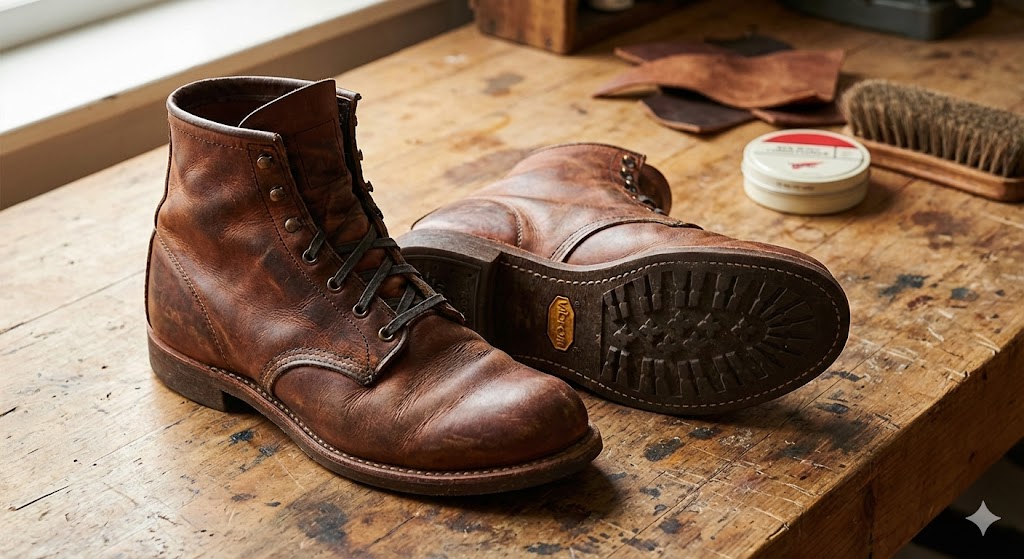
Construction: Goodyear Welt This is the headline feature. A strip of leather (the welt) is stitched to both the upper and the sole, creating a cavity filled with cork. This means the boot can be resoled multiple times without damaging the upper—extending lifespan to potentially decades. The cork also molds to your foot shape over time, which is why broken-in heritage boots fit better than anything else. For more on how welt construction affects sole performance, our work boot soles guide breaks down the differences.
Sole: Vibram 430 Mini-Lug Owners consistently praise the traction improvement over the flat cork soles found on older models and some other Heritage boots (like the original Iron Ranger). The mini-lug pattern grips well on varied surfaces including snow, wet pavement, and light trails.
Leather Options:
- Copper Rough & Tough: Oil-tanned with a distinctive orange-brown color (lighter and more varied than photos suggest)
- Briar Oil Slick: Reddish-brown with slight texture, many owners report easier break-in
- Black Prairie: Dressy black with subtle texture
- Black Spitfire: Rough-out texture, takes conditioning treatments well
Steel Shank Provides arch support and structural rigidity—though note this can trigger airport metal detectors, which several frequent flyers mentioned as an annoyance.
No Built-In Insole Cushioning This surprises many first-time buyers. The footbed is leather over cork, with minimal padding. Most owners add aftermarket insoles to improve immediate comfort while the cork molds to their foot shape.
Feature-by-Feature Breakdown (Truth vs Marketing)
| Feature | What the Manufacturer Says | What It Actually Means (User Experience) | Compared to Competitors |
|---|---|---|---|
| Heritage-style construction | Traditional materials + build vibe | Owners expect a break-in curve and a “boot feel,” not sneaker softness | Feels more “classic/firm” than many modern comfort boots |
| Vibram outsole | Rugged traction outsole | Many report better grip and a more “confident” sole than flatter options | Often described as grippier than flatter heritage soles |
| Fit/sizing | “Know your size” (typical footwear guidance) | Real owners split: many say half size down, many say full size down, some say true-to-size worked | More sizing drama than casual shoes; similar story to other heritage boots |
| Footbed comfort | Traditional underfoot feel | The “no insole” shock is common; insoles help many, but can tighten fit | More “spartan” than cushioned boots; closer to other heritage builds |
| Looks + aging | Designed to develop character | Most love patina/scuffs; a minority report uneven creasing or cosmetic mismatch between boots | More “wear-in character” than dress boots; less uniform than perfect fashion pairs |
| Laces | Waxed laces included | Repeated complaint: waxy/short/breaking for some | Easy fix, but annoying at this price tier |
| Durability | Built for long wear | Most describe long-term confidence, but a minority report stitching separation or odd internal sensations | Better reputation than many cheap boots, but QC/arrival condition can swing by seller |
Real-World Owner Experience (Deep Pattern Analysis)
Based on the recurring themes I identified across hundreds of owner experiences, here are the patterns that matter most:
Pattern #1: The Sizing Puzzle
In a nutshell: Red Wing Heritage boots run large. Almost everyone sizes down, but the exact amount varies.
Hidden strength: Once you nail the fit, these boots accommodate thick socks beautifully and the break-in process results in a custom-molded fit.
Hidden weakness: Getting sizing right online is a gamble. Some owners go half size down, others a full size, and a few with narrow feet go down 1.5 sizes. There’s no single answer.
What to do about it: The most consistent guidance across feedback: size down at least a half size from your sneaker size. If you have narrow feet or prefer a snug fit, go a full size down. If possible, visit a Red Wing store for proper measurement (owners who did this had dramatically higher satisfaction). For comprehensive sizing strategies, our work boot fit and sizing guide covers the principles.
Pattern #2: The Break-In Reality Check
In a nutshell: The break-in period is not optional and can range from “a few days” to “several painful weeks.”
Hidden strength: Owners who push through consistently describe the post-break-in fit as exceptional—”like they were made for my feet.”
Hidden weakness: Some buyers report blood blisters, heel abrasions, and genuine pain during the first weeks. The Copper Rough & Tough leather tends to be stiffer than Briar Oil Slick.
What to do about it: Wear thick boot socks. Limit initial sessions to a few hours. Don’t wear them to an all-day event during week one. Some owners recommend applying leather conditioner before first wear to soften the leather. Our break-in guide has more methods that work.
Pattern #3: The Insole Situation
In a nutshell: There’s virtually no cushioning out of the box. Owners describe the sensation as “walking on wood” or “walking on bricks.”
Hidden strength: The lack of cushioned insole is intentional—the cork footbed eventually molds to your foot shape, and aftermarket insoles let you customize support.
Hidden weakness: For anyone used to cushioned footwear, the initial experience can be jarring. Several owners reported knee and back discomfort until they added insoles.
What to do about it: Budget for aftermarket insoles. Popular choices among owners include Superfeet Delux Dress-Fit, Dr. Scholl’s gels, and Red Wing’s own leather or comfort insoles. Note that thick insoles may affect fit—some owners who sized down for a snug fit couldn’t add insoles comfortably.
Pattern #4: Color Expectations vs. Reality
In a nutshell: The Copper Rough & Tough color looks more orange and more varied in person than the marketing photos suggest.
Hidden strength: The leather takes conditioning beautifully—mink oil or leather conditioner darkens the color significantly and brings out rich reddish-brown tones.
Hidden weakness: If you’re expecting the exact shade in the product photos, you may be disappointed by the initial appearance.
What to do about it: View real owner photos before ordering. Plan to condition the leather anyway (it’s good for the boot), which will shift the color. The Briar Oil Slick option is more consistent in color if that matters to you.
Pattern #5: Quality Control Variability
In a nutshell: A minority but notable portion of owners received boots with scratches, scuffs, loose grain, or other cosmetic issues that shouldn’t appear at this price point.
Hidden strength: The underlying construction quality remains excellent even on pairs with cosmetic issues. These are still resoleable, durable boots.
Hidden weakness: Some buyers report receiving what appear to be returns or “factory seconds” without being labeled as such. This seems more common with certain sellers.
What to do about it: Inspect your boots carefully upon arrival. Check for scratches, uneven stitching, loose grain on the vamp, and proper lace inclusion. Red Wing stores may not honor warranties on boots purchased through third-party sellers—several owners reported being turned away. If something seems off, return immediately within your window. Understanding what to look for helps—our boot anatomy and construction guide explains the components.
The Good, The Bad & The Ugly (Pros/Cons)
The Good
Build Quality & Durability:
- Goodyear welt construction enables multiple resoles over the boot’s lifetime
- Full-grain oil-tanned leather develops beautiful patina with age
- Steel shank provides substantial arch support and structural integrity
- Vibram 430 outsole offers excellent traction and wears like iron
- Made in USA with genuine craftsmanship visible in the details
Long-Term Value:
- Owners report 5-10+ years of wear with proper care
- Post-break-in comfort is exceptional—boots mold to your specific foot shape
- Resoling extends lifespan indefinitely at a fraction of replacement cost
- Timeless styling that doesn’t go out of fashion
Versatility:
- Transitions well from casual to business casual settings
- Handles light outdoor use, motorcycle riding, and urban environments
- Multiple leather options for different aesthetic preferences
The Bad
Comfort Learning Curve:
- Brutal break-in period for first-time heritage boot buyers
- No meaningful cushioning from the factory
- Cork footbed takes weeks to months to fully mold
- Some owners never fully adapt and add permanent insoles
Sizing Complexity:
- Runs large, but the exact amount varies by individual
- Width runs narrow for many buyers—wide options limited
- Getting the right fit online requires educated guessing or returns
Not for Work:
- No safety toe certification
- No electrical hazard protection
- Not waterproof despite premium price
The Ugly
QC Inconsistency:
- Reports of scuffed, scratched, or previously-worn boots arriving
- Some evidence of factory seconds being sold as firsts through certain channels
- Loose grain and cosmetic defects shouldn’t happen at this price point
Accessory Issues:
- Stock laces are too short for most users and tend to break
- Gusseted tongue makes initial entry difficult—shoe horn recommended
Mini Toolkit: Decide + Fix (Fast)
Issue-Tag Box
| Issue Tag | What It Means | Quick Fix |
|---|---|---|
SIZING-LARGE | Heritage boots run 0.5-1 size big | Size down; visit RW store for measurement if possible |
BREAK-IN-BRUTAL | Expect discomfort for 1-4 weeks | Thick socks, limit wear time, condition leather |
NO-CUSHION | Cork footbed has no padding | Add aftermarket insoles (budget $20-40) |
NARROW-FIT | Standard D width too narrow | Order wide (E/EE) if available; stretch or return |
LACES-SHORT | Stock laces inadequate | Replace with 54″+ waxed laces |
NOT-WATERPROOF | Water seeps through welt | Don’t expect waterproofing; treat with mink oil for water resistance only |
Mini Decision Tree
IF you need OSHA-compliant safety features → SKIP (get actual work boots)
IF you expect immediate comfort → SKIP (or budget for insoles + patience)
IF you want boots that improve with age → PROCEED
IF you can visit a Red Wing store for sizing → STRONGLY PROCEED
IF buying online, understand return policies → PROCEED WITH CAUTION
For the complete decision framework covering all Red Wing models, the Red Wing boots buying guide maps features to use cases.
Troubleshooting Quickflow
PROBLEM: Boots feel too tight/painful
→ Are you in the first 2 weeks? → Normal. Wear shorter sessions with thick socks.
→ Still painful after 4 weeks? → May be wrong size. Consider exchange.

PROBLEM: Heels slipping
→ Is the boot new? → Some slip normal until cork molds.
→ After break-in? → Likely sized too large. Add heel grip pad or return.

PROBLEM: No cushion, feet hurt
→ Add quality insoles immediately. Superfeet Delux or similar.

PROBLEM: Boots arrived damaged/scuffed
→ Return within window. Document with photos. Consider buying from RW store directly.
For deeper troubleshooting on common boot problems, our complete troubleshooting guide covers solutions for dozens of issues.
Mini Return-Window Reality Check
Before your return window closes, verify these things:
- Day 1: Inspect for cosmetic defects, scratches, uneven stitching, or signs of previous wear. Check that both laces are included.
- Day 2-3: Try on with the socks you’ll actually wear. Walk around the house on carpet (to keep soles returnable). Verify length and width feel appropriate—snug is okay, pain is not.
- Week 1: If sizing feels completely wrong (not just “stiff”), initiate return/exchange. Don’t push through hoping they’ll magically fit.
- Week 2: Break-in discomfort should be improving. If pain is worsening or localized to one spot, may indicate defect or sizing issue.
The Red Wing boots buying guide includes a more detailed pre-purchase checklist.
Installation / Setup Tips (Being Realistic)
Before First Wear:
- Apply leather conditioner (Red Wing’s All Natural Leather Conditioner, Bick 4, or similar) to soften the leather and reduce initial stiffness
- Replace the stock laces with longer ones (54″-60″ depending on your lacing preference)
- Have a shoe horn ready—the gusseted tongue makes entry difficult
First Two Weeks:
- Limit wearing sessions to 2-4 hours initially
- Wear quality boot socks (wool or thick cotton)—this isn’t optional
- Don’t wear them to an all-day event or on a flight until broken in
- Walk on varied surfaces to start molding the sole
Ongoing Care:
- Clean and condition leather every few months (or after heavy exposure to elements)
- Use cedar shoe trees when not wearing to maintain shape and absorb moisture
- Brush off dirt regularly with a horsehair brush
- When soles wear down, have them resoled rather than replacing the boot—this is what Goodyear welt construction is designed for
Common Mistakes to Avoid:
- Ordering your regular sneaker size (almost always too big)
- Expecting cushioned comfort on day one
- Wearing them for 10+ hours the first day and getting blisters
- Not treating the leather, then wondering why it looks dried out
- Assuming these are waterproof because the leather is thick
If you run into heel slip, tongue discomfort, or other fit issues, our complete troubleshooting guide covers fixes for most common problems.
See It in Action: Visual Reality Check
While specs and reviews tell part of the story, seeing the boot in a real-world context adds another dimension.

What to look for in this video (based on owner patterns):
- 📏 Scale Check: Notice the boot’s profile and how it sits on the foot—does the toe shape work for your style preferences?
- 👐 Leather Thickness: Pay attention to how the leather moves and flexes—this gives you a sense of the break-in you’ll face
- 🔊 Sole Sound: Listen for the substantial sound when the boot contacts surfaces—that’s the Vibram 430 and the rigid construction
- 🎨 Color Reality: Compare the on-screen color to the product photos—is it what you expected?
- 🪢 Lace Length: Notice if they’re using the stock laces or have already swapped them out
Keep in mind: Videos typically show the initial unboxing or early wear. They won’t capture the transformation that happens after 3-6 months of break-in, nor will they show the sole separation or stitching issues that some owners report emerging after extended use.
Owner Stories
The stories below are composite scenarios reflecting repeated patterns across owner feedback.
The Business Casual Convert
A software engineer wanted boots that looked sharp enough for his company’s business casual environment but could handle weekend hikes and his motorcycle commute. He ordered the Copper Rough & Tough based on product photos, then was initially disappointed—the color looked more orange than expected, and the first week was genuinely painful.
He almost returned them. Instead, he applied mink oil (which darkened the leather to what he actually wanted), added Superfeet insoles, and committed to wearing them 3-4 hours daily. By week three, something shifted. The boots started feeling like an extension of his feet rather than an obstacle. Two years later, he bought a second pair “just in case Red Wing ever changes anything.”
The Iron Ranger Refugee
After years of wearing Red Wing Iron Rangers, an owner wanted the same quality without the bulky toe cap he’d never loved. The Blacksmith fit the bill—almost identical construction, cleaner profile. What surprised him was how much easier the Blacksmith break-in felt compared to his Iron Rangers. Same leather, same construction, but the absence of the cap toe seemed to make flexibility come faster.
His only complaint: the stock laces broke within the first year. He replaced them with longer waxed cotton laces and hasn’t thought about it since. The boots are now at year four with one resole completed.
The Frustrated First-Timer
A buyer who’d never owned heritage boots ordered based on reviews praising Red Wing quality. What he got felt like torture devices. No cushion. Stiff as boards. Painful to put on, painful to walk in.
He almost left a 1-star review. Then he read more carefully about what heritage construction actually means—the intentional lack of cushioning, the break-in period as a feature rather than a bug. He added insoles, adjusted his expectations, and gave it another month. The boots eventually became comfortable, though he admits he’ll probably stick to cushioned work boots for his actual job. These became his weekend boots, and in that role, he understands why people love them.
🔎 See more owner feedback on Amazon
Who This Is For (and Who Should Skip It)
Buy It If:
- You understand that heritage boot construction requires break-in patience
- You want American-made quality with resoleable construction for long-term value
- You’re buying for business casual, casual wear, riding, or lifestyle use—not safety-regulated work
- You can either visit a Red Wing store for sizing or are comfortable with potential exchanges
- You appreciate footwear that develops character and patina over time
- You’re willing to invest in aftermarket insoles for immediate comfort
Skip It If:
- Your job requires ASTM-rated safety footwear (these carry no safety certifications)
- You need waterproof boots—these will not keep your feet dry
- You expect cushioned, comfortable wear on day one
- You’re not willing to deal with a sizing puzzle when ordering online
- You need wide widths and can’t find them in stock
- You prioritize instant comfort over long-term quality
👉 Check today’s price on Amazon
If you’re comparing options, start here: Top Red Wing Boot Collections Reviewed
Alternatives (Quick Comparisons)
Want similar quality with less break-in pain? The Thursday Captain uses Goodyear welt construction with a more forgiving break-in. Less character development over time, but faster comfort.
Want the Red Wing name with actual safety features? Look at Red Wing’s work boot lines (not Heritage). Models like the King Toe or DynaForce carry ASTM F2413 certifications for actual jobsite protection. Our work boots by job type guide can help match safety features to your specific work environment.
Want similar style at a lower price point? Chippewa Service Boots offer Goodyear welt construction in a similar aesthetic at roughly $100 less. Leather quality and longevity may not match Red Wing, but it’s a legitimate entry point.
Prefer the Iron Ranger look? The Red Wing Heritage Iron Ranger uses similar construction with the distinctive toe cap. Same break-in challenges, slightly different aesthetic. See our Red Wing boot collections comparison for details on each model.
Deep-Dive FAQ
What should I test immediately after delivery?
Inspect for scratches, scuffs, or signs of previous wear. Check stitching consistency, especially around the welt. Verify both laces are included and aren’t damaged. Try them on with your intended socks on carpet (to keep soles pristine for returns). The boot should feel snug but not painful—distinguish between “tight” and “wrong size.”
What are the most common problems and fixes?
- Too tight/painful: Usually sizing or break-in. Try thick socks, shorter wear sessions, leather conditioner. If no improvement after 3-4 weeks, consider sizing up.
- No cushion: Add aftermarket insoles immediately. Superfeet Delux, Dr. Scholl’s, or Red Wing’s own insoles.
- Heel slip: Normal initially—cork hasn’t molded yet. Persistent slip after break-in means sizing issue; add heel grips or exchange.
- Laces too short: Replace with 54″-60″ waxed laces.
- Color looks wrong: Apply leather conditioner or mink oil to darken and enrich color.
Will this work with my setup/use case?
For business casual, casual wear, motorcycle riding, light hiking, urban walking: Yes, excellent choice. For construction sites, electrical work, or jobs requiring safety footwear: No. For wet weather: Treat with mink oil for water resistance, but don’t expect waterproofing.
How long is the break-in period realistically?
Owners report anywhere from “a few days” to “several painful weeks.” The Briar Oil Slick leather tends to break in faster than Copper Rough & Tough. Pre-treating with conditioner helps. Budget 2-4 weeks of moderate wear before expecting full comfort.
Should I buy from Amazon or a Red Wing store?
Buying from a Red Wing store gets you: proper sizing measurement, verified first-quality boots, warranty support, and the option to resole through official channels. Buying from Amazon may be cheaper and offers convenient returns, but scattered reports suggest some boots arrive in less-than-first-quality condition, and Red Wing stores may not honor warranties. It’s a tradeoff between convenience and certainty.
What about the warranty situation?
Red Wing has a limited warranty against manufacturing defects, but the terms and what’s covered can vary. The Heritage line may have different warranty handling than work boots. Crucially, boots purchased through third-party sellers (including Amazon) may not be covered by Red Wing stores for warranty service. If warranty matters to you, buying direct from Red Wing is safer. For more details, see our Red Wing warranty explainer.
Can these be resoled, and is it worth it?
Absolutely yes—this is one of the core benefits of Goodyear welt construction. Red Wing offers resoling services, or you can use a quality cobbler. Cost is typically $75-150 depending on the sole type and provider. Given that the boots can last decades with proper care and resoling, it’s almost always worth it compared to buying new.
Final Verdict
The Red Wing Heritage Blacksmith is a genuine “buy it for life” boot—if you’re the right buyer. It rewards patience and punishes wrong expectations.
If you want American-made quality, appreciate boots that improve with age, and understand that heritage construction means break-in discomfort before custom-molded comfort, the Blacksmith delivers exceptional value over the long term. The Vibram 430 sole provides traction the original cork soles never could. The oil-tanned leather develops character that cheap boots will never match. And the Goodyear welt construction means your grandkids could theoretically inherit these boots.
But if you need safety-rated work boots, immediate comfort, or waterproofing—look elsewhere. This boot isn’t designed for those use cases and will only frustrate you if that’s what you expect.
For the heritage boot enthusiast, the business casual professional, the weekend warrior who wants something that’ll still be going strong in a decade: the Blacksmith earns its place in your rotation.