Red Wing Work Chukka (3140/3141) Honest Review: Sizing, Break-In & Long-Term Durability
Last Updated: February 2026
- Reviewed latest owner feedback spanning 2013–2026
- Verified current pricing and availability
- Updated sizing guidance based on recent buyer experiences
- Confirmed Goodyear welt construction and resole options
Affiliate Disclosure: SturdyBoot.com earns a small commission from qualifying purchases made through links on this page—at no extra cost to you. This helps us keep producing honest, in-depth boot content.
The Work Boot That Isn’t a “Work Boot”
Here’s the thing about the Red Wing Heritage Men’s Work Chukka that confuses a lot of first-time buyers: despite having “Work” in its name, this boot sits firmly in the Heritage line—meaning it’s built for style, durability, and all-day wear, but it’s not ASTM-rated safety footwear.
If your jobsite requires protective footwear under OSHA’s 29 CFR 1910.136 foot protection standards, you’ll need to look at Red Wing’s actual Work line with safety toe options. But if you’re after a ruggedly handsome chukka that can handle warehouse floors, office environments, light shop work, and Saturday errands—all while lasting a decade with proper care—the Heritage Work Chukka deserves a serious look.
I spent considerable time digging through owner feedback spanning over a decade of real-world use to separate marketing promises from everyday reality. What I found is a boot that inspires genuine loyalty, but also one that demands you understand its quirks before buying. For a foundational understanding of what separates different boot categories, the Work Boots 101 primer ties features to jobsite risks and helps clarify where Heritage boots fit in the broader landscape.
How This Review Was Built (So You Can Trust It)
Approximate reviews analyzed: 150+ owner reviews
Time window covered: 2013–2026 (approximately 13 years of owner experiences)
Synthesis method: I tagged feedback into categories including comfort/break-in, sizing/fit issues, durability patterns, construction quality, and long-term wear. I separated “setup-driven issues” (sizing mistakes, unrealistic expectations) from “likely product concerns” (sole separation, quality control inconsistencies).
Important limitations:
- Reviews skew toward strong opinions—people who had exceptional or disappointing experiences are more likely to write
- RV variability applies to boots too: foot shape, gait, work environment, and care habits affect outcomes dramatically
- I prioritized recurring patterns over one-off complaints
- No firsthand testing—this synthesis reflects aggregated owner experiences, not personal wear
Quick Verdict (TL;DR)
Best For:
- Workers splitting time between office and light warehouse/shop duties who want one versatile boot
- Anyone seeking a Heritage aesthetic with genuine durability and resole potential
- Buyers willing to invest in a proper break-in period for long-term comfort
Not For:
- Jobsites requiring ASTM F2413-certified safety toe protection—for that, see our ASTM F2413-24 Explained guide
- Workers on their feet for 8+ hours on concrete who need serious arch support out of the box
- Wide-footed buyers who can’t try before they buy (the toe box runs narrow)
Standout Win:
- Decade-plus lifespan with proper care and resoling—owners report 5–8 years of regular use before needing a resole
Watch-Outs:
- Sizing confusion is rampant—owner guidance conflicts wildly (more on this below)
- Break-in period can be brutal; some owners report blisters and heel pain during the first weeks
Confidence Score: 🟢 High (8/10)
This score reflects buyer-usefulness, not a scientific reliability metric. It’s high because owner patterns are consistent, the product has a long track record, and the main complaints (sizing, break-in) are predictable and manageable with proper preparation.
👉 Check today’s price on Amazon
What This Boot Is (and What It Isn’t)
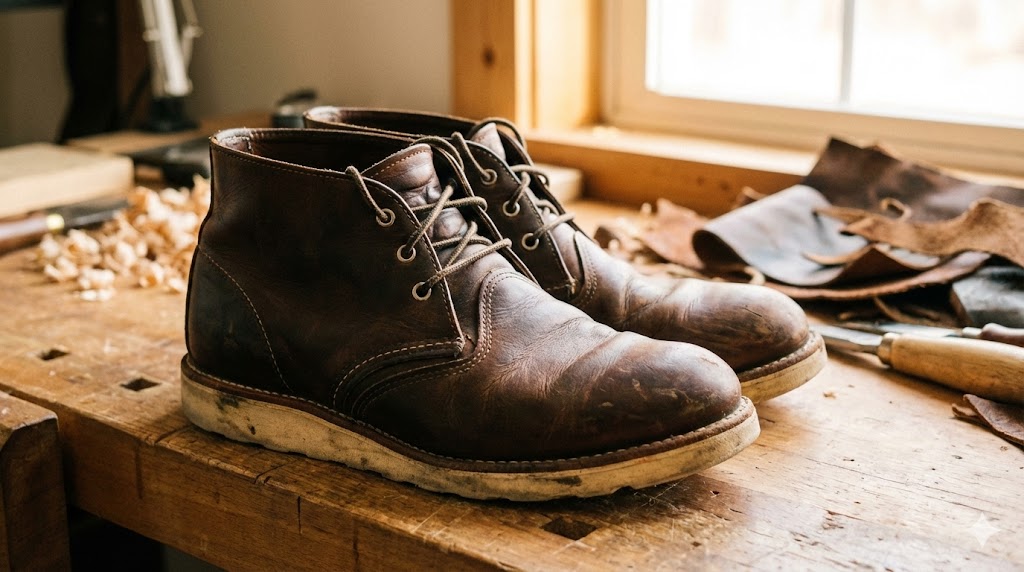
The Red Wing Heritage Work Chukka (Style #3140/3141) is a two-eyelet, ankle-height boot built on Red Wing’s classic No. 210 last. It features full-grain leather uppers, Goodyear welt construction, a leather footbed, and the signature Atlas Tred outsole—a wedge-style crepe sole that provides cushioning on hard surfaces.
What it is:
- A heritage-style casual/work hybrid boot
- Made in the USA (Red Wing, Minnesota)
- Resoleable through Red Wing’s repair service or a quality cobbler
- A long-term investment piece that develops character over years
What it isn’t:
- Safety footwear (no steel toe, composite toe, or electrical hazard rating)
- An out-of-the-box comfort experience—expect significant break-in
- A boot for extreme cold (minimal insulation) or wet conditions (no waterproofing)
Common Misconceptions
“It’s a work boot, so it should protect my toes.”
No. The Heritage line prioritizes aesthetics and traditional construction over safety certifications. If your employer requires protective footwear, this boot won’t meet compliance. The thick leather does offer some incidental protection—one owner reported deflecting a glancing blow from a splitting maul—but that’s not the same as rated impact protection.
“Red Wing means it’ll fit perfectly from day one.”
This is perhaps the most damaging misconception. The stiff, high-quality leather and leather footbed require legitimate break-in. Owners who gave up after a few days missed out; those who pushed through report the boots eventually feel like custom-fitted slippers.
“I should always size down for Red Wing boots.”
This advice gets repeated constantly but isn’t universally true for the Work Chukka. The narrow toe box on this specific model means some owners need to size up or go wide. Your best bet is trying them in-store first.
Key Specs That Actually Matter for Workers
Understanding boot construction helps you match footwear to your actual needs. For a deeper dive into how boots are built, the Work Boot Anatomy, Construction & Materials guide breaks down every component.
| Spec | What It Means for You |
|---|---|
| Goodyear Welt | The sole is stitched to a welt strip rather than glued directly. This makes the boot resoleable and extends lifespan dramatically. |
| Full-Grain Leather Upper | Briar Oil Slick leather (most popular) is oiled and waxed, developing patina over time. It’s not waterproof but resists light moisture. |
| Leather Footbed | No cushioned insole—the leather conforms to your foot shape over time. Great for long-term fit, challenging during break-in. |
| Atlas Tred Outsole | A wedge-style crepe sole that cushions on hard floors. It’s not aggressive enough for mud or trails, and owners note it’s slippery on ice. |
| Steel Shank | Provides arch support and structural stability, reducing foot fatigue on hard surfaces. |
| No Safety Ratings | No ASTM certifications. Not compliant with OSHA protective footwear requirements. |
Feature-by-Feature Breakdown (Truth vs. Marketing)
| Feature | What Red Wing Says | What It Actually Means | Compared to Alternatives |
|---|---|---|---|
| Briar Oil Slick Leather | “Oiled and waxed leather resists elements” | Light water resistance at best; not truly waterproof. Develops rich patina with wear and scratches show character rather than damage. | More forgiving than smooth leathers; shows wear better than suede. |
| Goodyear Welt Construction | “Built to be rebuilt” | Absolutely true—owners report successful resoles after 5–8 years. Cost runs approximately $135 through Red Wing. | Superior to cement construction; on par with other premium welted boots. |
| Atlas Tred Outsole | “Cushioned comfort” | Genuinely comfortable on concrete and hard floors. However, owners note it wears faster than vibram lugged soles, especially in the heel. | Softer and more cushioned than lug soles; less durable and less grippy. |
| Leather Footbed | “Molds to your foot” | True, but requires weeks of wear. The break-in period is where most buyers struggle. Some add aftermarket insoles for immediate comfort. | Most competitors include cushioned insoles; this is a traditional construction choice. |
| Made in USA | “Handcrafted in Red Wing, MN” | Verified. Quality control is generally excellent, though some owners report occasional stitching issues or midsole separation. | Premium positioning justified; domestic production means repair parts remain available. |
Real-World Owner Experience (Deep Pattern Analysis)
Across the owner feedback I analyzed, several patterns emerged repeatedly—these aren’t outliers but consistent themes.
Pattern 1: The Sizing Confusion
In a nutshell: Owner advice on sizing is wildly contradictory. Some say size down a half size, others say true to size, still others recommend sizing up.
Hidden strength: This confusion actually reflects the boot’s versatility—it accommodates different sock thicknesses and insole preferences depending on how you size.
Hidden weakness: Without trying them on, you’re essentially gambling. The narrow toe box punishes wide feet regardless of length.
What to do about it: If possible, visit a Red Wing retail store for proper fitting on a Brannock device. If ordering online, know your Brannock size (not just your sneaker size), consider your typical sock thickness, and whether you’ll add an insole. Most consistent advice: if you have narrow-to-normal feet, try true to size. If you have wide feet or plan to add insoles, consider sizing up a half size or going with EE width.
Our Work Boot Fit & Sizing Guide walks through proper measurement techniques and what to expect from different brands.
Pattern 2: The Break-In Period Is Real
In a nutshell: Expect anywhere from a few days to six weeks before these boots feel comfortable. Some owners limped during the first week.
Hidden strength: Once broken in, owners describe these as “like slippers” and “the most comfortable boot I own.” The leather genuinely molds to individual foot shapes.
Hidden weakness: Modern workers expect immediate comfort. The break-in process can cause blisters, heel rubbing, and foot fatigue. Some buyers give up before reaching the comfort phase.
What to do about it: Accelerate break-in by wearing them for a few hours daily at home, working the leather with your hands, and using a shoe horn to reduce heel damage. Don’t wear them for a full workday until they’ve softened. For detailed techniques, our guide on Easy Ways to Break in Work Boots Faster covers proven methods.
Pattern 3: The Flat Footbed Divide
In a nutshell: Some owners love the leather footbed; others find it unbearable without aftermarket insoles.
Hidden strength: For flat-footed wearers or those who prefer a firm platform, the leather footbed works beautifully once broken in. The cork midsole also conforms over time.
Hidden weakness: If you have high arches or require arch support, the out-of-box experience will be painful. Red Wing doesn’t include a cushioned insole.
What to do about it: Budget for quality aftermarket insoles if you need arch support. Superfeet, Red Wing’s own insoles, or similar products work well. Keep in mind that adding insoles may require sizing up to maintain proper fit.
Pattern 4: Sole Separation Concerns
In a nutshell: A minority but recurring pattern involves the Atlas Tred sole beginning to separate from the welt, sometimes within months for heavy users.
Hidden strength: Because it’s Goodyear welted, this is repairable rather than a death sentence for the boot.
Hidden weakness: For the price point, sole separation within the first year feels like a quality control failure. Owners who kneel frequently (HVAC techs, electricians) report accelerated separation at the toe.
What to do about it: Inspect the welt regularly. If separation begins, address it early—a cobbler can re-glue before it worsens. Red Wing stores can also handle repairs. Consider whether your work involves frequent kneeling; if so, a different sole construction might serve you better.
Pattern 5: The Decade-Long Love Affair
In a nutshell: Owners who make it past the break-in period overwhelmingly become loyal customers. Multi-year reviews (4–8+ years) consistently praise durability and continued comfort.
Hidden strength: These boots genuinely last. With care (conditioning, cleaning, protecting from excessive moisture) and eventual resoling, owners report 8–10+ years of regular wear.
Hidden weakness: The upfront investment—both financial and in break-in effort—is significant. Not everyone wants to “earn” their boot comfort.
What to do about it: If you value long-term cost-per-wear over immediate gratification, these boots reward patience. If you prefer low-maintenance, comfortable-from-day-one footwear, consider alternatives like the Red Wing Weekender Chukka (reviewed in our Red Wing Weekender Chukka Review)—it trades some durability for immediate comfort.
👉 Check today’s price on Amazon
The Good, The Bad, and The Ugly
The Good
Built to Last a Generation
Goodyear welt construction, full-grain leather, and American craftsmanship combine for a boot that—with care—outlasts almost anything in its price range. Multiple owners report 5–8 years before needing a resole, and the boots continue after that.
Versatile Styling
Works equally well with chinos in an office setting, jeans at a brewery, or shop clothes in a warehouse. The white wedge sole keeps things casual-professional without looking like heavy-duty work boots.
Develops Character
The Briar Oil Slick leather ages beautifully. Scratches and creases become features rather than flaws. Each pair becomes uniquely yours.
Made in USA
For buyers who prioritize domestic manufacturing, Red Wing delivers. Parts availability for repairs remains strong because of continued domestic production.
The Bad
Sizing Is a Gamble Online
The narrow toe box and variable fit recommendations make blind ordering risky. Budget for potential returns and exchanges.
Break-In Demands Commitment
This isn’t a slip-on-and-go boot. Expect discomfort, potential blisters, and a weeks-long softening process.
No Out-of-Box Arch Support
The leather footbed is traditional but unforgiving for those needing cushioning or arch support immediately.
Atlas Tred Wears Quickly
The soft, comfortable outsole trades durability for cushioning. Heavy walkers and those with aggressive gaits report noticeable heel wear within a year or two.
The Ugly
Quality Control Inconsistencies
While rare, some owners report receiving boots with loose threads, crooked eyelets, or early sole separation. Red Wing’s customer service handles exchanges, but it’s frustrating at this price point.
Slippery on Ice and Wet Surfaces
The Atlas Tred outsole has minimal traction. Owners consistently warn about ice and slick floors.
Not Actually Safety Footwear
Despite the “Work” name, these don’t meet ASTM or OSHA requirements. Buyers expecting protective features are disappointed.
Mini Toolkit: Decide + Fix (Fast)
Issue-Tag Box
| Issue | Likely Cause | Quick Fix |
|---|---|---|
| Can’t get foot in | Stiff new leather | Use a shoe horn; wear thick socks initially |
| Heel rubbing/blisters | Break-in period | Moleskin padding; shorter wear sessions |
| Toe box cramping | Wrong size or narrow feet | Exchange for half-size up or EE width |
| No arch support | Flat leather footbed | Add aftermarket insoles |
| Squeaky soles | Sole construction | Usually fades; some floors just squeak |
| Sole separating | Adhesive failure | Cobbler repair or Red Wing service |
Mini Decision Tree
- Need ASTM safety ratings? → Skip this boot; see our Work Boots by Job Type guide
- Wide feet and can’t try on in-store? → Consider the Weekender Chukka or look at EE width options
- Hate break-in periods? → This boot isn’t for you; look for cushioned insole options
- Want a 10-year boot and willing to invest effort? → Strong candidate
- Need aggressive traction? → Look at lug-soled alternatives; the Work Boot Soles Explained guide covers options
Troubleshooting Quick Flow
- Boot feels too tight overall? → Confirm sizing; the #210 last runs narrow
- Just the toe box? → Try EE width before sizing up in length
- Heel slippage? → Likely sized too large; also common before break-in
- Foot pain after hours of wear? → Add quality insoles; give break-in more time
- Sole peeling at edges? → Get to a cobbler before it worsens; check warranty options
- Still uncomfortable after 4+ weeks? → This boot may not match your foot shape; return if within window
For more comprehensive troubleshooting across all work boot issues, our Work Boot Problems, Causes & Solutions guide covers everything from break-in problems to long-term maintenance.
Mini Return-Window Reality Check
- Days 1–3: Expect stiffness and difficulty getting your foot in. Don’t panic—this is normal.
- Days 4–7: Watch for persistent pinching, numbness, or pain that doesn’t ease when you remove the boots. These indicate sizing issues, not break-in.
- Week 2: Leather should be noticeably softening. If the toe box still crushes your foot, size is wrong.
- Before return window closes: Walk on a variety of surfaces. Test heel stability. Confirm the length allows toe wiggle room.
- Red flag to return immediately: Obvious defects (crooked eyelets, loose threads, sole separation), persistent numbness, or pain that worsens rather than improves.
For a complete framework on testing new boots, the Red Wing Boots Buying Guide includes a thorough checklist.
Installation / Setup Tips (Boot-Realistic)
Unlike equipment that requires installation, boots require preparation. Here’s how to set yourself up for success:
- Use a shoe horn from day one. The tight heel counter on new Work Chukkas can damage both the boot and your heel. A long-handled shoe horn protects both.
- Condition before first wear. Apply Red Wing’s Boot Cream or a quality leather conditioner to soften the leather slightly and add protection.
- Start with short wear sessions. Two to three hours at home for the first few days prevents serious blisters.
- Work the leather with your hands. Flex the toe box, roll the tongue between your fingers, and manipulate the ankle area to accelerate softening.
- Wear the socks you’ll actually use. Breaking in with thin dress socks then switching to thick wool creates fit problems.
- Crouch and flex while wearing. Getting into a catcher’s stance creates the natural toe crease and loosens the forefoot.
- Don’t get them soaking wet during break-in. Wet leather stretches unpredictably. Save the rainy-day test for after they’ve molded to your feet.
- Have bandages and moleskin ready. Hot spots on the heel are common. Address them before they become blisters.
- Don’t force marathon sessions. Pain isn’t “toughening up”—it’s tissue damage. Gradual break-in prevents injury.
- Consider cedar shoe trees. They help the boots maintain shape and absorb moisture between wears, extending leather life.
See It in Action: Visual Reality Check
While specs and owner reviews tell part of the story, seeing the boot in a real-world context adds valuable perspective.
What to Look for in This Video (Based on Owner Patterns):
- 📏 Scale Check: Notice how the boot proportions compare to the wearer’s feet and legs. The sleeker chukka profile differs significantly from 6-inch moc toes.
- 🔊 Flex and Stiffness: Watch how the leather moves (or doesn’t) when the boot flexes. New Work Chukkas are notably rigid.
- 👁️ Toe Box Shape: Pay attention to the slightly pointed toe profile some owners mention—it’s more tapered than other Red Wing Heritage models.
- 🧦 Ankle Height: The chukka sits lower than traditional work boots. Consider whether this height works for your environment.
- 🎨 Leather Finish: The Briar Oil Slick has a specific sheen and color that photos don’t always capture accurately.
Missing Context Note: Video shows the aesthetic and construction, but it won’t demonstrate the break-in experience that shapes so many owner reviews. That process happens over weeks, not minutes.
Owner Stories (The Human Side)
The stories below are composite scenarios reflecting repeated patterns across owner feedback.
The Office-to-Warehouse Convert
A veterinary student needed footwear that could handle clinical work, look professional enough for client interactions, and survive the occasional animal encounter. After a difficult break-in that involved limping and moleskin patches, the Work Chukkas became a daily wear item for over a year—surviving everything from excited dogs to multiple years of wear on hospital floors. The thick leather even deflected unexpected impacts.
The Four-Year Daily Wearer
An owner wore their Work Chukkas nearly every non-work day for four years across multiple cities and climates—New York, San Francisco, Denver—putting in hundreds if not thousands of hours. With regular saddle soap cleaning and periodic conditioning, the boots still hadn’t required resoling. The only maintenance was adding Bean Boots for winter to reduce salt exposure on the leather.
The Sizing Frustration
After reading conflicting size recommendations, a buyer ordered their usual sneaker size. The boots arrived and the toe box felt immediately restrictive—not break-in tight, but wrong-size tight. An exchange for a half-size larger resolved the issue, but the wasted time and shipping hassle left a sour taste despite ultimate satisfaction with the boots themselves.
🔎 See more owner feedback on Amazon
Who This Is For (and Who Should Skip It)
Buy It If…
- You understand and accept a multi-week break-in period as part of the ownership experience
- You value long-term durability over immediate comfort
- Your workplace allows or requires sturdy footwear but not safety-rated boots
- You appreciate heritage craftsmanship and made-in-USA manufacturing
- You’re willing to learn proper leather care to maximize boot lifespan
- You want one versatile boot for work, casual, and weekend wear
Skip It If…
- Your jobsite requires ASTM-certified protective footwear—this boot won’t keep you compliant
- You have wide feet and can’t try before you buy
- You need significant arch support without adding aftermarket insoles
- You work primarily in wet conditions or on icy surfaces
- You expect any boot over $200 to feel perfect immediately
- You prefer modern cushioning technology over traditional leather construction
👉 Check today’s price on Amazon
If you’re comparing options across Red Wing’s Heritage lineup, start here: Top Red Wing Boots Review: Brand’s 5 Best Popular Collections
Alternatives (Quick Comparisons)
Red Wing Weekender Chukka
For buyers who want the Red Wing aesthetic without the demanding break-in, the Weekender uses softer leather and includes a cushioned footbed. It’s more immediately comfortable but less rugged and not as easily resoled. See our Red Wing Weekender Chukka Review for a detailed comparison.
Red Wing Classic Moc
If you want more ankle support and don’t mind a taller boot, the Classic Moc offers similar quality with a different aesthetic. The moc toe construction provides more toe room for some foot shapes.
Clarks Desert Boot
The budget alternative that inspired countless comparisons. Softer, lighter, and cheaper—but owners consistently report the Work Chukka’s superior durability, comfort (after break-in), and support. The Clarks wear out faster and can’t be resoled.
Thorogood American Heritage Wedge
For buyers who need actual work boot features (safety toe options available) with a similar wedge sole aesthetic. More utilitarian appearance, potentially better value for job-site use.
Deep-Dive FAQ (High-Intent Questions)
What should I test immediately after delivery?
Inspect the eyelets for alignment, check stitching for loose threads, examine the welt-to-sole bond for any gaps, and verify both boots are the same size (it happens). Try them on with your intended socks and walk on carpet only until you’re sure about fit—scuffed soles complicate returns.
What are the most common problems and fixes?
Sizing issues are most common—solved by proper measurement and potential exchange. Heel rubbing during break-in responds to moleskin and shorter wear sessions. Lack of arch support requires aftermarket insoles. Sole wear is managed through eventual resoling. Squeaky soles on some surfaces typically fade with wear.
Will this work with my work setup?
If “work” means anything requiring ASTM-rated safety footwear, no. If “work” means office, light industrial, retail, creative fields, or environments where sturdy-but-not-rated footwear is acceptable, yes. Check your employer’s PPE requirements before assuming these boots will pass muster.
How do I care for Briar Oil Slick leather?
Clean with saddle soap or warm water and a brush periodically. Condition with Red Wing Boot Cream or similar products every few months (more often in dry climates or with heavy wear). Avoid excessive water exposure. Use shoe trees between wears. The leather develops patina—embrace scratches and creases as character.
Can I really get these resoled?
Yes. Red Wing’s repair facility in Minnesota handles resoles for approximately $135 (pricing subject to change). Many quality cobblers can also resole Goodyear welted boots. The whole point of this construction method is repairability. For warranty specifics, check out our Red Wing Boots Warranty guide.
Why do some owners love them immediately while others struggle for weeks?
Foot shape, sizing accuracy, break-in technique, and expectations all play roles. Owners who happened to nail the size, have average-width feet, and wore them gradually tend to report faster comfort. Those who sized incorrectly, have high arches, or tried to power through full workdays immediately tend to struggle more.
Are Amazon-purchased Work Chukkas authentic?
Overwhelmingly yes, but some owners have reported receiving boots with quality issues or suspected irregulars. If anything seems off—torn labels, unusual packaging, visible defects—Red Wing stores can verify authenticity. Buying from authorized sellers reduces risk.
Final Verdict
The Red Wing Heritage Men’s Work Chukka is a genuine investment piece—not just financially, but in the effort required to break it in. It rewards patience with decade-long durability, developing character, and eventually becoming the most comfortable boot many owners have ever worn.
But it’s not for everyone. Safety-focused workers need actual safety footwear. Comfort-first buyers should look at the Weekender line. Wide-footed buyers who can’t try on in-store face frustrating sizing roulette.
For the right buyer—someone who values heritage construction, understands leather goods, and treats boots as long-term companions rather than disposable footwear—the Work Chukka delivers on Red Wing’s reputation. It’s a boot that earns its place in your rotation through genuine quality rather than marketing hype.
If that sounds like you, it’s worth the investment and the effort.