
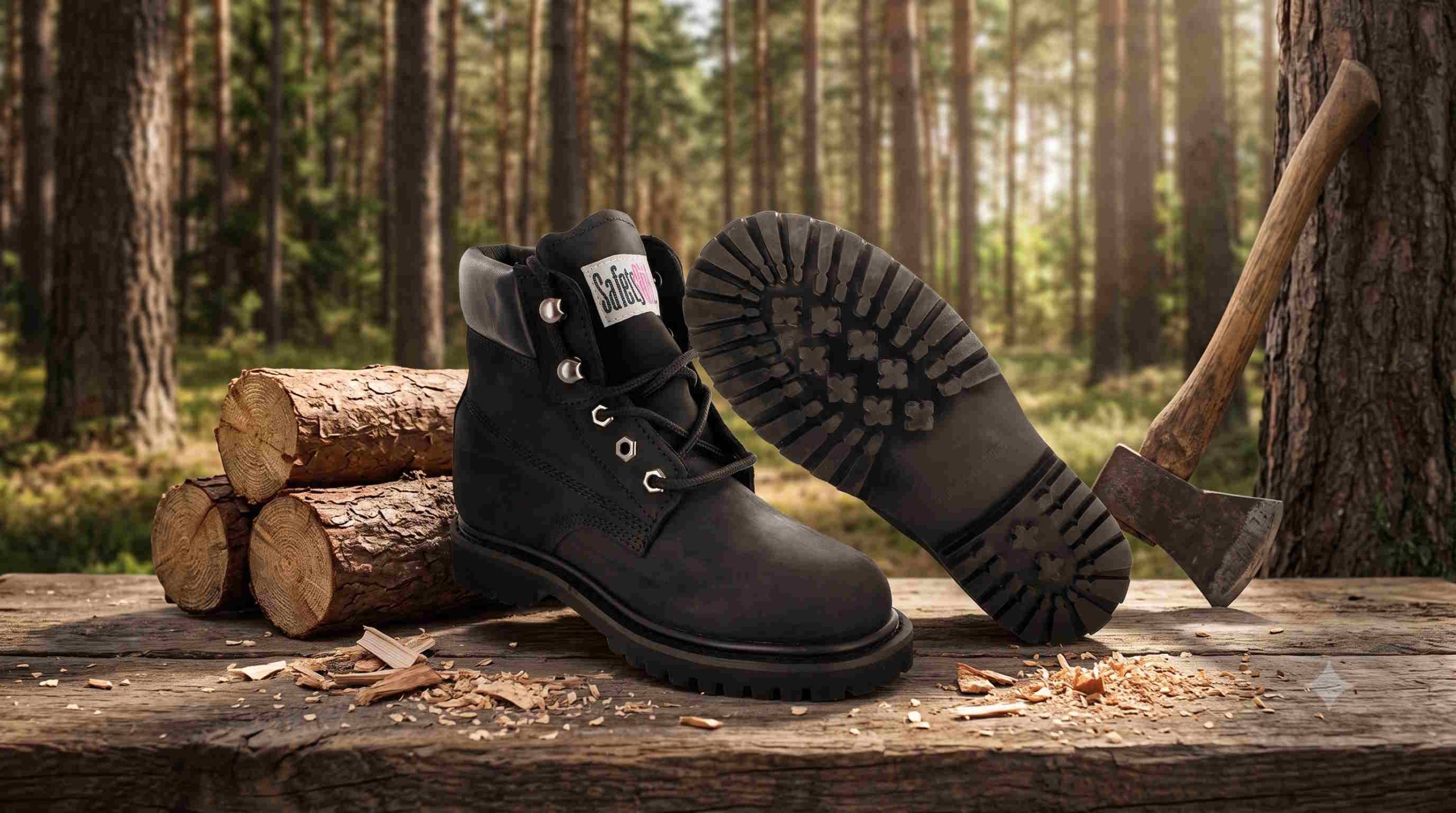
Safety Girl Women’s Logger Boots Review (2026): Worth It or Overhyped?
Last updated: July 2026
- Re-checked the newest owner feedback (through mid-2026) and confirmed the sizing story hasn’t settled down — the “runs big / runs small” split is still the loudest theme.
- Re-verified the cushioning complaints: the “hard, flat insole” pattern shows up across nearly a decade of owners, not just early pairs.
- Re-mapped which trades stay happy (yard work, warehouse, gardening, standing jobs with an insole swap) versus which ones return them fast.
- Confirmed the soft-toe vs steel-toe listing confusion is still tripping buyers up at checkout.
Affiliate disclosure: As an Amazon Associate, I earn from qualifying purchases. If you buy through links on this page, I may earn a small commission at no extra cost to you. It never changes what the owner feedback actually says.
The short version
If you’re a woman who’s tired of ugly, boxy men’s work boots and you want an 8-inch leather logger that looks good, protects your feet, and doesn’t cost a fortune, the Safety Girl Women’s Logger is a genuine value pick — as long as you nail the sizing and plan to drop in your own insole. That’s the whole ballgame with this boot.
Is it worth it? For yard work, warehouse, gardening, and standing jobs on a budget, yes — most owners who size correctly and add cushioning end up loyal repeat buyers. For heavy-abuse trades or anyone expecting plush comfort out of the box, look elsewhere.
I went deep into real owner feedback for this one — the polarized kind, where half the buyers adore these boots and the other half returned them in a week. That gap isn’t random, and untangling why it happens is what this review is really about. For the bigger-picture view of how features map to jobsite hazards, the Work Boots 101 primer is a solid companion read before you commit.
How this review was built (so you can trust it)
- What I analyzed: A sample of roughly 100+ verified-purchase text reviews pulled from this listing’s own customer reviews (both the positive and critical filters), spanning owners who actually wrote something — not just the star tally. For context, the listing itself shows a rating in the low-4s out of hundreds of global ratings, but I only counted the individual written reviews I could actually read.
- Time window: The written feedback stretches from around 2014 through mid-2026 — nearly a decade. That’s unusually long, and it matters: the durability and cushioning complaints are consistent across the entire window, so this isn’t a “bad batch” story. It’s a design-tradeoff story.
- How I synthesized it: I tagged every review into buckets — sizing/fit, comfort/cushioning, weight, durability (soles, eyelets, laces), waterproofing, and use-case — then separated use-and-fit-driven complaints (wrong size, wrong width, wrong socks) from likely product/design issues (thin insole, occasional hardware failure). Filtering the wrong-size returns out of the picture reveals a truer read than the raw star average.
- Important limitations:
- Reviews skew to extremes — thrilled buyers and furious returners write more than the “it’s fine” middle.
- Wear intensity varies wildly, from a gardener a few hours a week to someone standing 12-hour warehouse shifts.
- I prioritized patterns that repeat across many owners over dramatic one-off lemons.
If you want the full category-level breakdown of what separates a good logger from a bad one, the logger boots buying guide covers the shopping framework so this review can stay focused on this specific boot.
Quick Verdict (TL;DR)
Best for:
- Women who struggle to find work boots that actually fit a woman’s foot (small sizes down to 5, wide options available).
- Budget-focused buyers who want real leather and a Goodyear welt without a premium price.
- Lighter-duty trades: gardening, landscaping, warehouse, yard work, standing jobs.
Not for:
- Anyone who needs true out-of-the-box comfort with no insole tinkering.
- Heavy-abuse jobsites with sparks, constant crouching, or brutal daily mileage.
- Buyers who assume they’re getting a steel toe (this listing is the soft toe — read on).
Standout win:
- A genuinely feminine, good-looking 8-inch leather logger that women can find in their size — a rarer thing than it should be.
Watch-outs:
- The insole is thin and flat; many owners buy aftermarket cushioning.
- Sizing is a coin flip — dig into the fit section before ordering.
🎯 Confidence Score: 7.5/10 — This score reflects how confidently I can tell you who this boot fits, not a reliability guarantee. The comfort-and-value signal for the right buyer is strong and consistent across years of feedback. I’m docking points because the sizing feedback genuinely contradicts itself (some say big, some say small) and durability is polarized, which makes a blanket “buy it” irresponsible. For the correctly-sized, right-job buyer, though, the verdict is clear.
What This Boot Is (and What It Isn’t)
The Safety Girl Women’s Logger is an 8-inch, full-grain leather logger boot built on a woman’s last (not a shrunk-down men’s boot), with a soft toe on this listing, a cushioned insole, and a Goodyear-welt outsole with a chunky logger heel. Per the manufacturer, the steel-toe version is built to ASTM F2413 impact/compression standards — but the version most people are reviewing here is the soft toe, which offers no toe-cap protection.
A few misconceptions worth clearing up:
- It isn’t a steel-toe boot by default. This is the single most costly confusion in the feedback — buyers who need a protective toe for work grabbed the soft-toe listing and were stuck. If your employer’s PPE assessment requires a safety toe, verify you’re buying the steel-toe variant.
- It isn’t fully waterproof. Despite “water-resistant leather” branding, multiple owners flatly note the boots aren’t waterproof and that they spray them separately. Treat water resistance as “light splashes,” not “standing in a creek.”
- It isn’t a plush comfort boot out of the box. It’s a firm, sturdy leather boot. Comfort is achievable — but for many, it takes an insole and a break-in.
Key Specs That Actually Matter
Here’s what actually changes your day on the job, grounded in what owners report:
- Soft toe (on this listing): No impact protection. Great if you specifically want to avoid a bulky safety cap (several owners chose it on purpose), but a dealbreaker if your site requires a protective toe.
- Full-grain leather upper: Real leather, widely praised as sturdy and good-looking. The tradeoff is stiffness and a break-in period.
- 8-inch height with logger heel: Owners like the ankle support and the way the height keeps debris out when tromping through brush or yard slopes. The raised heel is part of the classic logger geometry.
- Thin/flat insole: The recurring weak point. The footbed is essentially firm with little cushion, which is why “buy an insole” is the near-universal owner tip.
- Lace hardware (stud hooks + eyelets): Mostly fine, but a minority report an eyelet or lace hook failing early — more on that below.
- Weight: Reported as on the heavier side. Some expected “lightweight” and were surprised; others adapted within a couple of days.
No verified numeric weight, lifespan, or temperature rating appears in owner feedback, so I won’t invent one. The pattern-level read is: sturdy and protective, firm underfoot, heavier than a sneaker-style work shoe.
Sizing & Fit — What Owners Actually Report
This is the section to read twice, because sizing is the number-one reason these boots get returned.
Here’s the honest, slightly maddening truth: owner sizing feedback contradicts itself. A large group insists the boots run big (“a 9W is more like an 11,” “cute but huge,” “way too large”). A smaller but very vocal group insists they run small (“ordered a 7.5 and still too small, toes jammed to the front, go a full size up”). Both camps are real and repeated.
How do you reconcile that? A few signals emerge from the pattern:
- Width behavior is the hidden variable. Several owners describe the fit as oddly wide — roomy across the instep and toe box even in standard width — which reads as “big” to some feet and “sloppy” to others. One buyer who ordered wide said it still felt a smidge narrow for true wide feet, suggesting the wide runs closer to standard.
- The instep/tongue area is a recurring pinch point. Multiple owners loved the overall length but got bothered where the tongue meets the instep, calling it tight or rubbing there specifically.
- Half-size guidance is genuinely split. Because the reports conflict, the safest move is to order your normal size, keep the box pristine, and do a hard fit-test immediately (see the return-window section).
Fit Mini-Matrix:
| Foot type | Verdict |
|---|---|
| Narrow foot | Often too roomy; expect heel slop and instep space — lace tight or size down carefully. |
| Standard foot | Best odds; many happy owners here, especially after an insole swap. |
| Wide foot | Order wide (some say the wide runs closer to standard); a few wish extra-wide existed. |
For a repeatable foot-shape checklist that helps you dodge the heel-slop and instep complaints owners keep raising, the work boot fit and sizing guide is worth ten minutes before you order.
Feature-by-Feature Breakdown (Truth vs Marketing)
| Feature | What the Manufacturer Says | What It Actually Means (Owner Experience) | Compared to Competitors |
|---|---|---|---|
| Fit | “Built to fit a woman’s foot” | Genuinely true for finding your size — but the fit runs roomy/wide and sizing is inconsistent. | Better size availability for small/wide women’s feet than many big brands; less consistent than premium loggers. |
| Comfort | “Extra-cushioned insole” | The weak spot. Many call the footbed thin, flat, and stiff; an aftermarket insole fixes most complaints. | Falls short of plush out-of-box brands; competitive once you add cushioning. |
| Leather | “Premium full-grain leather” | Widely praised as sturdy and attractive; stiff at first, softens with break-in. | Real full-grain at this price is a legit edge over synthetic budget boots. |
| Water resistance | “Water-resistant” | Owners say treat it as light resistance, not waterproof; several re-spray them. | Weaker than true waterproof loggers; expected at this price tier. |
| Toe | “Soft toe or steel toe options” | This listing is soft toe — no impact protection. Confusion causes returns. | Steel-toe rivals give protection; here you must pick the right variant. |
| Weight | “Feels lighter than steel-toe boots” | Reported as heavier than expected by some; most adapt in a day or two. | Heavier than lightweight athletic-style work shoes. |
Real-World Owner Experience (Deep Pattern Analysis)
I led with the pattern owners obsess over most for this boot — the comfort-versus-cushioning tension — because it drives nearly every other complaint and fix.
Pattern 1: The insole is the whole story (comfort paradox)
In a nutshell: The most repeated theme across a decade of feedback is that the boot is sturdy and well-built but firm and under-cushioned underfoot, especially after a couple of hours standing.
Hidden strength: Owners who add an aftermarket insole flip almost entirely positive — “put an insole in and it was basically perfect” is a refrain. The boot itself isn’t the problem; the stock footbed is.
Hidden weakness: Out of the box, several describe it as hard, flat, or “no padding,” which is brutal if you’re on concrete all day.
What to do about it: Budget for a cushioned insole from day one and treat it as part of the purchase. If you stand 8+ hours, this isn’t optional.
Pattern 2: What most reviews won’t tell you — the return-window trap
In a nutshell: The most damaging failures cluster right around or after the return window closes. One truck driver got stuck on the road, missed the window, and was stuck with a size that didn’t work. Another owner had an eyelet fail after about a week.
Hidden strength: The failures that show up in month one (fit, an early hardware defect) are exactly the ones you can catch and return if you test aggressively and early.
Hidden weakness: Because sizing is inconsistent and some buyers “wait to break them in,” they blow past the window before realizing the fit or a defect is a real problem.
What to do about it: Don’t baby the first week. Wear them hard indoors, stress the laces and eyelets, and decide fast (full checklist below).
Pattern 3: The re-buyer paradox
In a nutshell: Plenty of owners complain about comfort or sizing — and then say they’d buy another pair anyway, or already bought a second pair for a family member. That tells you the core value proposition is strong enough to survive the gripes.
Hidden strength: For the right buyer, loyalty is high. “Would absolutely buy another pair” and “got a pair for myself and my stepdaughter” show up repeatedly.
Hidden weakness: That loyalty is conditional on sizing correctly and accepting the insole swap. Take those away and the same owners are furious.
What to do about it: If you’re on the fence, the re-buyer signal is your green light — provided you commit to the sizing homework.
Pattern 4: The use-case threshold
In a nutshell: There’s a clean dividing line. Owners doing gardening, yard work, warehouse, standing/office-adjacent jobs, and general light-duty tasks tend to love these. Owners in high-abuse roles — heavy crouching, constant hard mileage — report faster breakdown.
Hidden strength: As a value logger for lighter trades and everyday protective wear, it punches above its price.
Hidden weakness: One carpenter/cabinetmaker noted the upper creases hard where the toe bends from crouching, predicting cracking over time — a job-specific stress this boot doesn’t love.
What to do about it: Match the boot to the job. For a hazard-based way to think about that, the work boots by job type guide maps trades to the features that actually survive them.
Pattern 5: The steel-toe confusion (a buyer-error failure, not a product one)
In a nutshell: A repeated, avoidable heartbreak: buyers who needed a safety toe purchased the soft-toe listing and couldn’t use them for work. This is a listing/expectation failure, not a defect.
What to do about it: Confirm the toe type at checkout. If your site requires protection, buy the steel-toe variant and verify it against the ASTM F2413 standard explainer so you know what the rating actually means.
Pattern 6: Isolated hardware failures
In a nutshell: A minority report an eyelet popping off or a lace hook/”tassel” breaking early. It’s not universal, but it recurs enough to flag as a quality-control inconsistency rather than pure bad luck.
What to do about it: Inspect all eyelets and hooks on arrival and give each a firm tug. For anything beyond a basic lace re-thread, consult a cobbler or qualified repair rather than improvising.
The Good, The Bad & The Ugly
The Good (value, looks, fit-finding):
- Real full-grain leather and a Goodyear welt at a budget price.
- Actually available in small and wide women’s sizes.
- Feminine, compliment-earning look that women genuinely enjoy wearing.
- Strong re-buyer loyalty from correctly-sized owners.
The Bad (comfort out of the box):
- Thin, flat, stiff stock insole — the near-universal gripe.
- Heavier than some expect; a short leg-fatigue adjustment period.
- Only “water-resistant,” not waterproof.
The Ugly (avoidable pain + QC flecks):
- The soft-toe/steel-toe confusion that leaves work buyers stranded.
- Sizing inconsistency that drives returns — and catches people after the window closes.
- Occasional early eyelet/lace-hook failures.
Mini Toolkit: Decide + Fix (Fast)
Issue-Tag Box: #thin-insole · #sizing-roulette · #instep-pinch · #soft-toe-mixup · #eyelet-pop · #not-waterproof
Mini Decision Tree:
- If you need a protective toe → skip this soft-toe listing; buy the steel-toe variant.
- If you stand 8+ hours on concrete → only buy if you’ll add a cushioned insole.
- If you have wide or hard-to-fit small feet → this is one of your better shots; order wide.
- If your job involves constant crouching or heavy abuse → look at a heavier-duty logger instead.
- If you want a budget women’s leather logger for light-to-medium work → strong pick.
Troubleshooting Quickflow (thin-insole discomfort):
- Confirm the fit isn’t the real issue (toes not jammed, heel not slopping).
- Remove the stock insole and inspect the footbed.
- Drop in a cushioned aftermarket insole sized to the boot.
- Re-lace to lock the heel and ease instep pressure.
- Wear indoors 1–2 hours and reassess pressure points.
- If pain persists at the toe cap or arch, consult a qualified fitter before more shifts.
Mini Return-Window Reality Check
Run these before the return window closes — because the worst-timed failures land right after it does:
- Hard fit-test on day one: Wear them 1–2 hours indoors with your work socks. Toes jammed forward or heel sliding? Return now, don’t “wait to break them in.”
- Stress the lace hardware: Firmly tug every eyelet and lace hook. Given the isolated early-failure reports, catch a weak one immediately.
- Check the instep/tongue zone: This is the recurring pinch point — if it bites in the first hour, it likely won’t stop.
- Insole trial: Swap in a cushioned insole early so you’re judging the boot’s real comfort ceiling, not the thin stock footbed.
- Confirm the toe type: Make sure you received the toe (soft vs steel) you actually need for your job.
Still weighing this against other loggers? The logger boots buying guide lays out the full pre-purchase checklist so you’re testing against the right benchmarks.
Sizing & Insider Tips (Realistic)
- Order your normal size first, but keep the box pristine — sizing feedback splits both ways, so you’re testing, not guessing.
- Buy a cushioned insole with the boots. This single move converts most “uncomfortable” reviews into “basically perfect” ones.
- Wide feet: order the wide, but know several owners feel the wide runs closer to standard.
- Small feet (5–6): this is a genuine option — owners who can’t find their size elsewhere are grateful here.
- Wear thicker socks if they feel roomy, a fix owners repeatedly land on for the big-fit camp.
- Longer laces help if you like to knot high — a few note the stock laces are just barely long enough.
- Waterproof them yourself. Treat them as water-resistant and spray before wet-season use.
- Expect a short break-in; the leather is stiff at first and softens with wear.
- Don’t scuff them prematurely outdoors if you might return them — inspect for factory scuffs first, as a couple of owners received marked pairs.
- For crouch-heavy work, monitor the toe crease for early cracking; this boot isn’t built for constant deep bending.
- Anything past basic care — resoling, hardware replacement, sole-bond concerns — should go to a cobbler or be checked against your employer’s PPE hazard assessment, not DIY’d.
Owner Stories
The stories below are composite scenarios reflecting repeated patterns across owner feedback — not direct quotes or a single person’s account.
The happy-fit re-buyer: A warehouse worker orders her usual size, finds the footbed too flat after a few hours, drops in a cushioned insole, and suddenly they’re her favorite work boots. She likes the look, gets compliments, and buys a second pair when the first wears down. This is the single most common “success path.”
The wrong-job mismatch: A cabinetmaker who crouches all day loves the leather and support but watches the upper crease hard where the toe bends. She adds inserts, it doesn’t solve the core stress, and she returns them — not because they’re bad boots, but because they’re wrong for constant deep crouching.
The wrong-toe returner: A buyer who needs a protective toe for her site grabs the soft-toe listing by mistake, realizes at unboxing there’s no safety cap, and has to send them back and restart the search. Avoidable entirely by confirming the toe variant at checkout.
SEE MORE OWNER FEEDBACK ON AMAZON
Who This Is For (and Who Should Skip It)
Buy it if…
- You’re a woman who struggles to find work boots in your size (small or wide).
- You want real leather and a Goodyear welt on a budget.
- Your work is gardening, landscaping, warehouse, yard, or standing-heavy.
- You’re happy to add a cushioned insole.
- You want a protective-looking, feminine boot for light-to-medium duty.
Skip it if…
- You need certified toe protection and won’t verify the steel-toe variant.
- You want plush, no-tinkering comfort straight from the box.
- Your job is high-abuse, spark-heavy, or crouch-constant.
- You need true waterproofing, not water resistance.
- You can’t risk missing the return window during a sizing test.
If you’re comparing options, start here: Top Logger Boot Picks
Alternatives (Quick Comparisons)
- Need genuine all-day cushioning? Prioritize a boot reviewed for out-of-box comfort — browse the most comfortable work boots rather than fighting a thin stock insole.
- Need real waterproofing for wet sites? This boot is only water-resistant; the best waterproof work boots round-up is the better starting point.
- Want lighter weight? If the reported heft is a concern, the best lightweight work boots guide is worth a look.
- Shopping women’s boots broadly? The best women’s work boots list widens the field beyond a single brand.
Deep-Dive FAQ
Is the Safety Girl Women’s Logger worth it?
Yes, for the right buyer — a budget-conscious woman in a light-to-medium-duty job who needs a hard-to-find size and is willing to add an insole. The value, looks, and fit-finding are real; the thin footbed and sizing inconsistency are the tradeoffs.
What should I test immediately after delivery?
Do a hard fit-test in your work socks within the first hour or two, tug every eyelet and lace hook, and check the instep/tongue area for pinching. Because the worst-timed failures land right after the return window, decide fast rather than “waiting to break them in.”
What are the most common problems and fixes?
The top issue is a thin, flat insole — fixed almost universally by swapping in a cushioned aftermarket insole. The second is sizing inconsistency — fixed by ordering your normal size, testing immediately, and using thicker socks if roomy. Isolated eyelet/lace-hook failures are worth catching early during the return window.
Will these work with my foot type and my job?
Standard and wide feet do best, and small sizes (5–6) are a real strength; narrow feet may fight heel slop. Job-wise, they shine for gardening, warehouse, yard, and standing work, and struggle with heavy crouching or high-abuse trades. Match the boot to the task using a hazard-first mindset.
How long do they really last?
Owner feedback is polarized rather than numeric, so I won’t invent a lifespan. Light-to-medium-duty owners frequently report years of use and re-buy; high-abuse and crouch-heavy users report faster breakdown. The pattern: longevity tracks closely with how well the job matches the boot.
Are these actually waterproof?
No — treat them as water-resistant only. Several owners explicitly note the boots aren’t waterproof and that they spray them with a treatment before wet conditions. Don’t rely on them for standing water.
Safety Girl Logger vs a steel-toe rival — which should I pick?
If your work requires impact protection, pick a steel-toe boot (or the steel-toe Safety Girl variant), not this soft-toe listing — the recurring buyer mistake here is grabbing the soft toe by accident. If you specifically don’t want a bulky safety cap and want a lighter, more comfortable feel for non-hazard work, the soft toe is a deliberate advantage that some owners chose on purpose.
Final Verdict
The Safety Girl Women’s Logger is a value boot with a clear personality: sturdy leather, a genuinely feminine look, real size availability for women who’ve been ignored by the big brands — held back by a thin stock insole and sizing that keeps you on your toes. Get the size right, add a cushioned insole, and match it to light-to-medium-duty work, and you land squarely in the camp of owners who quietly buy a second pair. Ask it to be a plush, waterproof, heavy-abuse workhorse and it’ll disappoint. Know which buyer you are, and this is an easy call.


