SUREWAY Waterproof Steel-Toe Logger Boot Review (2026): Worth It?
Last updated: July 2026
- Re-checked owner feedback stretching from mid-2023 into mid-2026 and confirmed the same two failure signatures still surface on recent pairs: heel/sole separation and a “two left feet” mismatched-boot defect.
- Re-verified the re-buyer split — a striking number of owners who complain about longevity still buy a second or third pair anyway.
- Added a job-type durability threshold after re-reading arborist, logger, quarry, and railroad feedback side by side.
- Reconfirmed the waterproofing pattern: many owners stay bone-dry for months, then feel the first damp sock right around the sole-flex line.
Affiliate disclosure: SturdyBoot is reader-supported. If you buy through links on this page, we may earn a small Amazon commission at no extra cost to you. It never changes what we report — every pattern below comes straight from owner feedback.
Is the SUREWAY Logger Worth It? (Short Answer)
Quick verdict: Yes — if you treat it as a genuinely comfortable $100 logger that may last a year or two, not a $300 boot in disguise. Inspect the pair on arrival, size up a half, and re-waterproof it early.
Here’s the confusion this boot creates. Walk through the reviews and you’ll find two completely different boots wearing the same name. One owner calls it the most comfortable safety boot they’ve ever owned and buys a fifth pair. The next throws theirs in the trash after a month with a sole peeling off. Both are telling the truth — and that gap is the whole story.
I went deep into real owner feedback for the SUREWAY 8″ Waterproof Steel-Toe Logger to figure out which of those two boots you’re likely to get, and what separates the happy owners from the furious ones. For a broader safety-first overview of how boot features map to jobsite risks, the Work Boots 101 primer is a good companion read before you commit. This review is a synthesis of what actual buyers report — not a spec sheet rewrite.
How this review was built (so you can trust it)
- Roughly 165 individual owner reviews read. I worked through a sample of about 165 distinct verified-purchase and text reviews across the boot’s positive and critical feedback. For context, the listing itself shows 642 global ratings at around 4.1 stars — but I only counted reviews I actually read, not the listing’s rating tally.
- Time window: mid-2023 through mid-2026. Feedback spans roughly three years, so it reflects current production. Notably, several longtime buyers grade this pair against older SUREWAY pairs and say quality control has shifted — some for the better, some for the worse — which matters when you read conflicting durability claims.
- How I synthesized it. I tagged every review into buckets: comfort/fit, sizing, waterproofing, sole and construction durability, lace and eyelet hardware, weight, heat/cold, warranty and support, plus one recurring oddity unique to this boot. Then I separated use- and fit-driven complaints (wrong width, wrong job, no break-in) from likely product or QC failures (mismatched boots, sole delamination, heel breakdown).
- Important limitations.
- Reviews skew toward extremes — the thrilled and the burned write more than the merely satisfied.
- Wear intensity is wildly different: an office-to-truck commuter and a full-time arborist are not testing the same boot.
- I prioritized patterns that repeat across many owners over dramatic one-off lemons.
If you want to compare this against the wider category before deciding, the logger boot buying guide breaks down what actually separates a real logger from a lookalike.
Quick Verdict (TL;DR)
Best for:
- Budget-conscious tradespeople who’d rather replace a $100 boot yearly than drop $300+ once.
- Loggers, arborists, and climbers who want a tall, wedge-sole logger silhouette without the premium price.
- Anyone who prioritizes out-of-box comfort and is willing to inspect and re-treat the boot early.
Not for:
- Welders and spark-heavy trades — a repeat heel-stitching failure shows up here specifically.
- Buyers who need guaranteed multi-year waterproofing with zero babysitting.
- Narrow-footed workers expecting a dialed-in fit — there are no true width options.
Standout win: Genuinely comfortable, real full-grain leather with a soft underfoot feel at a price that repeatedly “shocks” owners — many say it out-comforts boots costing three to four times more.
Watch-outs: A recurring “two left feet” / crooked-boot defect and heel-to-sole separation that often lands just outside easy return timing.
Confidence Score: 7.5/10 🎯 — This score is about buyer-usefulness: how confidently I can tell you WHO this boot fits, not a lab reliability rating. Comfort and value signals are loud and consistent, which raises confidence. But durability is sharply polarized and there’s a genuine quality-control lottery (mismatched pairs, early sole failures), which caps it. You can trust the “who it’s for” call more than you can trust any single pair to survive three years.
👉 CHECK TODAY’S PRICE ON AMAZON
What This Boot Is (and What It Isn’t)
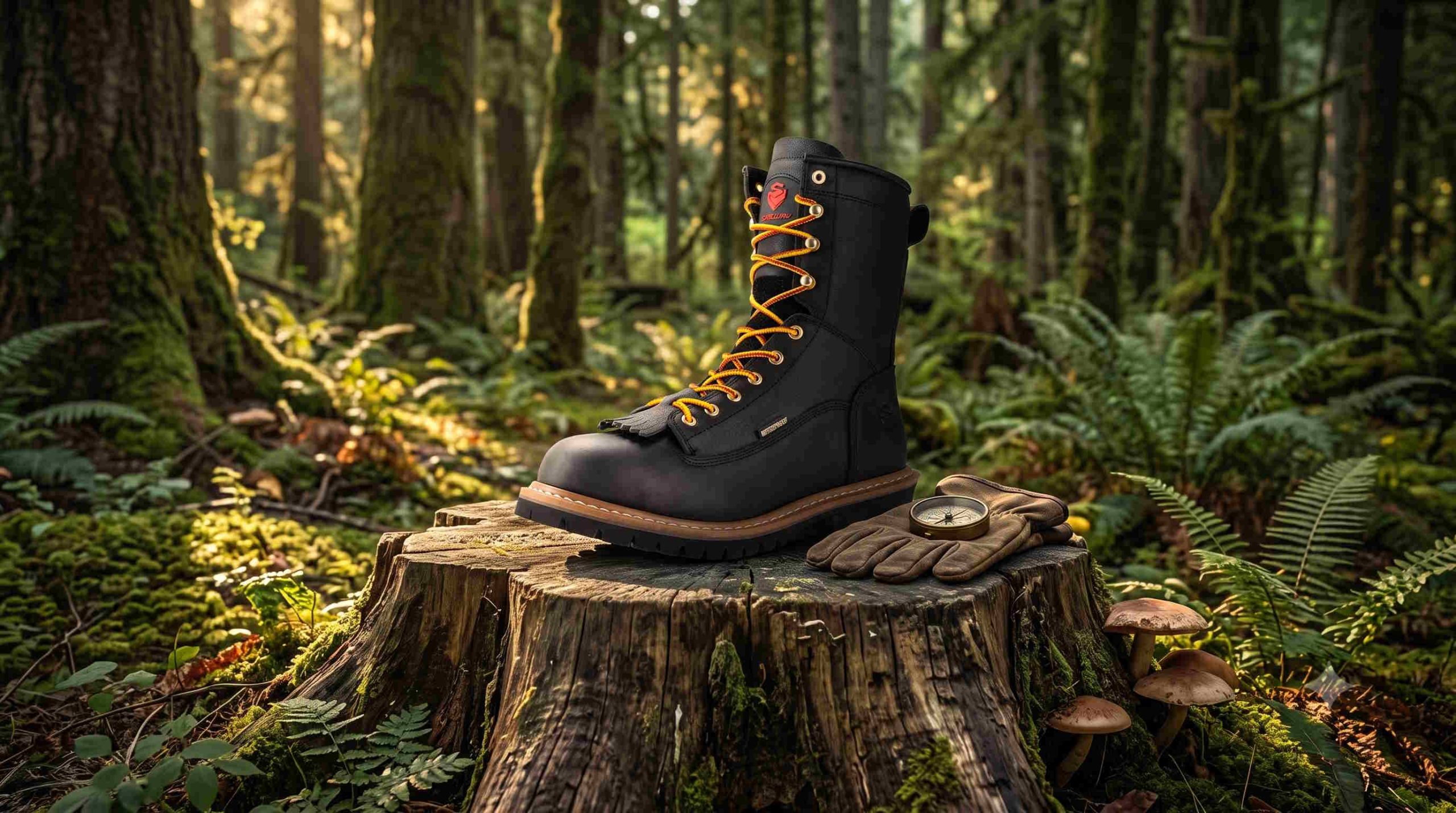
The SUREWAY is an 8-inch, full-grain leather logger boot with a steel toe, a wedge-style rubber outsole, and an EH (electrical hazard) rating, sold in the roughly-$100 tier. It ships with removable insoles (often a second set for thick socks) and a lace-to-toe logger profile.
Three misconceptions worth clearing up before you buy:
- It isn’t a Red Wing or Carolina at a discount. Several owners literally cross-shop it against those brands and note it resembles a Carolina — but the price tells you the durability expectation should be tempered. Owners who treat it as a “value beater” stay happy; owners who expect heirloom longevity get burned.
- “Waterproof” here means “waterproof for a while.” Many owners stay completely dry for months. A recurring pattern, though, is waterproofing that fades — the first wet sock often signals the sole starting to flex or separate, not a membrane defect.
- It’s a logger silhouette, not necessarily logger-grade durability for the hardest trades. It shines for lighter tree work, landscaping, and general jobsite use; the most punishing arborist and quarry use is where the early-failure complaints concentrate.
Key Specs That Actually Matter
Only the details that actually change your day on the job:
- Steel toe (EH rated): Real impact protection is the point of a safety toe. Under OSHA’s foot protection standard (29 CFR 1910.136), employers must provide protective footwear wherever falling, rolling, or piercing hazards exist — and owners here confirm the toe takes a dropped log without crushing. A minority feel the toe box pinches, which ties back to sizing.
- Full-grain leather upper: Owners consistently praise the leather as genuinely real and better than expected at this price. It’s the boot’s strongest, most repeated compliment.
- Wedge rubber outsole: Comfortable and soft underfoot — great on concrete and flat terrain. The trade-off owners report: the soft sole can wear down relatively fast and mud clings to it.
- Waterproofing: Works well early for most; longevity is the question mark. Re-treating on day one is a common owner ritual.
- Lace hardware / eyelets: A weak point. Broken grommets and laces that don’t last are reported often enough to plan around.
- Fit/last: Runs on the snug-and-narrow side of true-to-size for many, with no dedicated width options — critical if you have a wide or very narrow foot.
For a deeper look at why a wedge sole behaves differently from a lugged one on your specific surfaces, the work boot soles explainer is worth a skim.
Sizing & Fit — What Owners Actually Report
Direct answer: these run slightly small and narrow for many owners — order a half size up, and a full size up if you’ll add the thick-sock insole or have wide feet.
The sizing signal is one of the most consistent things in the entire feedback set. Recurring notes:
- Multiple owners say a size runs about one size small (a “9W feels like an 8”).
- Break-in tightness is common but usually resolves — several describe boots that felt snug for the first 8 hours, then loosened and became genuinely comfortable.
- No true width options. Wide-footed owners report toe-box pinch and side rubbing; narrow-footed owners report heel slop and the boot feeling loose mid-foot.
Who the fit suits: standard-to-slightly-wide feet who size up a half. Who it fights: very narrow feet (mid-foot looseness) and very wide feet (toe pinch), because there’s no width to dial in. If heel slop is your recurring problem across brands, the work boot fit & sizing guide has lacing fixes that apply directly here.
Feature-by-Feature Breakdown (Truth vs Marketing)
| Feature | What the Marketing Implies | What It Actually Means (Owner Experience) | Compared to Competitors |
|---|---|---|---|
| Full-grain leather | Premium, rugged upper | Widely confirmed as genuinely real leather; a top repeated compliment | Punches above its price; owners compare it favorably to Carolina/Georgia leather |
| Steel toe, EH rated | Jobsite safety protection | Takes real impacts (dropped logs) well; occasional toe-box pinch is a fit issue, not a toe failure | On par with budget safety toes; roomier toe than some rivals like Adtec per one long-term owner |
| Waterproof | Keeps feet dry | Dry for months for many; a recurring “wet sock” complaint appears as the sole begins to flex/separate | Less durable sealing than premium Gore-Tex loggers; comparable to other sub-$120 boots |
| Wedge rubber sole | Comfort + traction | Soft, comfortable underfoot; wears faster than expected and holds mud | Softer/comfier than some but shorter-lived than a stiffer lugged/Vibram sole |
| Lace hardware | Durable lacing | Grommets and laces are a known weak spot; some replace laces early | Below premium boots; plan on a lace swap |
| Comfort out of box | Ready to work | Frequently “no break-in needed” and “most comfortable I own” — the biggest win | Beats many pricier boots on out-of-box comfort per repeat buyers |
Real-World Owner Experience (Deep Pattern Analysis)
Pattern 1 — The “Two Left Feet” Defect (what most reviews won’t tell you)
In a nutshell: The single strangest and most repeated quality-control complaint is that some pairs arrive mismatched or crooked — owners describe two left-shaped boots, a sole sewn onto the wrong side, or a boot that visibly leans and points outward. Several construction and tree-work buyers report it independently, which signals a manufacturing consistency issue rather than isolated bad luck.
Hidden strength: When the pair is built straight (the majority), those same owners often love the boot — so this is a QC lottery, not a universal flaw.
Hidden weakness: Owners who didn’t inspect immediately discovered the defect after the return window and were stuck.
What to do about it: Unbox and inspect both boots side by side the day they arrive. Set them together on a flat floor; if one leans, points outward, or the soles don’t mirror each other, start a return that day. Don’t wait to “break them in” first.
Pattern 2 — The Re-Buyer Paradox
In a nutshell: This boot has an unusually loyal repeat-buyer base coexisting with furious one-timers. Owners on their third, fourth, and fifth pair sit a few reviews away from owners swearing they’ll never buy again. That paradox is the real verdict: for a meaningful group, the comfort-and-price combo is good enough that they simply re-buy when a pair wears out — treating it as a consumable, not an investment.
Hidden strength: Repeat buyers tell you the value math genuinely works for their trade and climate.
Hidden weakness: The re-buy behavior can mask a short average lifespan — “I love them, I’m on pair five” also means each pair didn’t last that long.
What to do about it: Decide up front which camp you’re in. If replacing a cheap comfortable boot yearly beats one expensive boot, you’ll likely be a happy re-buyer. If you need one pair to last, look higher up the price tier.
Pattern 3 — The Failure Sequence: Waterproofing → Sole → Heel
In a nutshell: Among owners who did have durability problems, a repeatable order emerges. The first symptom is usually a sudden wet sock; shortly after, owners notice the sole flexing or separating at the toe or heel; the heel counter/backing breaking down tends to follow. In other words, that first unexpected leak is often the early warning that the sole bond is going.
Hidden strength: Because there’s a sequence, you get a warning shot — the leak — before catastrophic failure.
Hidden weakness: The failures cluster in the first several months for the unlucky pairs, sometimes right after easy-return timing closes.
What to do about it: Treat a new leak as a diagnostic, not just an annoyance. Re-waterproof early and often, and once you feel water and see any sole gap, stop trusting the boot for hazard work. Sole re-bonding is not a safe DIY fix — consult a cobbler or verify against your employer’s PPE hazard assessment before continuing to wear a separating boot.
Pattern 4 — The Use-Case Durability Threshold
In a nutshell: There’s a clear dividing line between happy and unhappy owners, and it’s job intensity, not luck. Landscapers, railroad workers, general construction, line-clearance crews, and lighter tree work frequently report a year-plus of solid service and re-buy. The hardest arborist/climber and quarry use — constant ankle-rolling on uneven ground, daily abrasion — is where “shot in a month” and “wore plumb sideways” complaints concentrate.
Hidden strength: For the large middle band of trades, this threshold means the boot performs well within its lane.
Hidden weakness: If your work sits above that line, the boot’s structure can break down fast — some arborists report the side support material wearing out and the boot rolling their ankle within weeks.
What to do about it: Match the boot to the lane. For daily high-abrasion climbing on rough terrain, treat this as a backup or short-cycle boot, not your primary. The work boots by job type guide helps you place your trade on the right side of that line.
Pattern 5 — Comfort Is the Consistent Bright Spot
In a nutshell: Across the entire feedback set, comfort is the least polarized signal. “No break-in needed,” “most comfortable safety boot I’ve owned,” and “out-comforts my Red Wings/Danners” repeat constantly. The included insoles (often two sets) get real credit — though a vocal minority calls the thin foam insole “junk” and swaps it.
Hidden strength: For anyone whose #1 priority is all-day comfort at low cost, this is the boot’s honest superpower.
Hidden weakness: A minority report ankle rubbing from the tall shaft and tongue, and a few describe genuine foot pain — often tied to width mismatch rather than the boot itself.
What to do about it: If the tongue or ankle rubs, re-lace to lock the mid-foot and consider an aftermarket insole. If pain persists past a real break-in, it’s likely a width mismatch — return rather than push through.
Pattern 6 — The Smell and Sweat Quirk
In a nutshell: A smaller but memorable pattern: some owners report the boots trap heat and sweat, and a few describe a strong odor build-up not seen with their other boots. Others say they run warm — great in cold/freezer zones, less ideal in summer heat.
Hidden strength: The warmth is a genuine plus for cold-weather and freezer work.
Hidden weakness: Poor breathability can mean sweaty, warm feet in summer.
What to do about it: Treat it as a fall/winter boot if you run hot, rotate pairs to let them dry, and use moisture-wicking socks. Basic care only — nothing that voids the boot.
The Good, The Bad & The Ugly
The Good (comfort & value)
- Out-of-box comfort that repeatedly beats pricier boots.
- Genuinely real full-grain leather.
- Two insoles included; strong cold-weather warmth.
- Price that “shocks” owners for what you get.
The Bad (durability & fit friction)
- Soft wedge sole wears fast and holds mud.
- Lace hardware and grommets are weak points.
- Runs snug/narrow with no width options.
- Waterproofing longevity is inconsistent.
The Ugly (quality-control failures)
- Mismatched / “two left feet” / crooked pairs shipped to multiple owners.
- Heel-to-sole separation and heel-counter breakdown, sometimes within a month.
- A repeat heel-stitching failure specifically flagged by a welder across multiple pairs.
Mini Toolkit: Decide + Fix (Fast)
Issue-Tag Box #two-left-feet · #sole-separation · #heel-breakdown · #grommet-snap · #runs-narrow · #waterproofing-fades
Fit Mini-Matrix
| Foot type | Verdict |
|---|---|
| Narrow | Expect mid-foot/heel slop — lace-lock the instep or size carefully |
| Standard | Best fit; order a half size up |
| Wide | Toe-box pinch likely; size up a full size, but no true wide option exists |
Mini Decision Tree
- If your work is high-abrasion arborist/quarry every day → treat as backup, not primary.
- If you want max comfort per dollar for general/light trade work → strong buy.
- If you need guaranteed multi-year waterproofing → look at a premium Gore-Tex logger instead.
- If you have very narrow OR very wide feet → try it, but plan to inspect fit hard and return fast.
- If a $100 yearly-replace cycle beats one $300 boot for you → you’re the target buyer.
Troubleshooting Quickflow
- Boots arrive → inspect both on a flat floor for lean/mismatch today.
- Fit snug → wear ~8 hours before judging; snugness often loosens.
- Still pinching after break-in → likely width mismatch → return.
- New wet sock → re-waterproof and check the sole seam for gaps.
- Sole gap + wet foot → stop using for hazard work; see a cobbler or your PPE assessor.
- Heel/laces failing → swap laces; if the heel counter collapses, it’s replacement time.
Mini Return-Window Reality Check
Before easy-return timing closes, run these SUREWAY-specific tests:
- Mirror test: Set both boots together on a flat surface — confirm they’re a true left/right pair and neither leans or points outward.
- Toe-box press: Lace up and press each toe; a hard pinch now won’t “break in” if it’s a width problem.
- Seam flex: Firmly flex the sole at the ball and heel and look for any early separation at the leather-to-sole bond.
- Soak-adjacent test: Wet the outsole area and stand a few minutes; check for early dampness at the sole line.
- Hardware tug: Lace fully and tug — stress the grommets and laces while you still can return.
For a fuller pre-purchase framework across the category, the logger boots buying guide lays out how to pressure-test any pair in this class.
Sizing & Insider Tips (Realistic)
- Order a half size up as a default; a full size up if adding the thick-sock insole or you have wide feet.
- Inspect for the mismatch defect the day it arrives — this is the #1 avoidable regret in the feedback.
- Re-waterproof on day one. Owners who apply a leather grease/treatment early report far fewer wet-sock complaints.
- Lace-lock the instep if you get heel slop or mid-foot looseness — a common narrow-foot fix.
- Swap the thin foam insole if it feels flimsy; the boot is comfortable even without it per several owners.
- Treat a first leak as an early warning to inspect the sole bond, not just a nuisance.
- Rotate pairs and dry them out if you run hot or notice odor build-up.
- Don’t rely on it for the hardest daily abrasion work — reserve it for its lane.
- Replace laces proactively; budget laces are a known weak link.
- For anything beyond basic care — sole re-bonding, heel-counter or hardware repair, or any slip/safety concern — consult a cobbler or qualified repair, or verify against your employer’s PPE hazard assessment. A separating safety boot may no longer meet the protection your job requires.
Owner Stories
The stories below are composite scenarios reflecting repeated patterns across owner feedback — not individual quotes.
- The happy re-buyer (railroad/landscaping): Bought a $100 pair expecting to burn through it. It stayed comfortable and dry through mud and puddles for a year-plus, so when it finally wore, they simply ordered the same boot again. For their trade and price ceiling, the math works — and they’re on their third pair.
- The wrong-job mismatch (daily arborist): Loved the comfort and fit out of the box, wore it hard climbing and on uneven ground, and watched the side structure break down within weeks until the boot rolled their ankle. Not a lemon — a boot pushed past its durability lane.
- The wrong-width returner (very wide foot): Ordered true-to-size, felt the toe box pinch immediately, gave it a week hoping to break in, and it only got worse. With no wide option to fall back on, the right move was a fast return, not perseverance.
👉 SEE MORE OWNER FEEDBACK ON AMAZON
Who This Is For (and Who Should Skip It)
Buy it if…
- You want maximum out-of-box comfort per dollar.
- You’re in a general, light-trade, landscaping, railroad, or line-clearance role.
- You’d rather replace a cheap comfortable boot yearly than invest once.
- You’ll inspect on arrival and re-waterproof early.
- You want a real leather logger look without premium pricing.
- You work cold or freezer zones where the warmth helps.
Skip it if…
- You’re a welder or in spark-heavy work (repeat heel-stitching failure flagged).
- You need one boot to survive multiple hard years.
- You have very narrow or very wide feet and no patience for fit trial-and-error.
- You need guaranteed, long-lasting waterproofing with no maintenance.
- Daily high-abrasion arborist/quarry work is your norm.
👉 CHECK TODAY’S PRICE ON AMAZON
If you’re comparing options, start here: Top Logger Boot Picks
Alternatives (Quick Comparisons)
- Need bulletproof waterproofing above all? Prioritize a dedicated Gore-Tex logger and see the best waterproof work boots — SUREWAY’s sealing is good early but inconsistent long-term.
- Want lighter weight for high-mileage days? A few owners find SUREWAY a touch heavy; the lightweight work boot roundup has nimbler options.
- Willing to invest once for multi-year durability? Owners repeatedly cross-shop Red Wing; the Red Wing buying guide is the natural step up.
- Chasing all-day comfort as the top priority? SUREWAY does well here, but compare against the most comfortable work boots before deciding.
Deep-Dive FAQ
What should I test immediately after delivery?
Inspect both boots on a flat floor to confirm they’re a matched left/right pair that doesn’t lean or point outward — the “two left feet” defect is the top avoidable regret here. Then check toe-box fit, flex the sole seam for early separation, and stress the laces and grommets, all while a return is still easy.
What are the most common problems and fixes?
The big three are sole/heel separation, weak lace hardware, and a snug/narrow fit. Fixes: re-waterproof early to protect the sole bond, swap the laces proactively, size up a half, and lace-lock the instep for slop. Anything involving sole re-bonding or a collapsed heel counter should go to a cobbler, not a DIY glue job — a separating safety boot may no longer protect you.
Will these work with my foot type and my job?
Standard-to-slightly-wide feet who size up a half tend to do best; very narrow feet get mid-foot slop and very wide feet get toe pinch, because there are no true width options. Job-wise, it thrives in general, light-trade, landscaping, and railroad work and struggles under daily high-abrasion arborist or quarry use.
How long do they really last?
It varies sharply by use. Many owners report roughly a year to two-plus years of solid service in moderate trades, while the unlucky or hardest-use pairs break down within months. Because the lifespan is polarized, treat it as a value boot you may replace yearly rather than a multi-year investment.
Are they actually waterproof?
Mostly yes at first — a large share of owners stay dry through mud, puddles, and even river crossings for months. The recurring catch is that waterproofing can fade, and the first wet sock often coincides with the sole beginning to flex or separate. Re-treating on day one noticeably helps.
SUREWAY vs Red Wing — which should I buy?
If your priority is long-term durability and warranty backing, Red Wing is the safer multi-year investment and owners here openly admit SUREWAY won’t match that lifespan. If your priority is out-of-box comfort and value, SUREWAY genuinely competes — many owners say it feels as comfortable as boots costing three to four times more, and they’d rather re-buy it than pay premium once. Choose SUREWAY as a comfortable consumable; choose Red Wing as a long-haul investment.
Is the steel toe legit for jobsite safety?
Owners confirm the steel toe absorbs real impacts like dropped logs without crushing, and the boot carries an EH rating. Safety-toe footwear performance is defined by consensus standards such as ASTM F2413, which OSHA incorporates by reference — but always verify the specific rating meets your employer’s hazard assessment for your tasks.
Final Verdict
The SUREWAY 8″ Waterproof Steel-Toe Logger is one of the most honest “you get a lot for $100” boots I’ve analyzed — with an equally honest catch. If you’re a general, light-trade, landscaping, railroad, or line-clearance worker who values out-of-box comfort and real leather over guaranteed longevity, and you’re willing to inspect the pair on arrival and re-waterproof it early, this is an easy recommendation and you’ll likely become one of its many repeat buyers. If you need one boot to survive years of the hardest abrasion, guaranteed waterproofing, or a dialed-in width, spend more and skip this one. Match it to its lane and it over-delivers; push it past that lane and it fails fast.