CAT Women’s Echo Waterproof Steel Toe Review (2026): Worth It?
Last updated: June 2026
- Re-checked the “ordered Wide, still runs narrow” complaint against the happy owners — and found the split is more about foot shape than a sizing mistake.
- Re-verified where the waterproofing actually fails, and confirmed the recurring “soaked one day past the return window” timing pattern.
- Re-read the multi-year owners against the months-and-done crowd to see what separates a 3-year pair from a 3-month pair.
Affiliate disclosure: As an Amazon Associate, SturdyBoot earns from qualifying purchases. If you buy through a link on this page, we may earn a small commission at no extra cost to you. It never changes what owners actually reported.
The short version
I went deep into real owner feedback on the CAT Women’s Echo, and the verdict is genuinely split down the middle — which is exactly why it’s so confusing to shop for. Half the reviews call it the best women’s steel-toe boot they’ve ever worn; the other half call it disposable. Both halves are telling the truth, because this boot rewards one foot shape and punishes another.
Is the CAT Women’s Echo worth it? Worth it for narrow-to-standard feet doing light-to-medium duty; risky for wide feet, heavy abrasion trades, or anyone who needs true all-day waterproofing.
That one-line answer hides a lot of nuance, so let me show you the patterns that decide which camp you’ll land in. Everything below is a synthesis of real, verified-purchase owner experience — not a spec sheet rewrite.
For the broader category picture, the waterproof work boot buying guide lays out how membrane boots are supposed to behave so you can judge where the Echo lands.
How this review was built (so you can trust it)
- Reviews analyzed: I read a sample of roughly 200 verified-purchase text reviews — about 100 from the critical side and 100 from the positive side. For listing context, the product shows several thousand global ratings overall, but I’m only counting the individual written reviews I actually read, not the star tallies.
- Time window: The feedback I went through spans roughly late 2022 through mid-2026, so it reflects the current production run as well as longtime owners comparing newer pairs to ones they bought years ago. A few happy multi-year owners are explicitly talking about older pairs, which matters — more on that below.
- How I synthesized it: I tagged every review into buckets — comfort/fit, sizing and width, waterproofing, sole and stitching durability, lace hardware, weight, heat/sweat, and warranty/support — then separated use-and-fit-driven problems (wrong width, wrong trade, wrong climate) from likely product or design problems (delamination, stitching failure, liner tearing). Filtering the wrong-fit complaints out of the durability pile reveals a clearer picture than the raw star split.
- Important limitations:
- Reviews skew toward extremes — thrilled or furious — so the quiet middle is underrepresented.
- Wear intensity is wildly different: a security guard doing 4-hour shifts and a welder doing 40-hour weeks are not testing the same boot.
- I prioritized patterns that recurred across many owners over dramatic one-off lemons.
Quick Verdict (TL;DR)
Best for:
- Narrow, standard, or AAA-narrow feet that struggle to find a snug steel-toe boot
- Light-to-medium trades: warehouse, stocking, electrical, HVAC, landscaping, lab/clean environments
- Women who want a steel-toe that looks feminine and doesn’t feel like a clown shoe
Not for:
- Genuinely wide feet (the “Wide” width is a recurring sore point)
- Welders, mechanics, or anyone around sparks, diesel, or heavy abrasion
- Workers who stand in standing water or need warmth in deep snow
Standout win: When the fit is right, owners report borderline-shocking comfort and multi-year lifespans — several are on their third, fourth, or fifth pair.
Watch-outs: Waterproofing that fails for a meaningful minority, and an interior liner that wears out long before the exterior does.
Confidence Score: 7.5/10 🧭 — This score reflects how confidently I can tell you who this boot fits, not a reliability percentage. It’s high because the comfort-and-fit signal is remarkably consistent (narrow feet love it, wide feet fight it) and the failure modes are predictable. It’s not higher because the durability and waterproofing signals are genuinely polarized — two owners in identical jobs report opposite outcomes often enough that I can’t promise you a result.
What This Boot Is (and What It Isn’t)
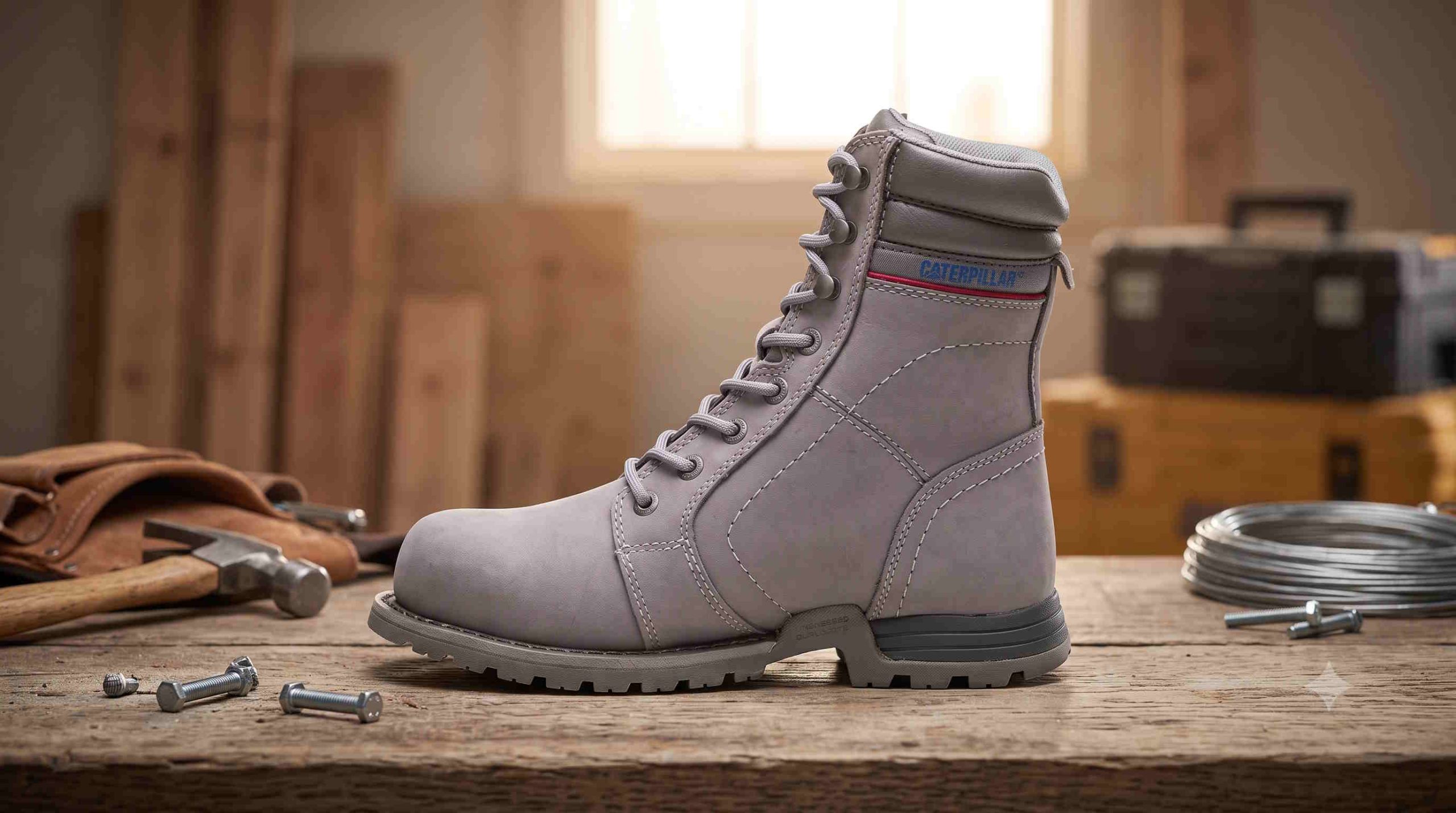
The CAT Women’s Echo is a full-height, lace-up steel-toe work boot with a waterproof-rated leather upper, metal lace hooks up top, and a single-density outsole — built specifically on a women’s last rather than a shrunk-down men’s boot.
A few misconceptions worth clearing up:
- “Waterproof means submersible.” It isn’t. Across the feedback, the upper holds out splashes and shallow puddles for many owners, but it’s water-resistant in practice for others, and water that comes in over the top stays in.
- “Steel toe means industrial-grade everywhere.” The toe cap does its job — owners credit it with saving toes from nails, sheep, falling machinery, even a motorcycle spill. But the rest of the boot is tuned for medium duty, not heavy abrasion. Worth knowing: a steel toe is not the same as puncture (sole) protection or an electrical-hazard rating — under OSHA’s foot-protection rule, those are separate classifications, which is why one owner who expected a nail-stopping shank was surprised when a nail still reached her foot.
- “It’s a fashion boot.” The color options get tons of compliments, which makes people assume it’s style-first. The protection is real; the styling is just a bonus that happens to draw skeptics.
Key Specs That Actually Matter
- Steel toe cap: The headline safety feature, and the part owners trust most. Several describe it preventing real injuries. The toe-cap protection that work boots are judged on is defined by the ASTM F2413 performance specification, the standard OSHA points to for impact and compression. On the flip side, a few report the toe box pressing or “bending” inward over time — a fit issue, not a protection failure.
- Waterproof leather upper: Works well for many, fails for a vocal minority. The recurring nuance: it’s reliable from the sole up to roughly the lower lace area, and unreliable above that.
- Women’s-specific last / fit: This is the boot’s whole identity. It runs narrow through the toe and midfoot because of the steel cap — which is exactly why narrow feet love it and wide feet don’t.
- Metal lace hooks (top eyelets): Owners genuinely value the speed-hooks for cinching the ankle. A minority report a hook bending or snapping, and the included laces are a common gripe.
- Single-density outsole: Decent tread and flex, but thin underfoot cushioning for some, and not strongly slip-resistant on ice or wet smooth floors.
- Weight: Described as “a little heavy for the category” — owners attribute the heft to the steel toe, and most say it doesn’t impede walking.
For how outsole compound and lug pattern translate to grip on your specific floor, the work boot soles explainer is a useful companion read, since slip resistance is one of the more mixed signals here.
Sizing & Fit — What Owners Actually Report
This is the single most-discussed topic in the entire feedback set, so read this section twice.
Verdict: runs true-to-size in length but narrow in width — and the “Wide” option does not solve it for genuinely wide feet.
- Length: Most owners say length is true to size. A handful of wide-foot owners size up half a size purely to buy width, but that’s a workaround, not a true length issue.
- Width is the battleground: The most repeated phrase across critical reviews is essentially “ordered Wide, still felt narrow.” If you have wide feet, multiple owners with the same experience are warning you directly. CAT does not appear to offer a true extra-wide (the kind of 3E–4E width some owners explicitly ask for).
- Who the fit suits: Narrow and AAA-narrow feet rejoice — several owners say this is the only steel-toe they can actually cinch down without heel slop. High arches are usually fine with an insole swap.
- Who it fights: Wide feet, and people whose pinky toe or the side of the big toe takes pressure from the steel cap. That’s the most common pain complaint, and it’s structural.
A foot-shape self-check before you buy saves a return: the work boot fit & sizing guide walks through measuring width and instep so you can predict whether the steel cap will pinch.
Feature-by-Feature Breakdown (Truth vs Marketing)
| Feature | What the Marketing Implies | What It Actually Means (Owner Experience) | Compared to Competitors |
|---|---|---|---|
| Waterproof upper | Keeps feet dry | Dry for many up to the lower lace line; a real minority report soaked feet, sometimes just past the return window | Less consistently sealed than premium membrane boots owners name (Red Wing, Bogs for snow) |
| Steel toe | Heavy-duty protection | Genuinely protective; credited with preventing injuries — but can press the toes on wider feet | Protection on par with category; fit tighter than many men’s-derived steel toes |
| Women’s last / width | True women’s fit | True-to-length, narrow-by-design; “Wide” still reads narrow to wide feet | Narrower than most; a win for narrow feet, a dealbreaker for wide |
| Outsole / grip | Slip-resistant | Adequate dry; weak on ice and wet smooth floors per several owners | Trails dedicated slip-rated boots |
| Interior liner | Comfortable all-day | Comfortable early; liner/heel lining wears or tears well before the exterior for heavy users | A recurring weak point versus boots with more durable interiors |
| Lace hardware | Secure speed-hooks | Loved for ankle cinching; occasional bent/snapped hook and weak stock laces | Hooks are a plus; lace quality below average |
Real-World Owner Experience (Deep Pattern Analysis)
Pattern 1: The width paradox is the whole story (lead pattern)
In a nutshell: The exact same boot earns “best fit I’ve ever found” and “painfully tight even in Wide” — because it’s narrow by design.
Hidden strength: Narrow-footed women repeatedly describe finally finding a steel-toe that doesn’t swim on them. One owner with AAA-narrow feet says she loves it for the reason others hate it.
Hidden weakness: Wide feet aren’t just uncomfortable — owners report lost toenails, blisters, and pressure bruises across the top of the foot. The “Wide” SKU does not behave like a true wide.
What to do about it: Be honest about your width before ordering. Narrow/standard: order your normal size. Wide: this is probably not your boot, and sizing up a full size to chase width tends to create heel slop instead.
Pattern 2: Waterproofing fails right as the return window closes (information gain)
In a nutshell: This is the insight most reviews won’t connect for you — several owners discover the boots aren’t holding water out days after the 30-day return window expires.
Hidden strength: When the seal holds, owners rave — rinsing contaminants off at day’s end, dry feet through rain weeks, several inches of standing water handled fine.
Hidden weakness: For the unlucky minority, the failure timing is brutal. One owner reports finding out one day past the 30-day window, soaked at a transfer station. The waterproofing is also height-limited: water over the collar just pools inside.
What to do about it: Don’t wait to test. Soak-test within the first week (details in the return-window section below). Treat the seam line above the laces as the weak point and never count on it in deep water.
Pattern 3: The interior dies before the exterior (failure sequence)
In a nutshell: A repeated sequence — the outside still looks fine while the inside liner shreds, especially at the heel, for high-mileage owners.
Hidden strength: Heavy users who accept this get years out of the shells by swapping to thick socks and heel pads. One backstage worker logged years on a pair this way.
Hidden weakness: For some, the liner tears within months and starts chewing up the back of the ankle — the first sign the boot’s daily-driver life is ending even though it still looks new.
What to do about it: If you’re high-mileage, plan on thick socks and aftermarket heel pads from day one. If the heel lining starts pilling or tearing, that’s your cue, not the exterior.
Pattern 4: The re-buyer paradox
In a nutshell: Plenty of owners complain and re-buy anyway — and just as many swear off the brand. The split tracks job type, not loyalty.
Hidden strength: Repeat buyers are concentrated in light/medium trades (warehouse, landscaping, electrical, HVAC, lab) and narrow feet. Several are on pair three, four, or five.
Hidden weakness: The “never again” crowd clusters in abrasion-heavy work (welding, mechanic, heavy construction, surveying) and wide feet. Same boot, opposite verdict.
What to do about it: Use the re-buyers as your mirror. If your job and foot match theirs, the odds are with you. If you’re a welder around spatter, believe the welders.
Pattern 5: The use-case threshold
In a nutshell: There’s a fairly clean line — fine for landscaping, warehouse, stocking, and clean trades; dies fast around sparks, diesel, hydraulic fluid, or constant heavy abrasion.
Hidden strength: In its lane, owners describe genuine multi-year service and real comfort once broken in.
Hidden weakness: Cross the threshold and you see the worst reviews — stitching at the toe cap letting go, soles delaminating, boots “falling apart” in months.
What to do about it: Match the boot to medium duty. For spark/welding work, owners flat-out say the toe stitching isn’t built for spatter — look elsewhere.
Pattern 6: Break-in is real and occasionally rough
In a nutshell: Many owners report little-to-no break-in; a meaningful group reports a genuinely painful week.
What to do about it: Expect a few days minimum. If it’s still creating blisters past a week and you have wide feet, that’s a fit mismatch, not a break-in stage — act before the return window closes.
The Good, The Bad & The Ugly
The Good (recurring positives)
- Outstanding fit for narrow/standard feet — a rare find in women’s steel-toe
- Real, injury-preventing toe protection
- Genuinely comfortable once broken in; multi-year lifespans when the fit and trade line up
- Looks good enough to draw compliments, light enough that the steel toe isn’t punishing
The Bad (recurring annoyances)
- “Wide” isn’t wide; weak stock laces; thin underfoot cushioning for some
- Sweaty feet in heat (expected with a waterproof boot, but worth flagging)
- Mediocre grip on ice and wet smooth floors
The Ugly (the failures that sting)
- Waterproofing failing just past the return window
- Sole delamination and toe-cap stitching letting go in abrasion-heavy trades
- Interior liner tearing and abrading the heel within months for heavy users
Mini Toolkit: Decide + Fix (Fast)
Issue-Tag Box: #width-too-narrow · #seam-leak-above-laces · #liner-tears-first · #toe-cap-pinch · #sole-delam-abrasion · #weak-stock-laces
Fit Mini-Matrix
| Foot type | Verdict |
|---|---|
| Narrow / AAA | Excellent — likely your best-fitting steel-toe |
| Standard | Good — order true to size, expect a snug toe |
| Wide | Risky — even “Wide” reads narrow; consider another boot |
Mini Decision Tree
- If your feet are wide → skip it, or accept toe pressure.
- If you weld/mechanic around sparks or fluids → skip it.
- If you’re narrow/standard in a medium-duty trade → strong buy.
- If you need deep-water or deep-snow protection → look at dedicated waterproof/insulated boots instead.
- If you’ve owned and loved a prior pair → re-buy with confidence.
Troubleshooting Quickflow
- Toes pinch → re-lace looser at the toe, add a thin insole; if still pinching past a week, it’s a width mismatch — return.
- Heel slop → tighten the top hooks; if it persists, you sized up too far for width.
- Feet wet → soak-test now; if it leaks below the lace line, return as defective.
- Liner rubbing heel → add heel pads + thick socks before it tears further.
- Hot/sweaty → switch to moisture-wicking socks; waterproof uppers don’t breathe.
- Beyond basic care (resoling, hardware replacement, slip-hazard fixes) → consult a cobbler or verify against your employer’s PPE hazard assessment.
Mini Return-Window Reality Check
Run these before your 30 days close — the worst reviews come from owners who found problems too late:
- Soak-test early: Stand in shallow water or hose the boots to the lower lace line for a few minutes, then check for damp socks. This is the single most important test, given the leak-after-returns pattern.
- Stress the toe box on a full shift: Wear them a real day, not ten minutes. Toe-cap pinch and pinky-toe pressure show up under load.
- Flex the sole seam and check the toe-cap stitching: Bend the boot and eyeball where the outsole meets the upper and where stitching wraps the toe — early separation is a red flag.
- Check the heel lining for early abrasion: If it’s pilling or tearing in week one under your mileage, it won’t survive months.
- Work the lace hooks: Cinch hard a few times; a hook that bends easily now will snap later.
If anything fails, return immediately. To sanity-check the Echo against the field before you commit, the waterproof boot buyer’s reference is the place to compare seal height and outsole ratings side by side.
Sizing & Insider Tips (Realistic)
- Narrow feet: order true to size. Owners with narrow/AAA feet consistently nail the fit at their normal size.
- Wide feet: think hard before buying. If you proceed anyway, sizing up a half size buys a little room but invites heel slop — manage it with the top hooks.
- Swap the insole if the underfoot feels thin. A common fix for the “walking on concrete” complaint; the stock insole is comfy at the heel but thin under the toes.
- Plan for thick socks if you’re high-mileage. This is the difference between a liner that “fails” in months and a shell that lasts years.
- Add heel pads at the first sign of liner wear, not after it tears — but apply carefully, since aggressive adhesive pads can rip more lining.
- Lace looser at the toe, tighter at the ankle to relieve toe-cap pressure without losing heel lock.
- Don’t count on them for deep water or deep snow. Owners in snow and standing water are the unhappiest; pair with waterproof overboots or pick an insulated model.
- Expect sweat in heat and switch to moisture-wicking socks — the waterproof upper traps moisture by design.
- For spark, weld, or solvent exposure, choose a different boot. The toe-cap stitching is the documented failure point under spatter.
- Anything beyond basic care — resoling, hardware replacement, or addressing a slip hazard — should go to a cobbler or qualified repair, or be checked against your workplace’s PPE requirements.
Work boots last longer when they’re broken in deliberately; the faster, easier break-in walkthrough helps with the rougher break-in some Echo owners describe.
Owner Stories
The stories below are composite scenarios reflecting repeated patterns across owner feedback.
- The happy narrow-foot re-buyer: A landscaper with narrow feet has worn the same model for over a year, 40-plus hours a week through rain and rough terrain, calls them the most comfortable shoes she owns, and plans to buy the exact same pair again. For her foot and trade, the boot is a clear win.
- The wrong-job mismatch: A welder who liked the boots after break-in watched the toe seams pop loose inside a couple of months. The boot wasn’t bad — it was simply pointed at spatter and abrasion it was never built to take.
- The wrong-width returner: A wide-footed warehouse worker ordered the “Wide,” still felt it crushing her toes within thirty minutes, fought it with insoles and looser lacing, and ultimately sent it back. Length was fine; width was the dealbreaker.
SEE MORE OWNER FEEDBACK ON AMAZON
Who This Is For (and Who Should Skip It)
Buy it if…
- You have narrow, standard, or very narrow feet
- You work warehouse, stocking, landscaping, electrical, HVAC, lab, or similar medium-duty roles
- You want real steel-toe protection in a women’s-specific, non-bulky boot
- You’ve owned a prior pair and know your size
- You’ll soak-test and act inside the return window
Skip it if…
- You have genuinely wide feet
- You weld, wrench, or work around sparks, diesel, or heavy abrasion
- You need dependable deep-water or deep-snow performance
- You need strong slip resistance on ice or wet smooth floors
- You can’t tolerate any break-in period
If you’re comparing options, start here: Top Waterproof Work Boot Picks
Alternatives (Quick Comparisons)
- If you have wide feet: The Echo is the wrong starting point — browse a width-friendlier option in the most comfortable work boots roundup, where fit consistency is the priority.
- If you want the lightest possible steel-toe: Weight is a mild Echo complaint; the lightweight work boots guide covers boots that shave the heft.
- If your job is genuinely wet or snowy: Owners who needed true waterproofing were happier elsewhere — the best waterproof work boots list ranks boots by real-world seal.
- If you’re shopping women’s work boots broadly: The women’s work boots guide puts the Echo in context against other women’s-last options.
Is the CAT Echo better than Red Wing for women’s work boots?
For pure long-term durability and waterproofing, owners who own both tend to give the edge to Red Wing — several Echo critics explicitly say they “should have stuck with Red Wing.” The Echo’s counter-argument is fit and value: it’s a women’s-specific last that narrow feet love, at a lower price tier, with a steel toe that isn’t bulky. If durability is everything and budget is flexible, Red Wing wins for those owners; if fit-for-narrow-feet and value matter most, the Echo earns its place.
Deep-Dive FAQ
What should I test immediately after delivery?
Soak-test the waterproofing and wear them for a full shift inside the first week. The recurring horror story is owners discovering leaks or toe pain just after the 30-day window. Check the toe-cap stitching, flex the sole seam, and inspect the heel lining for early wear while you can still return them.
What are the most common problems and fixes?
The top three are narrow width (fix: be honest about your foot before buying — there’s no real fix if you’re wide), waterproofing leaks above the lace line (fix: none reliable; return if it leaks low), and interior liner wear (fix: thick socks plus heel pads from day one). Weak laces are an easy aftermarket swap.
Will these work with my foot type and my job?
Narrow-to-standard feet in medium-duty trades: yes, strongly. Wide feet or abrasion-heavy trades (welding, mechanic, heavy construction): probably not. The boot’s fit and durability both reward the same profile — snug feet, moderate wear.
How long do they really last?
It’s bimodal. In light-to-medium trades with the right fit, owners report multiple years and re-buy repeatedly. In abrasion-heavy work or with a poor fit, failures cluster in the first few months. There’s less middle ground than most boots — your job and foot largely decide which end you land on.
Are they actually waterproof?
For many owners, yes — dry through rain and shallow puddles. For a real minority, no — soaked feet, sometimes within days. The consistent nuance: they hold from the sole to the lower laces, and water entering over the collar stays trapped. Treat them as splash-and-puddle proof, not submersible, and never rely on them in deep snow.
Is the steel toe comfortable or does it pinch?
For narrow/standard feet, owners find it protective without pinching. For wider feet, the steel cap is the number-one source of toe pain — pressure on the pinky toe and the side of the big toe. The protection itself is well-regarded; the discomfort is a width-and-cap-geometry issue.
Do they hold up for welding or mechanic work?
Owners in those trades say no. The toe-cap stitching isn’t built to survive welding spatter, and abrasion/solvent exposure accelerates sole and seam failure. Multiple welders and mechanics specifically warn against it — believe them. If your role also involves live electrical work, don’t assume an electrical-hazard rating: under OSHA’s foot-protection standard, EH protection is a distinct classification you should confirm on the boot’s marking (one owner was surprised to question whether hers qualified at all), and verify against your employer’s PPE hazard assessment.
Are they slip-resistant on wet or icy floors?
Mixed-to-weak. Several owners report poor grip on ice and wet smooth surfaces, with the cold hardening the outsole. The work boot soles explainer helps you judge whether the tread suits your floor before you rely on it.
Final Verdict
The CAT Women’s Echo Waterproof Steel Toe is one of the most polarizing women’s work boots I’ve researched — and once you see the pattern, the polarization makes perfect sense. This is a narrow-last, medium-duty boot wearing a tough-as-nails reputation. Give it the foot it wants (narrow to standard) and the job it’s built for (warehouse, stocking, landscaping, clean trades), and owners reward it with years of service and repeat purchases. Push it past its threshold — wide feet, welding sparks, deep water — and it produces the brutal reviews.
So who should buy it? The narrow-footed tradeswoman who’s tired of steel-toes that swim on her feet, works medium duty, and will soak-test inside the return window. If that’s you, the Echo is a genuinely strong, value-priced pick. If you’re wide-footed or working in abrasion and standing water, save yourself the disappointment and shop elsewhere.