Danner Logger Boots Review 2026: Worth It or Overhyped?
Last updated: July 2026
- Re-checked the split between long-haul repeat buyers and one-time disappointed owners; the polarization is still the defining pattern for this boot, not an outlier.
- Re-verified the heel/hardware failure timing reports — a recurring cluster of owners describe the heel counter or shoelace hook giving way in the weeks-to-months window, several noting it lands just past when an easy return would’ve been simple.
- Re-read the comfort feedback and confirmed the hard-sole and “runs hot” complaints are a consistent minority theme, not a one-off.
- Re-confirmed the made-in-Vietnam surprise remains a live sore point for buyers who expected USA construction.
Affiliate disclosure: SturdyBoot.com is reader-supported. If you buy through links on this page, we may earn a small Amazon commission at no extra cost to you. It never changes what we report from owner feedback.
The boot that splits its own owners in half
Ask any logger, lineman, or arborist about the mid-day gut-punch of feeling cold water seep through a “waterproof” boot, and you’ll get the same grimace. That exact scenario is where the Danner Logger creates real confusion: for every owner who calls it the most comfortable boot they’ve ever laced up and re-buys it for the fifth time, there’s another who says the heel tore off inside a few months and soaked their feet on a job. Both are describing the same boot.
Is it worth it? For most buyers, yes — if you want a sharp-looking, aggressive-heeled logger for moderate use and you go in knowing it’s a stiff, warm, Vietnam-made boot, not the old USA-welted legend. For daily hard abuse, it’s a coin toss.
This review is a synthesis of real owner experience — not a spec sheet rewrite. If you want the category-wide view before you commit, our logger boot buying guide frames how heel height, sole stiffness, and waterproofing trade off against each other on the job.
How this review was built (so you can trust it)
- Reviews analyzed: I read a sample of roughly 90 individual verified-purchase text reviews across the positive and critical feedback for this boot. That’s the count of distinct reviews I actually read — not the listing’s 320 global ratings, and not the star-filter tallies.
- Time window: The feedback spans roughly late 2016 through mid-2026, so it captures years of the current Vietnam-made production. Worth flagging: several of the most loyal reviewers are grading this pair against older or USA-made Danners they owned years ago, which colors both the praise and the letdown.
- Method: I tagged every review into buckets — comfort/fit, sizing, waterproofing, sole and construction durability, lace hardware, weight, heat/cold behavior, and support — then separated use- and fit-driven complaints (wrong width, wrong climate, wrong expectations) from likely product failures (heel separation, seam splitting, waterproofing loss). Filtering the wrong-use noise out reveals a truer picture than the raw star average.
- Important limitations:
- Reviews skew toward extremes — thrilled re-buyers and furious returners both post more than the quiet middle.
- Wear intensity is wildly different: a saw-crew arborist and a range officer who wears them a few days a week are not stress-testing the same boot.
- I prioritized patterns that repeat across many owners over dramatic one-off lemons.
For a feature-to-risk overview that pairs well with this review, the Work Boots 101 primer ties boot construction choices to real jobsite hazards.
Quick Verdict (TL;DR)
Best for:
- Loggers, arborists, and wildland crews who want an aggressive 90-degree heel to dig into slopes and ladder rungs
- Moderate-use wearers (range officers, part-time outdoor work, motorcycle riders) who value looks and grip over all-day cushioning
- Danner loyalists who already know the fit and re-buy without hesitation
Not for:
- Anyone doing hard, wet daily labor who needs guaranteed long-haul waterproofing
- Wide-footed workers expecting a roomy forefoot
- Buyers who assumed USA-made welted construction at this price
Standout win:
- A genuinely loved comfort-and-grip combo for the owners it fits — repeat buyers are intensely loyal
Watch-outs:
- A recurring cluster of heel-separation and waterproofing-loss reports, often clustering after the easy-return window
- Runs stiff and warm; the stock insole underwhelms many owners
🧭 Confidence Score: 7.5/10 — This reflects how confidently I can tell you who this boot fits, not a reliability percentage. The comfort signal is strong and consistent for the right buyer, and the sizing/width behavior is clear. It loses points because the durability data is genuinely polarized — the same boot delights and fails depending on use intensity — so I can’t hand you a clean “it’ll last X years” promise.
👉 CHECK TODAY’S PRICE ON AMAZON
What This Boot Is (and What It Isn’t)
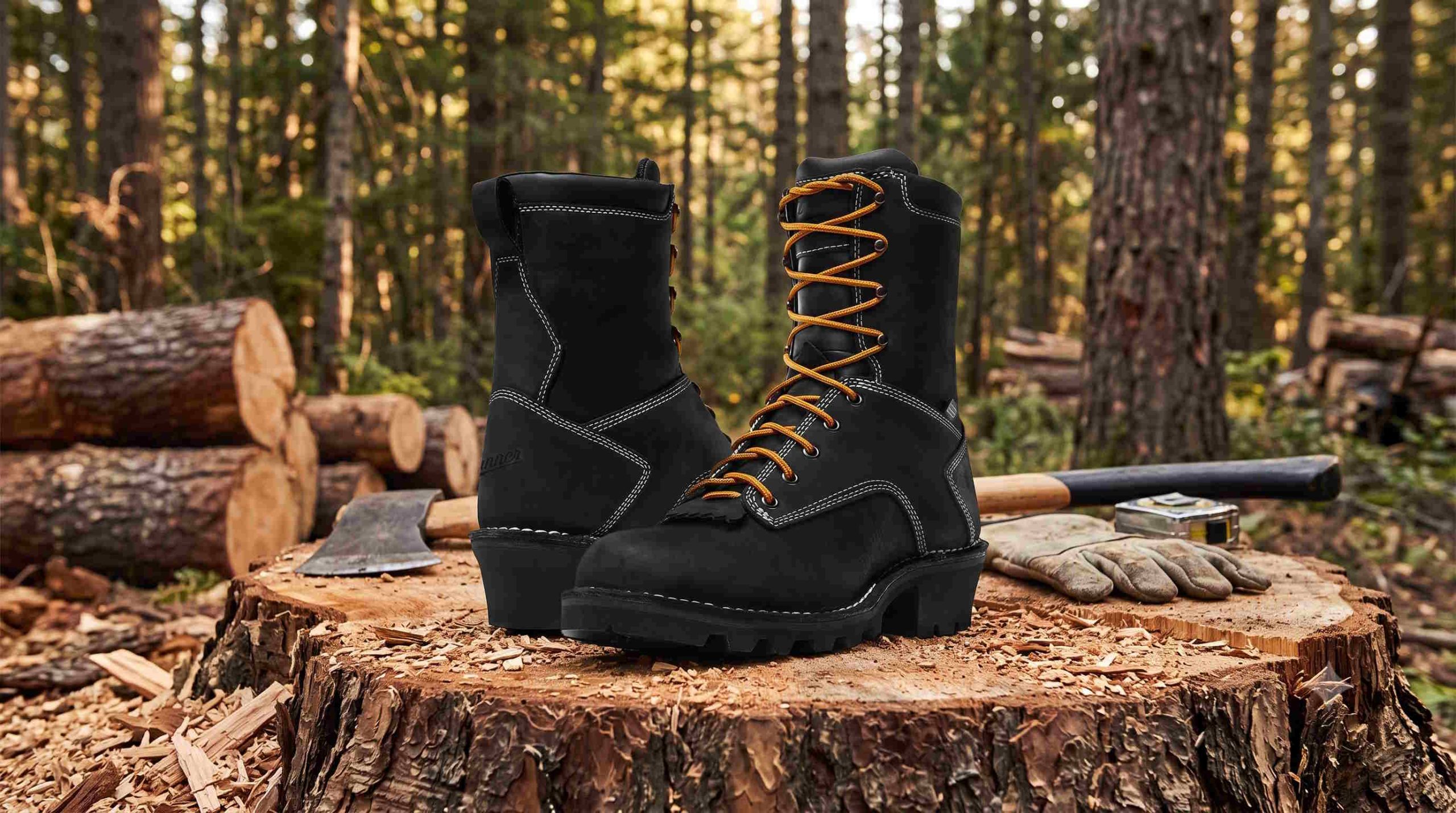
The Danner Logger is a stitchdown-style, oiled-nubuck logger boot built on a lightweight platform with a Vibram outsole and a pronounced 90-degree logger heel, running a “Danner Dry” waterproof liner. It is a working boot with a stiff sole and aggressive heel — not a soft, broken-in-out-of-the-box comfort shoe.
A few misconceptions worth clearing up:
- “It’s the old USA Danner Logger.” Owners repeatedly note these are made in Vietnam, and several longtime fans grade them against pricier USA-welted Danners they consider a step up for daily hard use.
- “Waterproof means waterproof forever.” Owner reports are split — many stay dry for months, but a repeated critical theme is water resistance fading, sometimes within weeks.
- “Logger heel = hiking comfort.” The tall heel and stiff sole are built to bite into terrain and ladder rungs; owners who wanted a flat, cushioned walker are the ones who bounce off it.
- “It’s a safety-toe boot.” Owners repeatedly note this is a soft-toe leather logger, and a few specifically wish it came in a protective toe. If your job requires a rated toe cap, understand what ASTM F2413’s impact and compression requirements actually cover before relying on any boot for it — and this one isn’t built for that.
Key Specs That Actually Matter
- 90-degree logger heel: Owners who climb poles, work slopes, or ride motorcycles praise how it digs in and grips — but a few note the pronounced heel makes weight distribution feel odd on flat pavement.
- Stiff sole: A durability asset and a comfort liability in the same breath. Repeat buyers accept it; comfort-first buyers call it the hardest-soled boot they’ve owned.
- Danner Dry waterproof liner: Keeps many owners dry for months, but also makes the boot run noticeably warm — a real drawback flagged for hot climates and summer work.
- Oiled nubuck upper: Multiple owners recommend oiling before first wear and re-treating regularly; several tie skipped conditioning to earlier leather cracking.
- Vibram outsole: Widely liked for grip; heavy-use arborists report getting a couple of years before a resole is needed.
- Stock insole: A recurring letdown — thin foam that many owners swap immediately.
Why it matters: the same traits that make this boot a slope-and-ladder specialist (our soles explainer breaks down why heel geometry changes how a boot behaves on different ground) are exactly what frustrate buyers expecting a soft daily walker.
Sizing & Fit — What Owners Actually Report
Verdict: mixed, leaning toward “runs a touch large but fits narrow.” Several owners say Danners run about a half size big and recommend sizing down. At the same time, the forefoot is repeatedly described as skinny.
- Width behavior: This is the sharpest fit signal in the feedback. Wide-footed owners repeatedly find the forefoot the narrowest part of the boot — one buyer who compared three Danner models found the Logger the tightest of the bunch. Even in a “Wide,” some still find the midfoot skinny.
- Half-size guidance: Multiple owners suggest going down a half size from your normal shoe; a few normally-9.5-to-10 wearers landed on a 9 and thought they could’ve gone smaller.
- Who it suits: Standard-to-narrow feet do best. Wide and extra-wide (2E) buyers are split — some in true wide sizes are perfectly happy, others send them back.
If heel slop or a skinny forefoot worries you, the work boot fit & sizing guide walks through measuring both length and width so you don’t become the “loved the look, couldn’t wear them” returner.
Feature-by-Feature Breakdown (Truth vs Marketing)
| Feature | What the Manufacturer Says | What It Actually Means (User Experience) | Compared to Competitors |
|---|---|---|---|
| Waterproofing | Waterproof, Danner Dry liner | Great for months for many; a recurring minority report leaks within weeks and blame the liner failing early | Owners who cross-shopped Danner’s Gore-Tex models found those noticeably more reliably waterproof |
| Sole | Vibram traction, lightweight | Excellent grip; also the stiffest, hardest sole many owners have worn | Grip praised over rivals; comfort trails softer-riding brands owners mention |
| Heel | 90-degree logger heel | Digs into slopes, ladders, and pole-climbing gear beautifully; feels odd to some on flat ground | A true logger heel where many “work boots” only imitate it |
| Leather | Oiled nubuck | Soft, sharp-looking, needs conditioning; skipping oil is tied to earlier cracking | Softer than some, which owners like for break-in but watch for wear |
| Insole | Cushioned footbed | Widely called thin and cheap; frequently swapped | A common complaint that aftermarket insoles fix |
| Origin | — | Made in Vietnam; a genuine surprise to buyers expecting USA build | The pricier USA-welted Danner Loggers are the step-up owners point to |
Real-World Owner Experience (Deep Pattern Analysis)
1. The Re-Buyer Paradox (the pattern owners obsess over)
In a nutshell: This boot has two loud tribes. One group is on their 2nd, 3rd, or 5th pair and swears it’s the only boot they’ll buy. The other says it fell apart doing real work and they’d go back to Chippewa or Georgia. Both are describing the same model.
Hidden strength: The loyalty is unusually deep — owners describe eight years across two pairs, or wearing them to the office for compliments and to the woods for felling trees. When it fits your foot and your use, satisfaction is very high.
Hidden weakness: The praise cluster skews toward moderate use and Danner veterans who already know the fit. The disappointment cluster skews toward hard daily laborers and first-time Danner buyers with high price expectations.
What to do about it: Be honest about which tribe you’re in before buying. If you abuse boots 50–60 hours a week in wet conditions, weight the critical reviews more heavily. If you want a sharp, grippy boot for mixed use, the loyalists are probably your future.
2. Heel & Hardware Failure Timing — what most reviews won’t tell you
In a nutshell: The single most alarming recurring failure isn’t the sole wearing out — it’s the heel counter or lace hook giving way relatively early. Owners describe the heel “coming off” one boot around the few-months-to-six-months mark, and a shoelace hook popping after about a week in one case.
Hidden strength: When the heel and hardware hold, the rest of the boot tends to keep going for years — several heavy users report multiple seasons.
Hidden weakness: The failure timing is the cruel part. A cluster of these breakdowns land after the simple 30-day return window, when you’ve already committed. That’s high-value information a star average hides.
What to do about it: Stress-test the heel and every lace hook hard in your first weeks (see the return-window check below). Catch a defect while returning is still easy. Heel-counter or hardware repair is a job for a qualified cobbler, not a DIY fix.
3. The Waterproofing-Then-Sole Sequence
In a nutshell: Among owners who report failures, a rough sequence shows up: waterproofing fades first, then stitching or seams open, then the boot is “shot.” Several describe wet feet within 30 minutes once the seam by the sole starts opening.
Hidden strength: For moderate-use owners who condition the leather, waterproofing holds up for many months and the sequence never starts.
Hidden weakness: Once water gets in through a failing seam, owners describe the decline accelerating.
What to do about it: Treat a sudden new leak as an early warning, not a nuisance — check the sole seam immediately. Keep the nubuck oiled from day one; owners tie neglected leather to faster deterioration.
4. The Hard-Sole, Runs-Hot Comfort Split
In a nutshell: Comfort is genuinely polarized. Many owners call it the most comfortable boot they’ve ever worn with little to no break-in. A vocal minority call it the hardest-soled, most uncomfortable boot they’ve owned, made worse by the warm waterproof liner.
Hidden strength: For a lot of feet, the fit is dialed in out of the box — “comfy from the start” is a very common phrase.
Hidden weakness: The stiff sole plus thin stock insole plus a warm liner is a bad combination for hot-climate or hard-concrete wearers. One owner testing at room temperature found the liner made his feet hot just sitting down.
What to do about it: Plan on a quality aftermarket insole — owners who swap the footbed routinely report a big comfort jump. If you work in summer heat, weigh a less-insulated boot.
5. Use-Case Threshold: Where It Wins vs Dies
In a nutshell: The dividing line is remarkably clean. Wildland fire academy, saw crews, arborists doing “moderate but real” work, range officers, motorcycle riders, and winter wear = happy owners. Hard daily labor in constant wet, especially by first-time buyers expecting premium longevity = the failure cluster.
What to do about it: Match the boot to the threshold honestly. Our work boots by job type guide helps you map your specific trade to the boot’s real strengths.
The Good, The Bad & The Ugly
The Good (comfort, grip, looks):
- Frequently called comfortable out of the box with minimal break-in
- Aggressive Vibram grip and a true logger heel owners love on terrain
- Sharp looks that draw compliments even off the jobsite
- Deep repeat-buyer loyalty among the owners it fits
The Bad (fit friction, comfort caveats):
- Skinny forefoot frustrates wide-footed buyers
- Stiff sole and thin stock insole disappoint comfort-first owners
- Warm liner makes hot-weather wear rough
The Ugly (failure clusters):
- Recurring heel-separation and lace-hook failures, some early
- Waterproofing loss reported by a real minority, sometimes within weeks
- Made-in-Vietnam surprise for buyers expecting USA welted construction
Mini Toolkit: Decide + Fix (Fast)
🏷️ Issue-Tag Box: #heel-separation · #lace-hook-snap · #seam-leak · #runs-hot · #skinny-forefoot · #thin-insole
Fit Mini-Matrix:
| Foot Type | Verdict |
|---|---|
| Narrow | Best fit — forefoot suits you |
| Standard | Good; consider sizing down a half |
| Wide / 2E | Split — some happy, many find it too skinny |
Mini Decision Tree:
- If you do hard daily wet work → weigh a Gore-Tex or USA-welted logger instead.
- If you want grip and looks for moderate/mixed use → strong pick.
- If you have wide feet → try in person or be ready to return.
- If you run hot or work summers → factor in the warm liner.
- If you’re a returning Danner owner → you already know your size; buy.
Troubleshooting Quickflow:
- New leak appears → check the sole seam for opening.
- Seam opening → document it and start a return if still in window.
- Heel feels loose → stress it now, don’t wait.
- Feet sore on hard ground → swap the stock insole.
- Feet running hot → thinner sock or reconsider for summer.
- Beyond basic care (resole, heel/hardware repair) → see a qualified cobbler, or verify your needs against your employer’s PPE hazard assessment under OSHA’s foot-protection standard (29 CFR 1910.136).
Mini Return-Window Reality Check
Before your easy-return window closes, run these boot-specific tests:
- Stress every lace hook and eyelet by hand — a hook popping early is a documented failure here.
- Grab and tug the heel counter firmly; heel separation is the signature complaint, and it’s cheapest to catch now.
- Soak-test the waterproofing with a hose or a wet walk, then check for damp socks — some owners lose water resistance fast.
- Flex the sole seam hard and inspect the stitching where the upper meets the sole.
- Wear them a full day on your actual surface (concrete, slope, ladder) to feel the stiff sole and warm liner before you’re stuck.
For how these checks fit into a smarter overall buying decision, the logger boot buying guide puts the return-window mindset in context.
Sizing & Insider Tips (Realistic)
- Consider sizing down a half size — multiple owners say Danners run about a half big.
- Wide feet: try in person if you can; the forefoot is the narrowest zone owners report.
- Swap the stock insole early — thin foam is the most common comfort complaint, and a better footbed fixes most of it.
- Oil the nubuck before first wear; owners say the pull-up finish can arrive a little dry.
- Re-condition regularly — neglected leather is tied to earlier cracking in the feedback.
- Don’t expect summer comfort; the warm liner shines in cold and drags in heat.
- Break-in is real but usually short — many owners report near-zero, a few need a couple of weeks.
- Monitor the sole bond over the first months; a new leak often signals a seam starting to open.
- Boot socks help — one owner specifically calls them a must for all-day comfort.
- For anything past basic care — resoling, heel rebuilds, hardware replacement — use a qualified repair shop, or verify slip/hazard concerns against your employer’s PPE assessment.
Owner Stories
The stories below are composite scenarios reflecting repeated patterns across owner feedback.
- The loyal re-buyer: A saw-crew worker on his second or third pair, waxes them every few weeks, gets multiple seasons, and swears he’ll never switch. For his moderate-but-real use and known fit, the boot delivers exactly what he wants.
- The wrong-job mismatch: A first-time Danner buyer doing hard daily labor in constant wet expected premium longevity at a premium-feeling price. Waterproofing faded, a heel let go a few months in, and he’s heading back to Chippewa — feeling the price didn’t match the lifespan.
- The wrong-width returner: A wide-footed buyer loved the looks, measured carefully, ordered his size, and still couldn’t get comfortable in the skinny forefoot. Sent them back and kept his roomier brand.
👉 SEE MORE OWNER FEEDBACK ON AMAZON
Who This Is For (and Who Should Skip It)
Buy it if…
- You want a true logger heel and aggressive grip for slopes, ladders, or pole work
- Your use is moderate-to-real but not constant wet daily abuse
- You have standard-to-narrow feet
- You’re a returning Danner owner who knows the fit
- You’ll swap the insole and condition the leather
Skip it if…
- You need bulletproof all-day waterproofing for hard wet labor
- You have wide feet and can’t try before buying
- You want soft, cushioned comfort with no insole swap
- You work in constant summer heat
- You specifically wanted USA-welted construction
👉 CHECK TODAY’S PRICE ON AMAZON
If you’re comparing options, start here: Top Logger Boots Picks
Alternatives (Quick Comparisons)
- If waterproofing is non-negotiable: Owners who cross-shopped Danner’s own Gore-Tex logger found it more reliably dry — worth it for constant-wet work.
- If you want more comfort for the money: Several owners name Chippewa and Georgia as roomier or softer-riding at a comparable or lower price.
- If you need a broader roundup: Browse our best waterproof work boots for wet-trade options that prioritize staying dry, or the most comfortable work boots if cushioning is your top priority.
Deep-Dive FAQ
What should I test immediately after delivery?
Stress every lace hook, tug the heel counter hard, and soak-test the waterproofing within your first few days. These three areas — hardware, heel, and water resistance — are exactly where this boot’s documented failures show up, and catching a defect early keeps your return simple.
What are the most common problems and fixes?
The recurring issues are early heel separation, lace-hook failure, waterproofing loss, a hard sole, and a thin stock insole. The insole and comfort complaints are largely fixable with a quality aftermarket footbed and boot socks; heel, hardware, and seam failures are product issues to catch inside the return window, not DIY repairs.
Will these work with my foot type and my job?
If you have standard-to-narrow feet and do moderate-to-real logging, wildland, range, or mixed outdoor work, they’re a strong match. Wide-footed buyers and anyone doing constant wet daily labor are the two groups most likely to be disappointed.
How long do they really last?
It’s genuinely polarized — heavy-use owners report anywhere from a few months (in the failure cluster) to multiple years with waxing and resoles. There’s no single honest number; longevity tracks closely with how wet and hard your use is and whether you condition the leather.
Are they actually waterproof?
Mostly, for a while — many owners stay dry for months, but a real minority report water resistance fading, sometimes within weeks. Treat any sudden new leak as a signal to inspect the sole seam rather than a one-off.
Danner Logger vs Chippewa — which should I pick?
Pick the Danner for the aggressive logger heel, grip, and looks; pick Chippewa if you want a roomier, often softer-riding boot at a comparable price. Owners who value forefoot width and cushioning repeatedly drift toward Chippewa, while those who prize the heel and grip stay with Danner — it comes down to whether fit-comfort or terrain-bite matters more to you.
Why do some owners say these aren’t the “real” Danners?
Because these are made in Vietnam, and longtime fans compare them to older or USA-welted Danner Loggers they consider a step up for hard daily use. They’re a legitimate working boot — just not the pricier welted construction some buyers assumed at this price.
Final Verdict
The Danner Logger is a genuinely good boot for a specific buyer: the standard-to-narrow-footed worker who wants an aggressive logger heel, excellent grip, and sharp looks for moderate-to-real use — and who goes in knowing it’s a stiff, warm, Vietnam-made boot that rewards an insole swap and regular leather care. For that person, the deep loyalty in the feedback is well earned.
If you’re doing hard, constant-wet daily labor, or you have wide feet you can’t fit-test, the recurring heel and waterproofing failures are a real gamble — and a Gore-Tex or USA-welted alternative may serve you better. Know your tribe before you buy.