
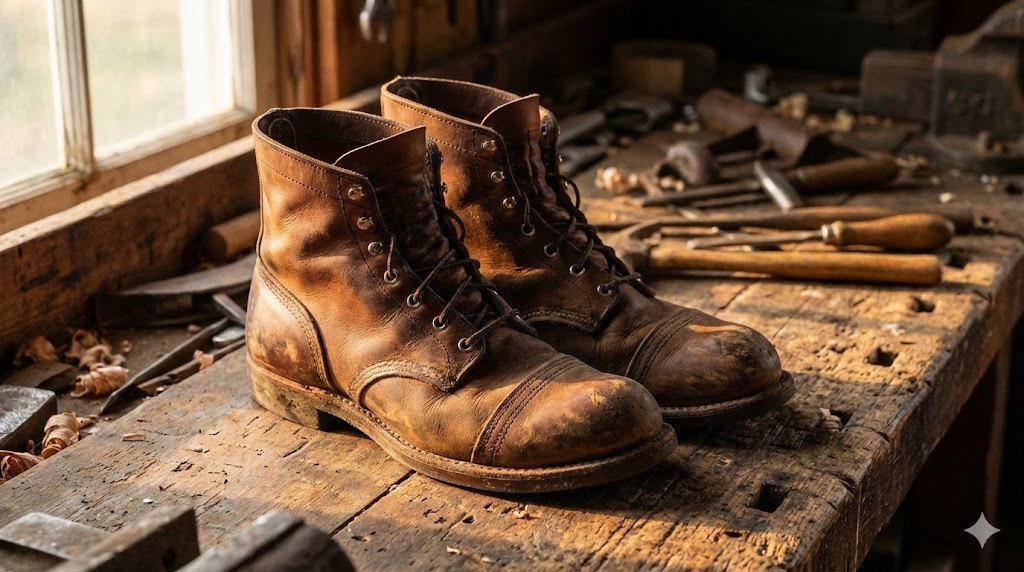
Red Wing Men’s Iron Ranger Review: Break-In, Sizing, QC & Is It Worth $350?
Last updated: February 2026
- Re-checked recurring sizing complaints and updated size-down guidance across multiple leather types
- Refreshed speed hook / quality control patterns with the latest owner reports
- Updated break-in tips around common hotspots (ankle collar, forefoot stiffness, toe box pressure)
- Verified current sole configuration (Vibram 430 mini-lug) and traction feedback on varied surfaces
SturdyBoot.com is reader-supported. If you buy through our Amazon links, we may earn a small commission at no extra cost to you. This never influences our recommendations—every boot earns its spot through real owner data.
Why This Boot Keeps Dividing People
There is something uniquely frustrating about spending north of $300 on a pair of boots and not knowing whether they will fit, whether the break-in will be survivable, or whether the pair you receive will have the same craftsmanship as the one your buddy swears by. That is exactly where the Red Wing Iron Ranger lives—somewhere between legendary reputation and a surprisingly polarizing real-world experience.
I spent a significant amount of time digging through owner feedback on this boot, and the pattern is unmistakable: people either fall deeply in love with the Iron Ranger after powering through the first few weeks, or they hit a wall of sizing confusion, quality control surprises, and break-in pain that makes them question the entire investment. This review is my attempt to cut through the noise and give you a clear, owner-grounded picture of what this boot actually delivers, where it falls short, and who it genuinely works for. If you are weighing heritage boots and want a broader framework for evaluating them, the Red Wing Boots buying guide lays out the full decision process before you commit.
How this review was built (so you can trust it)
- Approximate review count: I analyzed roughly 100+ owner reviews from Amazon, Zappos, and Red Wing direct feedback spanning from approximately 2016 through late 2025.
- Time window: This covers nearly a decade of real-world ownership, including owners who have worn their Iron Rangers daily for four, six, even twelve-plus years—alongside fresh buyers reporting on their first week.
- Synthesis method: I tagged every piece of feedback into categories—comfort and break-in, sizing consistency, traction and slip behavior, durability and wear patterns, quality control issues, leather care, and support/warranty experiences. I then separated problems that stem from fit or setup mistakes from those that appear to be genuine product-level issues.
- Important limitations:
- Online reviews skew toward both extremes (love it or hate it), so moderate experiences are underrepresented
- Jobsite conditions vary enormously—what works on a hospital floor may fail on an icy sidewalk
- Individual foot shape, arch height, and instep volume affect fit dramatically
- Sock choice and aftermarket insoles change the experience more than most buyers expect
- I prioritized recurring, repeated patterns over isolated complaints
Quick Verdict (TL;DR)
Best for:
- Casual-to-moderate daily wear where style, durability, and long-term value matter more than immediate comfort
- Workers in low-impact environments (offices, hospitals, warehouses with dry floors, light trades) who want a boot that transitions to off-duty wear
- Buyers who are willing to invest time in break-in and sizing research for a boot that can genuinely last a decade or longer
Not for:
- Anyone needing certified safety footwear (no safety toe, no electrical hazard rating, no ASTM compliance—this is a heritage boot, not PPE)
- Buyers who need all-day comfort on day one, especially on concrete or in standing-intensive roles
- People who regularly work on snow, ice, or slick wet surfaces where aggressive traction is non-negotiable
Standout win:
- Once broken in, the Iron Ranger molds to the foot in a way that owners describe as custom-fitted. Multi-year durability with Goodyear welt resolability means this can be a lifetime boot with basic care.
Watch-outs:
- Quality control on speed hooks is a documented, recurring problem—sharp, improperly crimped hooks that shred the tongue leather
- Sizing runs large and inconsistent; most owners size down a full size, some go 1.5 sizes down, and even then, exchanges are common
Confidence Score: 🟢 7.5 / 10
This score reflects buyer-usefulness, not a reliability statistic. It weighs pattern consistency (sizing and break-in themes are extremely well-documented), clarity of fit guidance (moderately clear but still confusing for first-timers), how repeatable the positive outcomes are across different jobs (high, once fit is dialed in), and how severe the recurring downsides are (speed hook QC and sizing confusion are real and frequent, but mostly fixable). The score would be higher if quality control were more consistent.
👉 Check today’s price on Amazon
What This Boot Is (and What It Isn’t)
The Red Wing Iron Ranger is a heritage-line, Goodyear-welted cap-toe boot built on Red Wing’s No. 8 last. In real-world wear, it behaves like a premium casual boot with enough toughness for light-duty work—think driving trucks, walking hospital corridors, light shop tasks, office environments, and weekend errands. It is not a safety boot and carries no ASTM or OSHA compliance ratings.
Common misconceptions:
- “It’s a work boot.” Red Wing’s own store associates have told owners this is a “fashion boot” not designed for heavy jobsite use. The Heritage line is separate from Red Wing’s actual work boot line. If your employer requires protective footwear under OSHA Standard 1910.136, the Iron Ranger does not meet those requirements. Verify your employer/site PPE requirements and confirm ratings via the manufacturer labeling.
- “It’s true-to-size.” It is not. This boot runs large—sometimes significantly. Most owners report sizing down a full size from their sneaker size, and many end up going 1.5 sizes down. The No. 8 last also tends to fit narrower than expected through the forefoot.
- “It’s waterproof.” The gusseted tongue offers some splash resistance, and the thick leather keeps light rain out. But owners who have tested these in sustained wet conditions report that water eventually gets through. This is not a sealed, waterproof boot. If wet-condition performance is critical, our best waterproof work boots roundup covers purpose-built options.
Key Specs That Actually Matter for Red Wing Boots
- Goodyear welt construction: This is the single most important feature for long-term value. It means the sole is stitched (not glued) to the upper through a welt strip, and the boot can be completely resoled multiple times. Owners report getting resoled at the five-to-ten-year mark, with some going even longer before the first resole.
- Full-grain leather upper: The thickness and quality of the leather is what drives both the brutal break-in and the exceptional long-term comfort. Different leather types (Copper Rough & Tough, Amber Harness, Hawthorne Muleskinner) break in at different speeds and feel noticeably different in stiffness.
- Vibram 430 mini-lug outsole: Current production Iron Rangers use this rubber outsole (older models had a nitrile cork sole that was notoriously slippery). The mini-lug provides decent traction on dry and lightly wet surfaces but struggles on snow and ice.
- Leather insole with cork filler: The interior footbed is a flat leather insole over a cork bed that molds to the foot over time. There is no cushioning or arch support out of the box—this is old-school construction. Many owners add aftermarket insoles.
- Steel shank: Provides midfoot stability and arch structure. Several owners specifically credit this for reducing back and foot fatigue compared to foam-filled boots.
- Cap toe (double-layered leather): The distinctive toe cap is structural, not just cosmetic. It adds durability and shape retention in the toe area.
For a deeper dive into how these construction elements compare across the boot market, the work boot anatomy and construction guide breaks down each component and what it means for longevity.
Feature-by-Feature Breakdown (Truth vs Marketing)
| Feature | What the Manufacturer Says | What It Actually Means (Owner Experience) | Compared to Similar Boots |
|---|---|---|---|
| Leather | Full-grain oil-tanned leather, multiple color/finish options | Thick, high-quality leather that ages beautifully but varies in stiffness by color. Copper Rough & Tough breaks in fastest; Amber Harness and Black Harness run stiffer. Some owners report leather thickness inconsistency between left and right boots. | Thicker and more rigid than Thursday Captain or Wolverine 1000 Mile; comparable to Thorogood heritage models |
| Sole | Vibram 430 mini-lug | Adequate for dry surfaces and light wet conditions. Poor on snow and ice—multiple owners describe them as “ice skates” in winter. Wears slowly on most surfaces; some owners report original soles lasting years. | Less aggressive traction than a full-lug Vibram sole; better than the old nitrile cork sole; less cushioning than boots with EVA midsoles |
| Construction | Goodyear welt, made in USA | The resolability is real and owners confirm multi-decade lifespans. Quality control on stitching, sole centering, and hardware is a recurring complaint. Made in Red Wing, Minnesota. | Construction method is comparable to higher-priced White’s or Nick’s; QC consistency reportedly trails those brands |
| Speed hooks | Three nickel speed hooks for quick lacing | The single most polarizing hardware feature. Owners widely report speed hooks that are improperly crimped, leaving sharp edges that cut into the tongue leather. Some require cobbler fixes within weeks of purchase. | Many competitors use standard eyelets throughout, avoiding this issue entirely |
| Fit | Available in D width (standard); some models in EE | Runs large and narrow. Most buyers size down significantly. Wide-foot owners frequently request more width options. The No. 8 last suits average-to-narrow feet best. | Narrower in the forefoot than many competitors at this price point; more accommodating in the heel cup than Red Wing’s Moc Toe |
Real-World Owner Experience (Deep Pattern Analysis)
Pattern 1: The Sizing Maze
In a nutshell: Sizing the Iron Ranger is the single biggest source of frustration, returns, and negative reviews. There is near-universal agreement that these run large, but exactly how much to size down varies by foot shape, width, and sock preference.
Hidden strength: Once you nail the fit, the No. 8 last locks the heel in place remarkably well. Owners who struggled with heel slip in other Red Wing models (particularly the Moc Toe) often find the Iron Ranger solves that problem.
Hidden weakness: The combination of running large and narrow means wide-footed buyers who size down for length can end up crushed through the forefoot. The D-width-only limitation on most models makes this worse. Some owners report left and right boots measuring differently—a QC issue, not a last issue.
What to do about it: Visit a Red Wing store for fitting if at all possible. If ordering online, plan for at least one exchange. Start by sizing down one full size from your sneaker size for D-width feet; if you are between sizes or have wider feet, consider a half-size down with thicker socks. The work boot fit and sizing guide walks through the complete measurement and validation process.
Pattern 2: The Break-In Gauntlet
In a nutshell: Break-in ranges from “pleasantly stiff for a day or two” to “genuinely painful for a month.” The variation depends heavily on leather type, fit accuracy, and how aggressively you wear them.
Hidden strength: The stiffness that makes break-in tough is the same quality that makes the boot mold to your specific foot shape over time. Owners with months or years of wear consistently describe the fit as “custom” or “like a glove.”
Hidden weakness: If you sized wrong, you will not know until break-in is complete—and by then, you may be outside the return window. Several owners report suffering through weeks of discomfort only to realize the sizing was off all along.
What to do about it: Wear them around the house first, on carpet, for short sessions with the socks you plan to wear long-term. Gradually increase wear time. Do not debut them on a twelve-hour shift. If you want to accelerate the process safely, conditioning the leather lightly with a leather cream helps—but go easy, as conditioning darkens most leather options. For more break-in strategies, our guide to breaking in work boots faster covers what works without risking damage.
Pattern 3: Speed Hook Quality Control
In a nutshell: Improperly installed speed hooks are the most consistent product defect reported across the entire review base. The back side of the hooks is frequently not crimped flat, leaving sharp metal edges that slice into the tongue leather.
Hidden strength: When the hooks are installed correctly, they work as intended—faster lacing and a solid hold.
Hidden weakness: Many owners report tongue damage visible within weeks. Some have had hooks break off entirely within months. This is not an isolated incident but a well-documented, ongoing QC issue.
What to do about it: Inspect the hooks immediately upon unboxing. Run your finger along the back of each hook. If any feel sharp or the hook rotates loosely, contact Red Wing for a replacement before wearing. Some owners have had a cobbler replace the speed hooks with standard eyelets for a permanent fix. A kiltie (leather tongue protector) can also reduce wear.
Pattern 4: Long-Haul Durability
In a nutshell: When quality control delivers a well-made pair, these boots can last an astonishingly long time. Owner reports of four, six, ten, twelve, even fourteen years of regular wear are not uncommon.
Hidden strength: The Goodyear welt means you are not buying a disposable boot. Resoling extends the life almost indefinitely, and the leather uppers hold up remarkably well with basic conditioning.
Hidden weakness: Some owners report premature sole-to-welt adhesive failure, sole separation, or stitching blowouts within the first year—which directly contradicts the durability promise. The experience appears to be a lottery.
What to do about it: Inspect sole stitching and welt alignment carefully on arrival. Rotate the boots with at least one other pair to extend life. Use cedar shoe trees when not wearing them. Condition the leather regularly but sparingly.
Pattern 5: The Comfort Divide (Insole and Arch Support)
In a nutshell: The stock leather insole provides zero cushioning and minimal arch support. This is by design—it molds over time—but it catches many buyers off guard, especially those coming from cushioned sneakers or foam-lined boots.
Hidden strength: The flat leather-over-cork footbed, combined with the steel shank, provides a stable, firm platform that some owners credit with reducing back pain compared to soft, unsupportive footwear.
Hidden weakness: The lack of cushioning makes the first several weeks on hard surfaces (concrete, tile) genuinely tiring. Some owners have reported the leather insole bunching, delaminating, or pulling away from the footbed.
What to do about it: Many experienced owners immediately swap to a quality aftermarket insole. Avoid rigid plastic-backed insoles—multiple owners report these making things worse. A medium-density foam or wool insole tends to work best. Consider checking with a clinician/podiatrist if you have ongoing foot pain or medical concerns.
The Good, The Bad & The Ugly (Pros/Cons)
Pros
Build and materials:
- Goodyear welt construction means this boot is resolable and built for multi-year (often multi-decade) ownership
- Full-grain leather quality is consistently praised, even by owners who had other complaints
- Made in the USA, in Red Wing, Minnesota—not outsourced
- The leather ages beautifully, developing unique patina that owners genuinely love
Comfort (post break-in):
- Once broken in, owners overwhelmingly describe these as among the most comfortable boots they have worn
- The heel cup provides excellent lockdown, solving heel slip that plagues other boot models
- Steel shank offers meaningful arch support and midfoot stability
- Multiple owners report all-day comfort on their feet for eight-to-ten-hour shifts after break-in
Versatility and style:
- Transitions seamlessly from light work to dinner, from jeans to business casual
- No external branding, logos, or text—the design speaks for itself
- Multiple leather and color options allow for different looks from the same platform
- Motorcycle riders specifically praise the cap toe for shifting and the overall boot profile
Cons
Sizing and fit:
- Runs large and narrow; sizing down a full size (or more) is standard and confusing
- D-width-only on most models severely limits wide-foot buyers
- Some owners report measurable size differences between left and right boots in the same pair
Quality control:
- Speed hooks not properly crimped, creating sharp edges that destroy tongue leather—this is widespread, not occasional
- Reports of uneven sole sanding, off-center outsoles, mismatched leather thickness, and inconsistent stitching
- While Red Wing’s customer service often resolves issues, the frequency of QC complaints at this price point is notable
Break-in and initial comfort:
- The break-in period is real and can be painful, especially in stiffer leather types
- No cushioning or arch support out of the box—the flat leather insole is a shock for sneaker converts
- The sole transmits cold; these provide no insulation for winter conditions
Traction:
- Vibram 430 mini-lug is adequate for dry floors but poor on snow and ice
- Not suitable for consistently slippery or wet work environments; if traction is a primary concern, purpose-built options in our work boot soles guide cover outsole types by surface
Mini Toolkit: Decide + Fix (Fast)
Issue-Tag Box
Based on the most common owner-reported issues:
- 🏷️ Runs large / inconsistent sizing
- 🏷️ Speed hooks destroying tongue
- 🏷️ Long / painful break-in
- 🏷️ No cushioning / flat insole fatigue
- 🏷️ Poor traction on snow and ice
- 🏷️ QC inconsistency (stitching, sole centering, leather mismatch)
Fit/Sizing Mini-Matrix
| Your foot type | Recommended approach | Watch for |
|---|---|---|
| Average width, average arch | Size down 1 full size from sneaker size | Toe box may feel snug at first; leather stretches |
| Wide forefoot or high instep | Try 0.5 size down in EE if available; otherwise, 0.5 down in D with thicker socks | Forefoot pinching that does not resolve after two weeks |
| Narrow heel, wider toes | Size for heel lockdown first (usually 1 full size down); add insole to take up volume if needed | Heel slip means you likely need to go smaller |
Mini Decision Tree
- IF you need safety-rated footwear → SKIP (the Iron Ranger is not PPE)
- IF you want all-day comfort on day one → SKIP (break-in is unavoidable)
- IF you prioritize long-term value and are willing to invest in fit → CONSIDER
- IF you walk primarily on snow/ice → SKIP (the mini-lug cannot handle it reliably)
- IF you want a versatile boot for light work + lifestyle wear → STRONG MATCH
Troubleshooting Quickflow: “My Iron Rangers Hurt”
- Check sizing first: Can you wiggle your toes? Is there heel slip? → If yes to heel slip, you likely need a smaller size. If toes are crushed, you need a larger or wider size.
- Assess timing: Are you within the first two weeks? → Some stiffness is normal. Break-in is real. Wear in short sessions.
- Try different socks: Thick wool socks add cushion and fill volume. Thin socks make a loose boot worse.
- Swap the insole: If the flat leather insole is causing arch pain or fatigue, add a medium-density aftermarket insole.
- Inspect the hardware: If pain is at the top of the foot near the lacing, check if speed hooks are biting into the tongue or foot. A kiltie or cobbler fix may be needed.
- If pain persists beyond four weeks with correct sizing → Consider checking with a clinician/podiatrist if you have ongoing foot pain or medical concerns.
If you are still working through fit issues, our complete boot troubleshooting guide covers fix-it flows for every common problem.
Mini Return-Window Reality Check
Before your return window closes, validate these things under real conditions:
- Heel lockdown: Walk stairs, inclines, and uneven surfaces. Any slip means the size is wrong—do not assume break-in will fix it.
- Toe box pressure: Wear with your intended everyday socks for at least two hours. Pressure on the pinky toe that does not ease up is a width problem, not a break-in issue.
- Speed hook inspection: Run your fingers along the back of every hook. Sharp edges or loose hooks need to be addressed before they damage the tongue.
- Sole alignment: Flip the boots over and check that outsoles are centered and stitching does not run through the lug pattern.
- Insole adhesion: Press the insole at the toe and arch. If it shifts, bunches, or lifts easily, flag it early.
- Walk on your actual surfaces: If you work on tile, concrete, or polished floors, test traction before committing.
Break-In / Fit Tips (Job-Realistic)
- Start by wearing them around the house on carpet for thirty minutes to an hour at a time. Increase gradually over the first week.
- Wear the socks you plan to wear long-term from day one. Switching sock thickness later changes the fit equation.
- Do not debut these on a full work shift. The single most common mistake is wearing stiff new boots for twelve hours and ending up with blisters or hotspots.
- Condition the leather lightly before first wear if you chose a stiffer finish (Amber Harness, Black Harness). Use a leather cream or balm sparingly. Be aware that conditioning darkens most colors permanently.
- Lace them firmly but not tight. Overtightening creates pressure points at the instep and ankle that mimic a bad fit.
- If the ankle collar is biting, wear taller socks that cover the collar area. This is a common early discomfort that resolves as the leather softens.
- Rotate them with another pair of shoes. Wearing them every other day allows the leather to dry and flex, actually speeding the break-in.
- Use cedar shoe trees when they are off your feet. This maintains shape and draws out moisture.
- Do not use extreme heat (hair dryers, ovens) to speed break-in. This can damage the leather and void any warranty coverage.
- If you are experiencing persistent hotspots at the ball of the foot, try adjusting lace tension at the forefoot eyelets rather than relacing the entire boot.
- Many owners report that the Copper Rough & Tough leather breaks in noticeably faster than the Amber Harness. Consider leather choice as part of your break-in planning.
- If break-in is taking longer than a month with daily wear, reassess your sizing. Extended discomfort usually means the fit is off, not that break-in needs more time.
See It on Feet: Visual Reality Check
Specs are useful, but seeing the Iron Ranger worn and flexed under real conditions tells you more about fit, movement, and build quality than any data sheet.
What to look for in this video (based on owner patterns):
- Fit cues: Watch for heel lift when walking, toe pinch visible through the cap toe area, and how the instep sits under the lacing. Notice collar height relative to the ankle.
- Flex cues: Watch where the boot creases—the Iron Ranger’s double-layered cap toe holds its shape, but the vamp behind it creases heavily. Look for stiffness going up and down stairs.
- Outsole cues: Note the low profile of the Vibram 430 mini-lug and how it interacts with different surfaces. The tread pattern is shallow relative to full-lug boots.
- Build cues: Look at stitching consistency, how the speed hooks sit against the tongue, and the overall alignment of the sole to the upper.
Missing context note: What a video will not show you is long-term outsole wear speed, whether speed hooks will damage the tongue over months of use, or how the insole breaks down (or bunches) over extended wear—all recurring themes in owner feedback.
Owner Stories
The stories below are composite scenarios reflecting repeated patterns across owner feedback.
The Truck Driver Who Found His Last Boot: A long-haul trucker bought the Iron Rangers after years of cycling through cheaper boots every six months. He walks a good amount during his routes but does not do heavy manual labor. After a two-week break-in during which the stiff leather tested his patience, the boots molded to his feet and became all-day comfortable. He added a three-quarter arch support insole to deal with his flat feet and now wears them six or seven days a week. His one complaint: he wishes Red Wing offered the Vibram mini-lug on more models from the factory, since he eventually plans to have them resoled with a more aggressive tread.
The Office Worker Turned Boot Enthusiast: A desk worker bought the Iron Rangers in Copper Rough & Tough to upgrade from sneakers. He went to a Red Wing store, got fitted, and was surprised to end up in a size significantly smaller than his sneaker size. Break-in was moderate—stiff but not painful. Within two months, he was wearing them daily and started buying additional colors. He conditions them sparingly and uses cedar shoe trees. After two years, the patina is something he genuinely looks forward to showing off. He would not wear them for heavy construction, but for his commute, office, and weekends, they are perfect.
The Frustrated Buyer Who Hit Every QC Issue: A buyer ordered Iron Rangers online in three different sizes over two months, trying to nail the fit. Each pair arrived with at least one quality issue—mismatched leather thickness, off-center soles, speed hooks that rotated freely. He loved the design and the feel of the leather but ultimately returned them after the third pair and started exploring other brands. His takeaway: try them on in a store and inspect them before walking out.
🔎 See more owner feedback on Amazon
Who This Is For (and Who Should Skip It)
Buy it if:
- You want a heritage American-made boot with a proven track record spanning decades
- You are okay investing time in sizing research and break-in for a long-term payoff
- Your daily wear involves a mix of light work, driving, walking, and casual or semi-formal settings
- You appreciate leather that ages and develops character rather than looking factory-fresh forever
- You want a resolable boot and plan to keep it for five-plus years
- You ride motorcycles and want a boot that looks sharp and works well with controls
Skip it if:
- Your job requires ASTM-rated safety footwear (steel toe, composite toe, EH, puncture resistance)
- You need a boot that is comfortable right out of the box for long standing shifts
- You regularly work on ice, snow, or heavily wet surfaces where traction is a safety issue
- You have wide feet and cannot access EE width options
- You are not willing to deal with potential QC issues or the exchange process
- You prioritize cushioning and soft insoles from day one
👉 Check today’s price on Amazon
If you’re comparing options, start here: Top Red Wing Boots Picks
Alternatives (Quick Comparisons)
- Red Wing Blacksmith: Same No. 8 last, same construction, no cap toe. Sleeker look with brass hardware that blends into the leather better. If you like the Iron Ranger platform but find the cap toe too bulky, the Blacksmith is the natural alternative.
- Thorogood 1892 Beloit: A Goodyear-welted heritage boot at a lower price point. Less break-in intensity, slightly less premium leather, but a solid entry into the heritage boot space. Works well for buyers who want the look without the price or the extreme break-in.
- Thursday Captain: A modern service boot that costs significantly less, offers more sizes and widths, and breaks in faster. The leather is thinner and the construction is lighter. If budget matters and you do not need the heavyweight heritage feel, the Captain is a reasonable alternative.
- Red Wing Moc Toe (Classic or Traction Tred): If you need more toe room and a different aesthetic, the Moc Toe offers a wider forefoot and, with the Traction Tred sole, better grip on varied surfaces. If you are exploring Red Wing’s broader lineup, our work boots by job type guide helps match models to specific use cases.
Deep-Dive FAQ
What should I test immediately after delivery?
Inspect the speed hooks first—run your finger along the back side of each one. If any feel sharp, have rough edges, or rotate freely, contact Red Wing or your retailer before wearing them. Next, check sole centering by flipping the boot over. Then, try them on with your intended socks and walk on a clean indoor surface for at least thirty minutes. Check heel lockdown, toe room, and instep pressure. Do this before taking them outside so they remain returnable.
What are the most common problems and fixes?
The most frequently reported issues are speed hooks damaging the tongue (fix: kiltie, cobbler replacement of hooks with eyelets, or warranty exchange), sizing confusion (fix: in-store fitting or plan for one exchange), break-in pain (fix: gradual wear, proper socks, light conditioning), and quality control inconsistencies like off-center soles or mismatched leather (fix: inspect on arrival, exchange promptly). For a broader troubleshooting framework, the complete work boot problems and solutions guide covers all common scenarios.
Will this work with my job and surfaces?
The Iron Ranger works well for light-duty roles: driving, office work, hospital corridors, retail floors, light warehouse tasks, motorcycle riding, and general errands. It does not perform well on ice, snow, or consistently wet or oily surfaces. It is not rated as safety footwear under OSHA’s workplace foot protection standard, so it should not be worn where protective footwear is required. General workplace footwear safety practices, as outlined by organizations like CCOHS, emphasize that footwear selection should match the specific hazards of your environment. If your work surfaces are a concern, our work boot soles guide explains outsole types by grip profile.
How does sizing run compared to what people expect?
Nearly every owner reports that the Iron Ranger runs large. The most common recommendation is to size down one full size from your sneaker size. Some owners with narrower feet go 1.5 sizes down. Wide-footed buyers often find the D width too narrow, even when the length is correct. The best approach is to try them in a Red Wing store if possible. If ordering online, expect that you may need one exchange to dial in your size.
How long does break-in feel for most owners?
This varies significantly. Owners in softer leathers like Copper Rough & Tough sometimes report the boot feeling comfortable within days. Stiffer leathers like Amber Harness or Black Harness commonly take two to four weeks of regular wear to soften meaningfully. Some owners report the boot not feeling fully broken in until months of use. The cork footbed continues to mold over time, so comfort tends to improve continuously for the first several months.
Is the Iron Ranger good for motorcycle riding?
Yes—multiple owners specifically call this out as an excellent motorcycle boot. The cap toe is ideal for shifting, the boot profile is slim enough for easy pedal manipulation, and the overall construction provides meaningful foot protection without the bulk of moto-specific boots. It does not have ankle padding or reinforcement, but owners who ride regularly are satisfied with the real-world protection and comfort.
How does leather care affect the look?
Almost every conditioning product darkens the leather to some degree. Owners who want to preserve the original Amber Harness or Copper Rough & Tough color recommend using a minimal conditioner like Bick 4 rather than mink oil or boot oil, which darken more aggressively. Some owners recommend no conditioning at all for roughout leathers—just a damp sponge and a brush. The darkening is usually permanent, so test any product on a small area first. For guidance on Red Wing’s warranty and care support, our Red Wing warranty guide covers what is and is not included.
Final Verdict
The Red Wing Iron Ranger is not a perfect boot. The sizing is confusing, the break-in demands patience, the speed hook quality control is a genuine and unresolved issue, and the price is hard to swallow for a boot that might arrive with visible QC problems. I want to be upfront about all of that.
But here is why it keeps earning its reputation: when you get a well-made pair in the right size and push through the break-in, this is a boot that rewards you with years—sometimes a decade or more—of wear that actually gets more comfortable and better-looking over time. The full-grain leather develops a patina that is uniquely yours. The Goodyear welt means you are not throwing it away when the sole wears. The styling works across casual, semi-formal, and light-duty contexts without ever looking out of place. And the feeling of a fully broken-in Iron Ranger on your foot is something owners describe with genuine affection.
The Iron Ranger is for the buyer who values long-term craftsmanship over instant gratification, who is willing to do the homework on sizing, and who understands that this is a heritage lifestyle boot—not a safety-rated work boot. If that is you, this remains one of the best investments in footwear you can make.


