Thorogood GEN-Flex2 Review: Worth It in 2026?
Last updated: July 2026
- Re-checked the newest owner feedback through mid-2026: the side-zip and the polish-loving crowd are still the loudest fans, while the “not-what-they-used-to-be” chorus hasn’t quieted.
- Re-verified the sizing pattern across dozens of recent buyers — the “runs big / roomy toe box” complaint is still the single most repeated fit problem.
- Re-checked the failure-timing signal: zipper and sole-edge issues keep clustering suspiciously close to (and sometimes just past) the return window.
Affiliate disclosure: SturdyBoot.com is reader-supported. If you buy through links on this page, we may earn a small Amazon commission at no extra cost to you. It never changes what we report from real owner feedback.
The duty-boot dilemma these boots create
Every correctional officer, trooper cadet, medic, and security guard eventually hits the same wall: you need a duty boot that shines up sharp for inspection, survives a 12-hour shift, and doesn’t cost Danner money. The Thorogood GEN-Flex2 8″ Side-Zip looks like the obvious answer — that famous high-shine toe cap, a side zipper for fast on-and-off, a Goodyear storm welt. Then you start reading owner feedback and the picture splits hard down the middle, and you’re left genuinely unsure whether you’re buying a beloved 20-year duty staple or a shadow of the boot officers remember.
Is it worth it? For most duty-and-service wearers, yes — if you size down and treat it as a comfortable, polishable service boot, not a rugged patrol/pursuit boot. Wrong job or wrong size, and it disappoints fast.
This review is a synthesis of real, verified-purchase owner experience — not spec sheets — pulled together to help you land on the right side of that split. If you want the wider category view first, our police and duty boot buying guide frames how side-zip duty boots stack up against lace-only tactical options.
How this review was built (so you can trust it)
I analyzed a sample of roughly 140 verified-purchase text reviews actually read across the critical and positive owner feedback for this boot — a slice of the listing’s much larger global rating pool, not the whole thing. Here’s the honest method behind it:
- Time window: The reviews I went through span roughly mid-2021 through mid-2026, so they capture current production. That matters a lot here, because a recurring thread is longtime buyers comparing today’s imported pairs against older USA-made ones they owned years ago — you’ll see me flag that distinction throughout.
- Synthesis method: I tagged every review into buckets — comfort/fit, sizing, shine/appearance, sole and welt durability, zipper/hardware, weight, waterproofing, country-of-origin, and warranty/seller experience — then separated use-and-fit-driven complaints (wrong size, wrong job, expecting a lightweight pursuit boot) from likely product or design issues (zipper breakage, sole-edge separation, collapsing toe box).
- Why that filtering matters: A big share of the angriest reviews are really sizing or wrong-use mismatches. Strip those out and a cleaner, more honest durability picture emerges underneath — and it’s more nuanced than the raw star spread suggests.
Important limitations:
- Reviews skew toward extremes — thrilled repeat buyers and furious returners both post more than the quiet middle.
- Wear intensity is wildly different: a bartender standing on rubber mats and a correctional officer walking miles of concrete are grading the same boot against very different demands.
- I prioritized patterns that recur across many owners over one-off lemons and shipping horror stories.
For a foot-shape gut-check before you commit to a size, our work boot fit and sizing guide pairs well with the sizing section below.
Quick Verdict (TL;DR)
Best for:
- Correctional officers, troopers, cadets, and security/service workers who need a sharp, polishable duty boot on a mid-tier budget.
- People who value fast side-zip entry and don’t want to lace up every shift.
- Wide-footed wearers and anyone who runs their own insole.
Not for:
- Officers who sprint, pursue, or need a genuinely lightweight patrol boot — many owners call these heavy and clunky.
- Buyers expecting a steel or composite safety toe. This is a soft-toe duty boot.
- Anyone unwilling to size down or condition/polish the leather themselves.
Standout win: The high-shine toe-and-heel design plus side zipper make this one of the easiest boots to get inspection-ready and slip on fast.
Watch-outs: Runs big with a roomy-to-sloppy toe box; the plastic side zipper is the most-reported failure point.
Confidence Score: 8/10 🎯 — This reflects how confidently I can tell you who this boot fits, not a reliability guarantee. It’s high because the comfort-and-shine signal is remarkably consistent and the sizing behavior is well-defined; it’s not a 9 or 10 because durability is genuinely polarized (zipper and sole-edge life vary a lot) and the made-in-China quality debate is unresolved among owners.
What This Boot Is (and What It Isn’t)
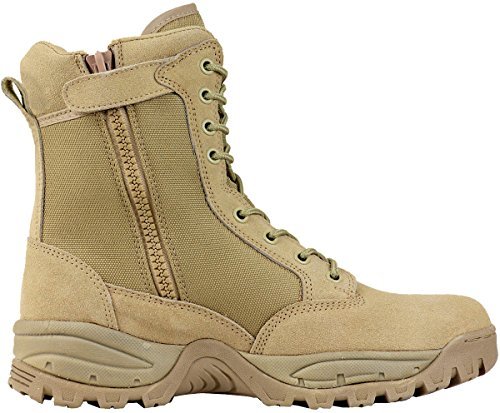
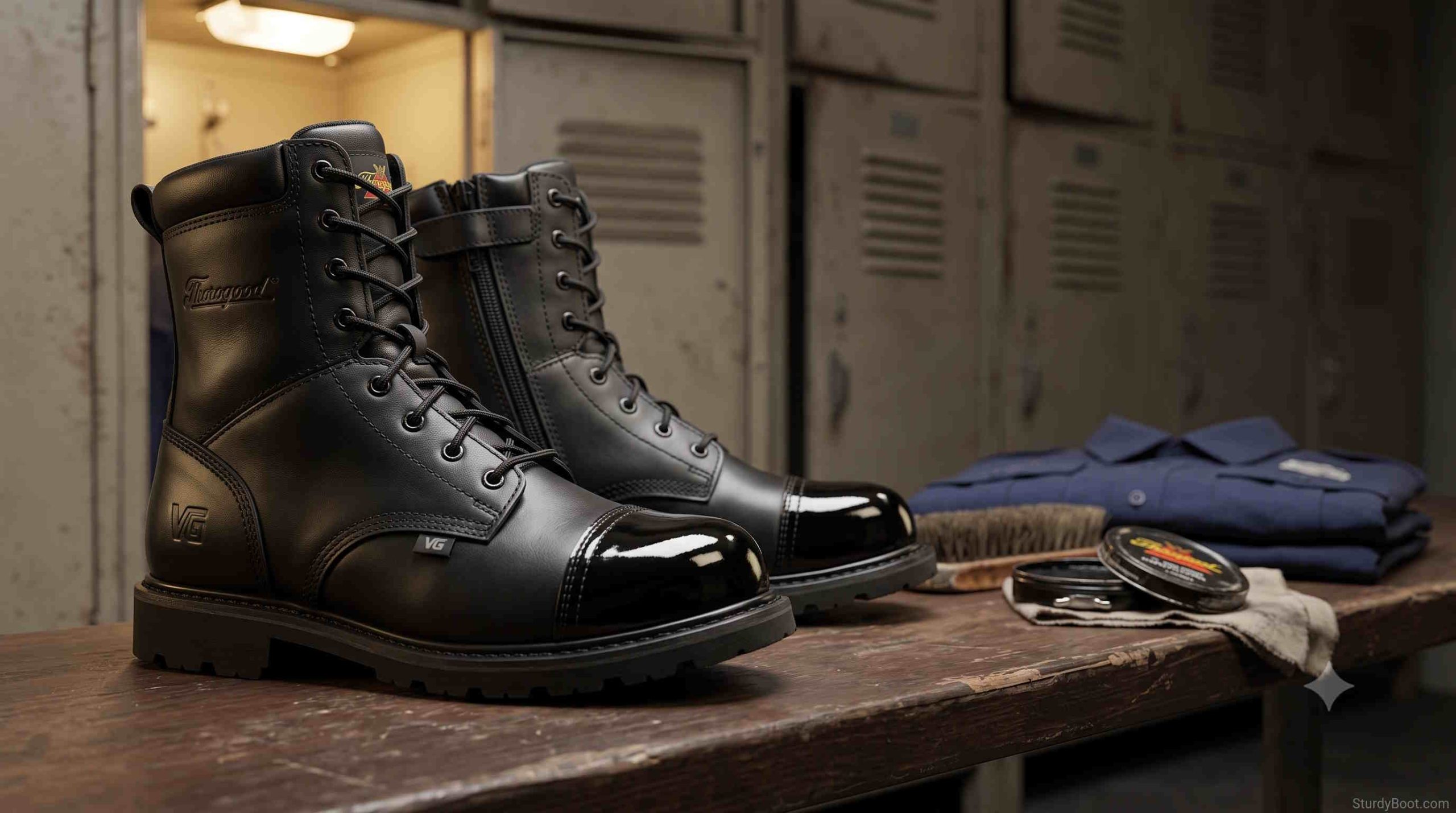
The GEN-Flex2 8″ Side-Zip is a soft-toe, 8-inch leather duty boot with a Goodyear storm welt, a slip-resistant outsole, a side zipper for quick entry, and heel-and-toe panels designed to take a high-gloss shine. It’s built for the duty-and-service world — corrections, law enforcement academies, EMS, security — where a professional shine and all-day standing comfort matter more than trail ruggedness.
Three misconceptions worth clearing up before you buy:
- It’s not a safety-toe boot. Owners looking for steel or composite protection are repeatedly disappointed; it’s a soft toe. If your hazard assessment calls for a protective toe cap, this isn’t your boot.
- It’s not a pursuit/patrol sprinting boot. Multiple officers describe it as heavy, stiff, and better suited to standing posts than chasing. Treat it as a duty and standing-shift boot.
- The “high shine” isn’t pre-polished glass. The panels are designed to be shined — several buyers expected mirror gloss out of the box and got a matte-ish cap that shines up beautifully only after you (or a cobbler) put in the work.
Key Specs That Actually Matter
Only the features owners actually tie to outcomes are worth your attention:
- Soft toe (no safety cap): Fine for corrections, academy, security, and EMS; a dealbreaker if you need impact/compression protection. OSHA’s foot protection standard, 29 CFR 1910.136, leaves protective-toe requirements to your employer’s documented hazard assessment — so confirm what your role actually requires before assuming a soft toe is allowed.
- Side zipper: The convenience star of nearly every positive review — and the single most-cited failure point in the negative ones. It’s the feature that sells the boot and the one most likely to end its life early.
- High-shine toe and heel panels: A genuine strength once conditioned; a genuine letdown for buyers who expect out-of-box gloss.
- Goodyear storm welt + glued multi-piece outsole: The welt earns praise, but the outsole’s glued sections are where long-term separation starts for heavy walkers.
- Roomy last / tall toe box: Drives both the “comfortable and wide-friendly” praise and the “sloppy, runs big” complaints. Your foot volume decides which camp you land in.
- Weight: Repeatedly described as heavy and substantial — reassuring for standing, punishing for running.
Sizing & Fit — What Owners Actually Report
Bottom line: these run big. The single most repeated fit note across the feedback I analyzed is that the GEN-Flex2 rounds about a half size large, with a tall, roomy toe box that can feel sloppy if your foot doesn’t fill it. Multiple owners who ordered their normal size returned for a half-size down and were happier.
- Half-size guidance: If you’re a true 9, several owners suggest trying 8.5. One buyer specifically noted the size chart recommended an 8.5 while Amazon “suggested” a 9 — and the 8.5 would’ve been the tighter, better fit for them.
- Width behavior is the twist: The standard width already feels wide to many, so wide-footed wearers often love it — but a few “Wide” buyers found the W actually felt narrow or pushed their big toes inward, so width feedback is genuinely mixed. This is a boot where wide feet tend to win and narrow feet tend to swim.
- Who it suits: Wide, high-volume, or flat feet that want room. Who it fights: Narrow feet — expect heel slip and toe-box movement that laces alone may not fully cinch out.
Because sizing is the #1 return driver for this boot, order from a retailer with easy exchanges and test fit early (see the Return-Window check below).
Feature-by-Feature Breakdown (Truth vs Marketing)
| Feature | What the Marketing Implies | What It Actually Means (Owner Experience) | Compared to Competitors |
|---|---|---|---|
| High-shine toe & heel | Mirror gloss out of the box | Shines up beautifully — after you wax/condition it yourself; several felt misled expecting instant gloss | Similar polish ceiling to Corcoran/Bates jump boots, but owners say it needs more upfront work |
| Side zipper | Fast, dependable entry | Loved daily — but the most-reported hardware failure; a minority see zippers crack or snap within months | Owners say Rocky’s side-zips have “well documented” zipper issues too; Bates lace-style avoids the risk entirely |
| Goodyear storm welt | Rugged, resoleable construction | Welt itself holds; the glued multi-piece outsole is where edge-separation and minor leaks begin after heavy years | Owners wish for a one-piece Vibram sole like older/other boots; current version trails that ideal |
| Comfort / cushioning | All-day duty comfort | Genuinely comfortable for standing — but thin stock insoles wear fast; many swap them early | Compares well to 5.11 and Rocky for standing comfort; loses to Danner for out-of-box refinement |
| Leather & origin | Premium, USA heritage | Current pairs are imported; longtime owners insist older USA pairs felt more substantial | The recurring “not what they used to be” gap is this boot’s defining controversy |
Real-World Owner Experience (Deep Pattern Analysis)
The Time-Machine Effect (the pattern owners obsess over most)
This is the loudest, most emotional theme in the entire feedback set, so it leads. A striking number of buyers are on their 3rd, 4th, or even a decade-plus of these boots — and a large share of them say today’s imported version doesn’t match the older USA-made pairs they remember. The complaints cluster tightly: leather that feels more bonded/synthetic and cracks or creases faster, a longer and more painful break-in, tongues sewn slightly crooked, and lace eyelets that don’t line up. Because these reviewers own the history, their disappointment carries weight a first-time buyer’s can’t.
- In a nutshell: Loyal buyers are grading the current boot against a discontinued better version — and often marking it down for it.
- Hidden strength: The fact that so many keep coming back at all tells you the core comfort-and-shine formula still works.
- Hidden weakness: If you’re expecting heirloom USA-made quality, the current import may feel like a step down.
- What to do about it: Judge this boot on its own current merits, not on a legend. Condition the leather from day one to slow the creasing and cracking these owners describe.
The Re-Buyer Paradox — the tell most reviews won’t give you
Here’s what most reviews won’t tell you: a meaningful chunk of the complaints come from people who bought the boot again anyway. Owners gripe about squeak, weight, thin insoles, and declining quality — then admit it’s their 2nd, 3rd, or 4th pair, or that they’ll buy again once this pair “finally decides to die.” That paradox is the single most useful signal in the whole set: it means the day-one comfort and the shine are strong enough to override real frustration. When people who write a critical-sounding review still re-buy, the real-world verdict is “flawed but genuinely liked.”
- What to do about it: Weight the comfort signal heavily and the anger signal a little less — the buying behavior contradicts the tone.
The Zipper Failure Sequence & Return-Window Timing
The side zipper is both the headline feature and the headline failure. A recurring, high-value pattern: zippers crack, snap, or let water in — and several owners report it happening at 2–3 months, sometimes just after the return window closes. One first responder had a zipper break mid-emergency-call; another’s snapped after only two light wearings and was then out of return range. The failure often announces itself first as water sneaking in through the zipper before the mechanism fully gives.
- In a nutshell: If this boot fails early, the zipper is the most likely culprit, and the timing tends to land inconveniently close to when you can no longer return it.
- What to do about it: Stress-test the zipper hard in week one (full up-and-down cycles, twist the boot) rather than babying it until returns close.
The Sole-Edge Separation Clock (the long-term failure)
For the owners who keep these for years, the most-reported durability failure is the glued multi-piece outsole starting to separate at the edges after roughly two-plus years — which then lets water seep in at puddle depth. A few report soles wearing “like they almost melted away” under a year of hard, high-mileage use. The Goodyear storm welt generally holds; it’s the outsole’s glued sections that go.
- What to do about it: For high-mileage roles, monitor the sole edges and consider a cobbler re-glue at the first sign of edge lift — don’t wait for water intrusion. Anything beyond that, consult a qualified repair or resoler.
The Shine Letdown (an expectation gap, not always a defect)
A whole cluster of one-to-three-star reviews boil down to “the toe cap wasn’t shiny out of the box.” The more experienced owners push back: the panels are designed to be shined, and with Leather Luster, Saphir, or a spit shine they gloss up hard. This is largely a marketing-expectation gap, not a manufacturing defect — but it’s real enough to sour buyers who needed instant gloss for a specific event.
- What to do about it: Plan to shine them yourself (or budget a cobbler). If you need mirror gloss for a ceremony this week, don’t order these expecting it pre-done.
The Use-Case Threshold (who’s happy vs who’s furious)
The clean split: owners in standing-and-service roles — corrections, security, EMS, bartending, truck driving, academy standing — overwhelmingly praise the comfort. Owners who need to run, pursue, or move fast call them heavy, stiff, “like walking on 2x4s,” and not real patrol boots. Same boot, opposite verdicts, decided almost entirely by whether your job is mostly standing or mostly sprinting.
The Good, The Bad & The Ugly
The Good (comfort & shine):
- Frequently called one of the most comfortable duty boots owners have worn, often out of the box.
- Side zipper praised constantly for fast entry — great for firefighters, EMS, and anyone gearing up quickly.
- Takes a stunning shine once conditioned; strong professional appearance for class-A uniforms.
- Wide-friendly, roomy fit that suits high-volume feet.
The Bad (fit & finish):
- Runs big with a tall toe box; narrow feet slide and slip.
- Thin stock insoles that many owners replace almost immediately.
- Heavy and stiff; a real break-in that some never make peace with.
- Squeak on hard floors is a common, if minor, annoyance.
The Ugly (hardware & origin):
- Early plastic-zipper failures, occasionally mid-shift and occasionally just past the return window.
- Glued outsole edges separating after a couple of years, eventually letting water in.
- A persistent country-of-origin dispute: listings implying USA, boots tagged made in China, and returns filed on that basis.
Mini Toolkit: Decide + Fix (Fast)
Issue-Tag Box: #runs-big · #zipper-snap · #sole-edge-separation · #shine-expectation-gap · #heavy-and-stiff · #thin-insole
Fit Mini-Matrix:
| Foot type | Verdict |
|---|---|
| Wide / high-volume | Best match — order your size or even try a half down |
| Standard | Good, but size down a half to kill toe-box slop |
| Narrow | Fights you — expect heel slip; consider another boot |
Mini Decision Tree:
- If your job is mostly standing (corrections, security, EMS, academy) → strong fit.
- If your job needs sprinting or pursuit → skip; too heavy for many.
- If you need a safety toe → skip; this is soft-toe.
- If you have narrow feet → size down and expect to fight heel slip, or look elsewhere.
- If you want out-of-box mirror gloss with zero effort → skip; these need shining.
Troubleshooting Quickflow (heel slip — the #1 fit gripe):
- Re-lace with a heel-lock (runner’s loop) through the top eyelets.
- Still slipping? Swap the thin stock insole for a fuller-volume aftermarket insole.
- Add a thicker boot sock to take up toe-box room.
- Check that the tongue sits centered (a few arrive slightly off).
- Walk a full indoor day before removing tags.
- Still unstable? It’s a size/width mismatch — exchange rather than push through blisters.
Mini Return-Window Reality Check
Before your return window closes, actually stress the things owners report failing:
- Cycle the zipper hard — full open/close reps, twist the boot — since zipper failure is the most-reported early defect.
- Do a standing shift indoors to expose heel slip and toe-box movement before tags come off.
- Water-check the zipper and sole edges with a damp cloth; owners note leaks start at the zipper and glued sole seams.
- Inspect tongue alignment and toe-cap panels for the crooked-tongue and dull-cap issues buyers flag.
- Confirm the size early — this boot runs big, and refunds/exchanges reportedly run slow, so don’t sit on the decision.
If you’re still weighing this against other duty options, our police and duty boot buying guide lays out the side-zip-vs-lace tradeoff in more depth.
Sizing & Insider Tips (Realistic)
- Order a half size down from your normal boot size — the runs-big pattern is the most consistent fit signal here.
- Wide feet, buy with confidence; narrow feet, expect to lace-lock and insole-up to stabilize.
- Budget for an insole swap — the stock insole is thin and wears fast per many owners; memory-foam or support insoles transform the boot.
- Condition the leather in the first two weeks to slow the cracking and hard creasing owners describe, especially before heavy squatting or kneeling.
- Plan your shine ritual (Leather Luster, Saphir, or a classic spit shine) instead of expecting factory gloss.
- Heel-lock lacing solves most of the heel-slip complaints from standard/narrow feet.
- Break them in on shorter shifts first — the stiff leather punishes a straight-into-a-double-shift approach.
- Watch the sole edges over the years; for a re-glue or resole, use a cobbler or qualified repair rather than DIY adhesives on a duty boot.
- Don’t over-scuff them outdoors early — the leather creases fast, and creasing is a top cosmetic gripe.
- If your role needs a protective toe or specific electrical rating, verify against your employer’s PPE hazard assessment — this is a soft-toe boot and won’t satisfy a safety-toe requirement.
Owner Stories
The stories below are composite scenarios reflecting repeated patterns across owner feedback.
- The happy re-buyer (corrections/security): A correctional officer on their second or third pair sizes down a half, drops in a support insole, polishes twice a week, and gets a comfortable, sharp-looking year-plus of daily wear. They gripe about the occasional squeak but re-buy anyway — the paradox in action.
- The wrong-job mismatch (patrol/pursuit): An officer who needs to move fast finds them heavy and stiff — “like bricks” — returns them, and goes back to a lighter boot. Nothing was defective; the boot was simply asked to sprint when it’s built to stand.
- The wrong-width returner (narrow foot): A narrow-footed buyer orders their usual size, finds the toe box cavernous and the heel slipping even laced tight, exchanges once, still swims a little, and ultimately switches brands. The fit fought their foot from the start.
SEE MORE OWNER FEEDBACK ON AMAZON
Who This Is For (and Who Should Skip It)
Buy it if you…
- Work a standing-heavy duty or service post (corrections, security, EMS, academy, bartending).
- Want fast side-zip entry and a boot that shines up sharp for inspection.
- Have wide or high-volume feet.
- Are happy to size down, swap the insole, and do your own shining.
- Want mid-tier duty comfort without paying premium-boot prices.
Skip it if you…
- Need a lightweight boot for pursuit, sprinting, or fast tactical movement.
- Require a steel or composite safety toe.
- Have narrow feet and hate fighting heel slip.
- Expect mirror gloss straight out of the box.
- Want assured heirloom USA-made construction (current pairs are imported).
If you’re comparing options, start here: Top Police & Duty Boot Picks.
Alternatives (Quick Comparisons)
- If you need lighter and faster: Owners repeatedly cross-shop Bates Durashocks and Danner duty boots for pursuit-friendly weight. See how weight-focused picks compare in our most comfortable and lightweight work boots rundown.
- If you need a genuine safety toe: This soft-toe boot won’t cover you — our ASTM F2413 safety-toe explainer helps you read the toe-cap ratings before you switch.
- If waterproofing is your priority: The glued-sole seepage some owners hit over time means dedicated waterproof builds may serve wet roles better; browse the best waterproof work boots.
- If sole longevity is the dealbreaker: Understanding wedge vs lug and glued vs one-piece construction, covered in our work boot soles explained guide, helps you pick a longer-lived outsole.
Deep-Dive FAQ
What should I test immediately after delivery?
Cycle the side zipper hard and confirm the size on day one — those are the two failure points owners hit most. Run full open/close reps on the zipper, stand a full indoor shift to expose heel slip, and check the toe-cap panels and tongue alignment. Do all of this before the tags come off, because exchanges reportedly run slow.
What are the most common problems and fixes?
The big three are runs-big sizing, early zipper failure, and thin stock insoles. Fix sizing by ordering a half down; fix heel slip with heel-lock lacing and a fuller insole; and plan an insole swap from the start. The zipper you can only stress-test early — if it feels flimsy, exchange rather than hope.
Will these work with my foot type and my job?
Wide, high-volume feet in standing-heavy roles (corrections, security, EMS, academy) are the sweet spot. Narrow feet tend to slip and swim, and pursuit/patrol officers who need to run usually find them too heavy and stiff. Match the boot to a standing job, not a sprinting one.
How long do they really last?
Owner reports scatter widely: some heavy, high-mileage users get roughly a year to 1.5 years before soles or insoles give out, while many standing-role wearers report multiple years — some citing three-plus years of near-daily wear. The most common long-term failure is glued sole-edge separation after about two years; the most common early failure is the zipper.
Are they actually made in the USA?
No — current pairs are imported, and this is the boot’s biggest controversy. Many buyers report listings implying USA origin while the boot’s tag reads made in China, and a chunk of returns are filed specifically on that basis. Longtime owners insist the older USA-made pairs felt more substantial.
Thorogood GEN-Flex2 vs Bates Durashocks — which should I pick?
Pick the GEN-Flex2 for a higher-shine, side-zip duty boot with a roomier, wide-friendly fit and strong standing comfort. Pick Bates Durashocks if you want lighter weight, lace-only simplicity, and to sidestep the side-zipper failure risk entirely — several owners specifically returned the Thorogoods to go back to their Durashocks for pursuit-heavy duty. It’s shine-and-comfort-and-easy-entry (Thorogood) versus lightweight-and-hardware-simplicity (Bates).
Do I need a safety toe for my job?
Only your employer’s hazard assessment can answer that. OSHA’s foot-protection rule doesn’t mandate steel toes universally — it requires footwear matched to documented hazards, with performance defined by standards like ASTM F2413. Since the GEN-Flex2 is soft-toe, confirm your role allows it before ordering.
Final Verdict
The Thorogood GEN-Flex2 8″ Side-Zip is a genuinely comfortable, sharp-shining, wide-friendly duty boot that rewards the right wearer and frustrates the wrong one. If you stand your shift — corrections, security, EMS, academy, service work — size down a half, swap the insole, shine it yourself, and you’ll likely join the loyal re-buyers who keep coming back despite their own complaints. If you sprint, pursue, need a safety toe, or have narrow feet, look elsewhere. The made-in-China quality debate is real and unresolved, so buy the current boot on its current merits, not the legend of the old USA pairs.