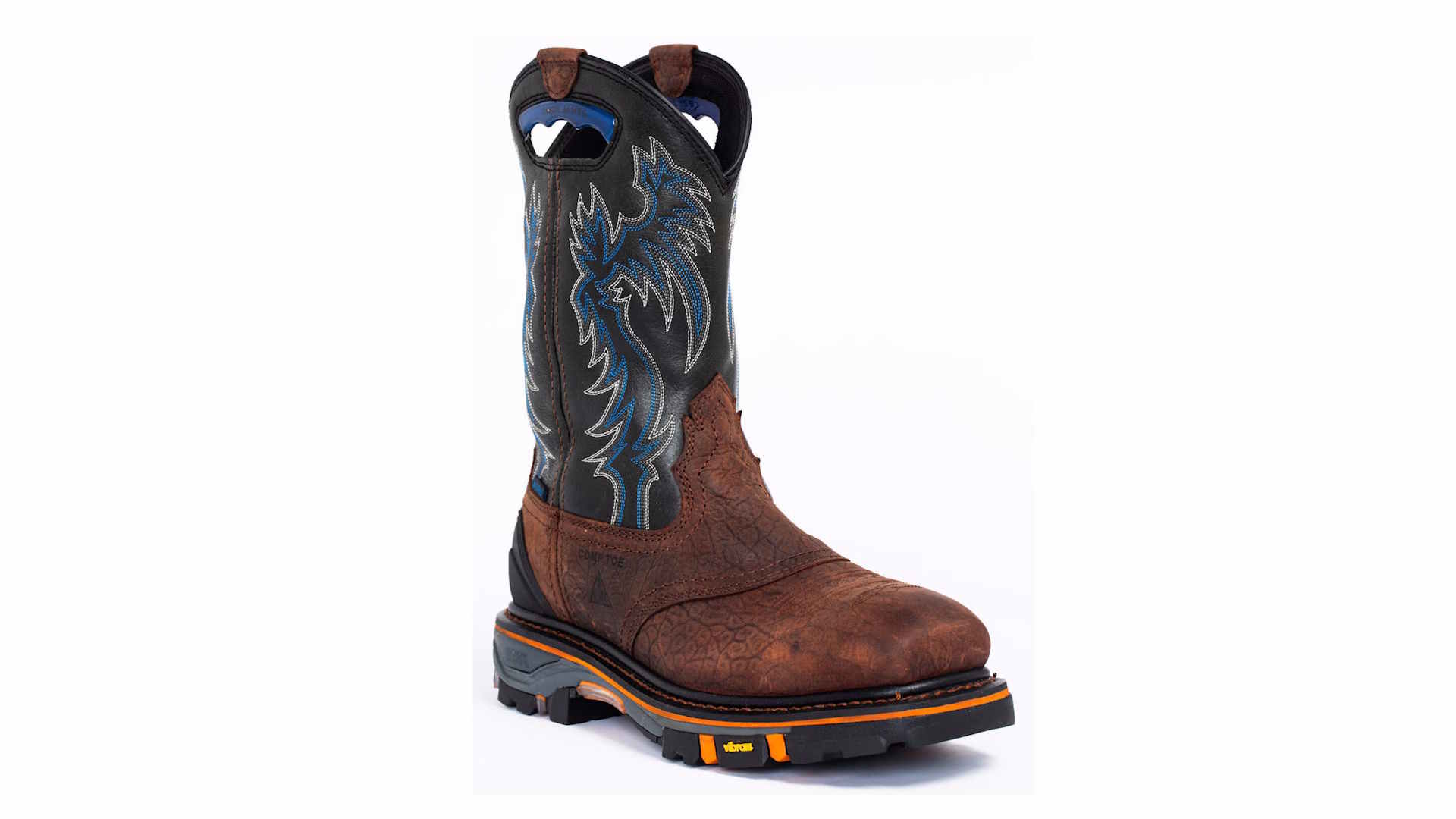
Cody James Decimator Review (2026): Comfort King, Durability Gamble?
Last updated: July 2026
Here’s what changed in this refresh:
- Re-read a fresh batch of 2025–2026 owner feedback from a second major retailer alongside the older Amazon reviews, and the split between the two sources turned out to be the whole story (more on that below).
- Re-verified the recurring “heel-liner tears right after break-in” complaint — it’s still the single most repeated durability failure, and it still clusters at the same spot.
- Reconfirmed the sizing pattern: the standard width fights narrow-toe owners, while the wide width behaves unpredictably. Updated the fit guidance accordingly.
Affiliate disclosure: SturdyBoot.com is reader-supported. If you buy through links on this page, we may earn a small commission at no extra cost to you. It never changes what the owner feedback says or how we read it.
I went deep into the owner feedback on the Cody James Decimator because it’s one of the most genuinely split boots I’ve analyzed. On one side you’ve got guys who’ve re-bought the exact same pair every year for a decade and call them the most comfortable boots they’ve ever owned. On the other, you’ve got tradesmen watching the sole peel off in the parking lot three months in. Same boot, wildly different verdicts — and that gap isn’t random. It tracks almost perfectly with what you do in them.
Is it worth it? For light-duty, on-and-off, comfort-first wear, yes — the Decimator is a comfortable, sharp-looking slip-on. For heavy trades that beat on boots daily, most owners say no.
This review is a synthesis of real owner experience across two retailers, not a spec sheet. If you want the wider “how to match features to jobsite risk” picture before you dive in, the Work Boots 101 primer ties construction choices to the hazards you actually face on site.
How this review was built (so you can trust it)
- Reviews analyzed: I read a combined sample of roughly 155 verified owner reviews — about 51 from the Amazon listing (which shows a 4.2-star average across 190 global ratings as listing context) and about 104 text reviews from a second major retailer where this boot also sells heavily. I’m counting only the reviews I actually read line by line, not the star totals.
- Time window covered: Owner feedback spans roughly 2019 through mid-2026, so it reflects both older pairs and current production. That matters here, because several longtime buyers compare today’s boots to pairs they bought years ago and to the Ariats and Justins they left behind.
- How I synthesized it: I tagged every review into buckets — comfort and fit, sizing accuracy, waterproofing, sole and construction durability, the heel liner, weight, and warranty/support — then separated use-and-fit-driven complaints (wrong width, wrong trade, too-narrow toe) from likely product/design failures (sole delamination, heel-liner tearing, rubber peeling off the heel).
- Important limitations:
- Reviews skew toward extremes — thrilled re-buyers and furious one-time buyers both write more than the quietly satisfied middle.
- Wear intensity varies enormously: a bus driver and an aggregates-yard laborer put completely different loads on the same boot.
- I weighed recurring patterns over one-off lemons, and I flagged where a single retailer’s sample leaned unusually positive or negative.
One thing worth naming early: the two retailer samples don’t agree, and the disagreement is informative. The recent second-retailer feedback runs strongly comfort-positive, while the Amazon sample carries a heavier load of long-term durability complaints. Read together, they paint a picture the star average alone hides — a boot that feels excellent and lasts inconsistently. For the full category framework behind that kind of split, our complete work-boot fundamentals guide is the companion piece.
Quick Verdict (TL;DR)
Best for:
- Guys who slip boots on and off all day (drivers, supervisors, walk-throughs) and want zero lacing.
- Light-to-moderate duty where comfort and looks matter more than a 12-hour beating.
- Anyone who’s found lace-up boots uncomfortable and wants a secure pull-on that still hugs the foot.
Not for:
- Heavy trades in wet, abrasive, or spark-heavy environments (aggregates, landscape construction, welding).
- Anyone who can’t tolerate a heavy, stiff, tall boot with a real break-in.
- Narrow-toed feet, unless you try before you buy.
Standout win: Out-of-the-box comfort and a genuinely secure slip-on fit that a lot of owners rank above Ariat and Justin.
Watch-outs: The heel liner tearing and sole/heel separation both tend to show up after the return window — often around the 2-to-6-month mark.
Confidence Score: 7.5/10 🎯 — This reflects how confidently I can tell you who this boot fits, not a lab reliability rating. The comfort signal is remarkably consistent across both retailers, which makes the “who it’s for” call easy. It loses points because the durability signal is sharply polarized and clearly use-case dependent, so I can’t promise how long your pair lasts.
What This Boot Is (and What It Isn’t)
The Decimator is an 11-inch, pull-on western work boot with a composite safety toe and a rubber-lug outsole. It’s a slip-on built to look like a cowboy boot but carry work-boot protection — the pull handles at the top replace laces entirely.
A few misconceptions worth clearing up:
- It’s not a lace-up-equivalent in fit control. The secure feel owners love comes from the boot’s shape, not from cinching. If your foot doesn’t match that shape, there’s no lacing to save you.
- “Waterproof” is doing some heavy lifting. Plenty of owners report dry feet, but a recurring minority report leaking at the stitch points — so treat it as water-resistant-to-waterproof depending on your pair and conditions, not a guaranteed dry boot in standing water.
- It’s not a lightweight boot. “Heavy” and “bulky” come up again and again. That’s partly the protective build, but it’s a real factor if you’re logging miles.
Because it carries a composite safety toe, the relevant benchmark is the toe-cap performance standard defined by ASTM F2413 — the spec that sets minimum impact and compression requirements for protective footwear.
Key Specs That Actually Matter
Only the things owners say change the outcome on the job:
- Composite safety toe: Lighter and non-conductive versus steel, but several owners feel exactly where the toe cap wraps and connects — which becomes the narrow-toe complaint below. If your employer requires a rated toe, confirm your jobsite’s hazard assessment against the toe-protection requirements in OSHA’s foot-protection standard.
- Pull-on (slip-on) design: The single biggest reason people buy it and, when the heel liner fails, the single biggest reason they rage-return it. No laces means the interior heel liner does all the retention work.
- Rubber lug outsole: Traction gets consistent praise, including on snow and ice. The weak point owners report is the bond between sole and boot, not the tread.
- Full-grain leather, tall 11″ shaft: Looks great, but the stiff upper shaft rubs calves and shins raw during break-in for a meaningful number of owners. This is a real, repeated complaint, not a one-off.
- Weight: Heavy enough that it’s a stated negative for high-mileage wearers.
For how outsole compound and construction affect grip and longevity, our breakdown of work-boot outsoles explains why a glued multi-piece sole behaves differently under stress than a solid one — which is exactly the failure some Decimator owners describe.
Sizing & Fit — What Owners Actually Report
Bottom line: fit is the Decimator’s most chaotic dimension, and it’s inconsistent enough that ordering blind is a gamble. The most common thread is a too-narrow toe box, especially noticeable on one foot, even in the wide width.
Here’s the pattern I kept seeing:
- Toe box runs narrow. Many owners — including some in wide sizing — report the composite toe pressing on the big toe, sometimes on just the right boot. A few describe the steel/composite edge digging into the side of the toe.
- Width behaves unpredictably. Some say the standard runs tight and the wide runs large; owners have swapped from a regular to an EE and finally gotten a proper fit. Others in a wide still felt squeezed.
- True-to-size for most, but with a real minority reporting “runs small.” Several longtime buyers order their normal size fine; others had to size up a half or full size, and a handful found one boot noticeably larger than the other.
- The throat/opening can be tight. A couple of owners literally couldn’t get their foot in.
Because there’s no lacing to fine-tune fit, sizing mistakes here are unforgiving. Our work-boot fit and sizing guide walks through measuring foot length and width properly, which is the single best way to dodge the heel-slop and toe-pinch complaints owners keep reporting.
Feature-by-Feature Breakdown (Truth vs Marketing)
| Feature | What the Marketing Suggests | What It Actually Means (Owner Experience) | Compared to Competitors |
|---|---|---|---|
| Pull-on convenience | Effortless on and off | True at first — but once the heel liner tears, some owners need a long shoe horn just to get them off | Ariat/Justin pull-ons draw fewer heel-liner-failure complaints |
| Waterproof | Keeps feet dry | Mixed: many stay dry, a recurring minority report leaking at the stitch lines | Owners switching from Red Wing/Ariat often felt those stayed drier longer |
| Composite safety toe | Protection without steel weight | Protective, but toe-box narrowness is a repeated comfort complaint | Owners say Ariat, Keen, Timberland toe boxes fit them better |
| Comfort / insole | All-day cushioned support | Genuinely strong — the most consistent praise in the whole sample | Frequently rated above Ariat and Justin for out-of-box comfort |
| Sole & construction | Durable work-ready build | Polarized: some last well, others see multi-piece soles delaminate in months | The recurring “solid one-piece sole vs. glued pieces” gripe favors rivals |
| Weight | Rugged and substantial | Heavy and bulky enough to tire out high-mileage wearers | Noted as heavier than several comparable work boots |
Real-World Owner Experience (Deep Pattern Analysis)
The re-buyer paradox (the pattern that defines this boot)
In a nutshell: The single most striking thing about the Decimator is that some of its harshest critics buy it again anyway. One owner is on his third pair while openly saying the insides never hold up. Another bought a second pair even after the first one’s liner failed. Meanwhile, guys who’ve re-bought the “exact same boot every year for 10 years” sit right next to one-time buyers throwing them in the trash.
Hidden strength: That repeat-buying tells you the comfort and look are addictive enough to overcome real durability frustration. When someone knowingly re-buys a boot that disappointed them, the thing they’re chasing — comfort and fit — is genuinely there.
Hidden weakness: It also tells you the durability problems are consistent enough that repeat buyers expect them. That’s not bad luck; that’s a pattern.
What to do about it: Buy with eyes open. If you love the fit, treat these as a comfortable light-duty boot you may replace on a cycle — not a buy-it-for-life boot.
What most reviews won’t tell you: the failure clock starts right after returns close
In a nutshell: The two signature failures — the heel liner tearing loose and the sole/heel rubber separating — repeatedly show up in the 2-to-6-month window. Owners describe being “super happy” at first, then watching the lining rip or the sole peel well after the return window shut.
Hidden strength: The first few weeks are almost universally positive, which is exactly why the early-life impression is so good.
Hidden weakness: That honeymoon masks the risk. By the time the classic failure appears, you’re usually past the point of a clean return.
What to do about it: Stress-test hard and early (see the Return-Window Reality Check below) so any weakness surfaces while you can still act on it.
The heel-liner tear — a repeat defect at the same spot
In a nutshell: Over and over, owners report the interior liner ripping loose in the heel, often within a couple of months, often on the left boot specifically. Once it tears, it catches your heel and you can’t get the boot off without a long shoe horn — several owners independently mention buying one just to cope.
Hidden strength: The outside of the boot frequently holds up fine even after the liner fails — leather and looks survive.
Hidden weakness: A failure that recurs at the same location across different buyers and replacement pairs points to a design/manufacturing consistency issue, not random defects.
What to do about it: If you’re committed to the boot, a long-handled shoe horn genuinely helps preserve the liner during on/off. If the liner is already tearing early, that’s a warranty conversation, not a DIY fix.
The sole is glued, not solid — and owners notice
In a nutshell: A recurring durability gripe is that the outsole is built from multiple glued pieces rather than one solid unit, and several owners watched it come unglued within months.
Hidden strength: When the bond holds, traction is excellent — grip earns praise across wet, snow, and uneven terrain.
Hidden weakness: A multi-piece glued sole has more failure points, and abrasive or wet trades seem to find them fast.
What to do about it: Monitor the sole seam. If you see any early separation, don’t keep walking on it — a delaminating sole is a slip hazard. Consult a cobbler or qualified repair, and verify against your employer’s PPE hazard assessment before relying on the boot again.
The use-case threshold: where happy owners end and unhappy ones begin
In a nutshell: The clearest dividing line in the entire sample is job type. Drivers, supervisors, HVAC and lighter-duty wearers overwhelmingly love them. Aggregates, landscape construction, and other heavy/wet trades report early failure — one landscaper went through pairs in roughly two months, another in the aggregates industry had soaked feet within a month.
Hidden strength: Inside its lane — light to moderate duty, lots of on/off, comfort-first — this boot performs.
Hidden weakness: Push it into a heavy abrasive trade and the failure timeline compresses dramatically.
What to do about it: Be honest about your trade. If your environment eats boots, this probably isn’t the one — and our work boots by job type guide can point you toward a build that matches your hazards.
The break-in bites your shins
In a nutshell: The tall, stiff shaft rubs calves and shins during break-in for a repeated group of owners — some wrapped felt tape or wore tall socks to survive it, and a few reported deep gouges on both legs.
Hidden strength: Once broken in, the same owners often describe the boot as extremely comfortable — the pain is temporary for most.
Hidden weakness: The break-in is rougher than average and genuinely drew blood for a minority.
What to do about it: Tall socks early on are the most-cited fix. For a gentler entry into a stiff pair, our guide to breaking in work boots faster covers safe methods that don’t risk the boot’s structure.
The Good, The Bad & The Ugly
The Good (comfort & feel):
- Out-of-box comfort that repeatedly beats owners’ previous Ariats and Justins.
- Secure, locked-in slip-on feel without laces.
- Excellent traction across wet, snow, and uneven ground.
- Sharp looks — a lot of owners keep them as “too nice for work” boots.
The Bad (fit & ergonomics):
- Narrow toe box, even in wide, pressing on the big toe.
- Heavy and bulky for high-mileage days.
- Rough, shin-rubbing break-in.
- Inconsistent sizing between the standard and wide widths.
The Ugly (durability failures):
- Heel liner tearing loose in the first few months, often on the left boot.
- Multi-piece glued sole delaminating in wet/abrasive trades.
- Heel rubber separating and flapping.
- Several owners report warranty-line calls going unanswered.
Mini Toolkit: Decide + Fix (Fast)
Issue-Tag Box: #heel-liner-tear · #toe-box-narrow · #sole-delamination · #runs-heavy · #stitch-leak · #shin-rub
Fit Mini-Matrix:
| Foot type | Verdict |
|---|---|
| Narrow foot | Often the best match — the snug toe becomes a feature |
| Standard foot | Usually fine true-to-size, but try the toe box first |
| Wide foot | Unpredictable — some need EE, some find the wide runs large |
Mini Decision Tree:
- If you’re in a heavy/wet/abrasive trade → skip it, pick a heavier-duty boot.
- If you slip boots on/off all day and want comfort → strong buy.
- If your toe box is wide or sensitive → try in person or size the width up.
- If the liner tears in the first weeks → start a warranty claim, don’t DIY.
- If the sole seam starts separating → stop wearing, get it inspected.
Troubleshooting Quickflow (heel-liner catch):
- Notice the liner catching your heel on removal.
- Stop yanking — that accelerates the tear.
- Use a long-handled shoe horn every on/off.
- Photograph the tear and note the date.
- Contact the seller/manufacturer while it’s early.
- If unresolved, weigh a return against your window.
Mini Return-Window Reality Check
Run these before your return window closes, because the classic failures hit after it:
- Work the heel liner hard: put the boots on and off repeatedly and feel for any liner shift or bunching at the heel — that’s the earliest warning of the tear-out.
- Soak-test the waterproofing: wet the boot around the stitch lines and check for seepage, since leaking-at-the-stitches is the recurring waterproof complaint.
- Flex the sole seam: bend the boot and inspect where the multi-piece sole meets the upper for any early gap or lift.
- Check the toe box on both feet: narrowness often shows on just one boot — press and walk to catch it early.
- Do a full-day shin test: wear them a long day with your normal socks to surface any shaft rubbing before you commit.
If any of these fail, compare against alternatives in our complete work-boot buying fundamentals before you re-order the same model.
Sizing & Insider Tips (Realistic)
- If you’re between sizes and have a wider foot, owners repeatedly found an EE solved the toe pinch where a standard width didn’t.
- Narrow-footed buyers tend to be the happiest — the snug toe that frustrates others locks your foot in.
- Wear tall, thick socks through break-in; it’s the most-cited defense against the shin and calf rub.
- Buy a long-handled shoe horn proactively if you commit to these — it protects the heel liner that owners say fails first.
- Don’t judge waterproofing on day one — soak-test the stitch lines early while a return is still possible.
- The stock insole gets praise from many, but a few report it packing out or degrading in weeks — swapping to your own insole is a reasonable early move if comfort drops.
- If you’re coming from Ariat, Justin, or Timberland, expect a different toe shape — don’t assume your usual size translates.
- Inspect both boots independently on arrival; mismatched fit between the pair is a repeated complaint.
- Watch the sole seam over the first months; if you see separation, stop wearing and get it inspected — a loose sole is a slip hazard, not a cosmetic issue. For anything beyond basic care, consult a cobbler or qualified repair and verify against your employer’s PPE hazard assessment.
- Keep these in their lane — light-to-moderate duty. Owners who forced them into heavy abrasive trades are the ones who bailed fastest.
Owner Stories
The stories below are composite scenarios reflecting repeated patterns across owner feedback — not quotes from any single review.
The happy re-buyer (driver, standard width): He’s a CDL driver on his feet in and out of the cab all day. He wanted a non-slip, comfortable pull-on and found the Decimator broke in fast and gripped well. He’s already eyeing a second pair — light duty, lots of on/off, exactly the boot’s sweet spot.
The wrong-trade mismatch (landscape/aggregates laborer): He bought them for a wet, abrasive, boot-punishing job. Comfort was great for a few weeks, then the sole started to give and his feet got soaked. Two months in, he’s back to a heavier-duty brand — the boot never had a chance in that environment.
The wrong-width returner (wide foot, sensitive toe): He ordered a wide expecting room, but the toe box still pressed his big toe and one boot felt tighter than the other. Without laces to adjust, there was no saving the fit, so back they went. An EE might have fixed it — but he couldn’t try before buying.
SEE MORE OWNER FEEDBACK ON AMAZON
Who This Is For (and Who Should Skip It)
Buy it if…
- You slip boots on and off constantly and want zero laces.
- Comfort and looks rank above maximum durability for you.
- You’ve got a narrow-to-standard foot.
- You work light-to-moderate duty, mostly dry.
- You’ve found Ariat/Justin pull-ons uncomfortable and want an alternative.
Skip it if…
- You’re in a heavy, wet, or abrasive trade.
- You need guaranteed all-day dryness in standing water.
- You have a wide or toe-sensitive foot and can’t try before buying.
- You want a buy-it-for-life boot that won’t need replacing on a cycle.
- You log heavy daily mileage and hate a heavy boot.
If you’re comparing options, start here: Top Work Boot Picks
Alternatives (Quick Comparisons)
- For heavier waterproof duty: if the Decimator’s sole/leak complaints worry you, browse sturdier options in our best waterproof work boots roundup — several owners who left the Decimator went hunting for exactly this.
- For high-mileage comfort without the weight: the Decimator’s heft is a dealbreaker for some; our most comfortable work boots picks prioritize all-day feel.
- For anyone who wants a lighter boot: if “heavy and bulky” scared you off, our lightweight work boots guide is the better shelf to shop.
Deep-Dive FAQ
What should I test immediately after delivery?
Work the heel liner and soak-test the stitch lines first. Those are the two failures owners report after the return window, so surfacing them early — by repeatedly putting the boots on and off and wetting the seams — is the smartest thing you can do while you can still return them. Also check the toe box on both feet independently and wear them a full day in your normal socks to catch shin rub.
What are the most common problems and fixes?
The heel liner tearing loose and the sole separating are the top two. For the liner, a long-handled shoe horn during on/off genuinely helps preserve it, and an early tear is a warranty matter, not a DIY one. For sole separation, stop wearing the boot and get it inspected — it’s a slip hazard. Tall socks handle the break-in shin rub for most people.
Will these work with my foot type and my job?
Narrow-to-standard feet in light-to-moderate, mostly-dry trades are the clear winners. Wide or toe-sensitive feet often struggle even in the wide width, and heavy/wet/abrasive trades tend to break these boots fast. If your foot is wide, an EE is worth trying; if your job eats boots, look elsewhere.
How long do they really last?
It depends almost entirely on how hard you use them. Light-duty owners report years of service and re-buy repeatedly, while heavy-trade owners describe failures in as little as two to three months. The recurring liner and sole issues tend to appear in the first two-to-six months, so the honeymoon is real but can be short if you push them hard.
Are they actually waterproof?
Mostly, but not universally. Many owners report dry feet in cold and wet conditions, while a recurring minority report leaking at the stitch points — some say you’d have to seal the stitches yourself for true dryness. Treat them as reliably water-resistant, not a guaranteed dry boot in standing water, and soak-test your own pair early.
Cody James Decimator vs Ariat: which should I pick?
For pure out-of-box comfort and a locked-in slip-on feel, a lot of owners actually rank the Decimator above Ariat — that’s the recurring surprise. But for long-term durability and consistent waterproofing, owners who’ve run both tend to trust Ariat to hold up longer, and several who strayed from Ariat to the Decimator went back. Short version: Decimator for comfort and looks at a lighter-duty pace, Ariat if longevity is your priority.
Is the composite toe comfortable?
For narrow-to-standard feet, usually yes; for wider or toe-sensitive feet, it’s the boot’s most common comfort complaint. Owners repeatedly feel where the toe cap wraps and connects, sometimes on just one boot. If toe pressure is a known issue for you, try before you buy or size the width up.
Final Verdict
The Cody James Decimator is a comfort-and-looks boot wearing work-boot clothing. If you’re a driver, supervisor, or light-to-moderate-duty worker who slips boots on and off all day and wants something that feels great from the first wear, this is an easy recommendation — and the small army of decade-long re-buyers backs that up. If you’re in a heavy, wet, or abrasive trade, or you have a wide, toe-sensitive foot you can’t fit in person, the recurring liner tears, sole delamination, and toe-box pinch make this a risky pick. Know your trade, test hard before the return window closes, and buy accordingly.